
USS Nautilus: World’s first nuclear submarine that changed underwater warfare forever
For submarines, slipping beneath the surface was only part of the challenge. The harder task...
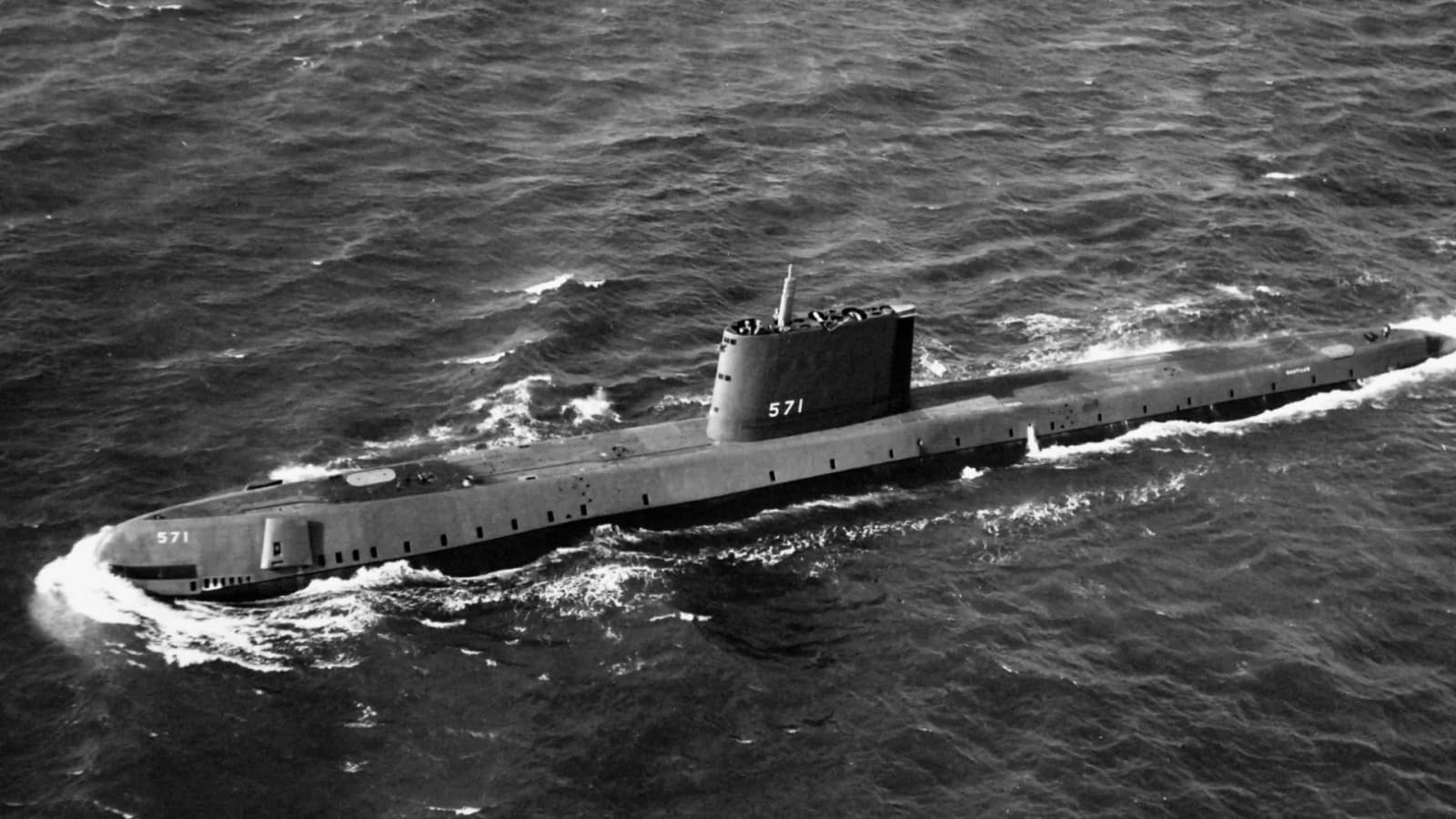
For submarines, slipping beneath the surface was only part of the challenge. The harder task was staying underwater while traveling quickly over long distances.
USS Nautilus helped overcome that limitation. Commissioned on September 30, 1954, in Groton, Connecticut, it was the world’s first nuclear-powered submarine.
Its arrival gave the U.S. Navy a vessel that could sustain underwater operations far beyond the capabilities of earlier diesel-electric boats.
That breakthrough reshaped submarine operations, challenged established methods of hunting them, and opened a route beneath the North Pole.
What made Nautilus different?
Conventional diesel-electric submarines relied on batteries to power their propulsion motors underwater.
Those batteries eventually needed recharging, requiring the submarine to surface or use a snorkel so its diesel engines could draw air. This dependence restricted how freely the boats could operate beneath the waves.
Commanders had to manage battery reserves carefully. Traveling faster consumed stored energy more quickly, while recharging required access to the atmosphere.
Nautilus usednuclear propulsion to overcome this constraint. Its reactor supplied heat to produce steam, which drove propulsion turbines and electrical generators. Unlike diesel engines, the system did not require atmospheric oxygen to generate propulsion power.
The practical advantage was sustained underwater mobility. Nautilus could travel long distances submerged without repeatedly interrupting its voyage to recharge propulsion batteries.
However, its commissioning and first sailing were separate milestones. After entering service in September 1954, Nautilus remained dockside for additional construction and testing. It first got underway on nuclear power on January 17, 1955.
Its early voyages demonstrated the difference. During a May 1955 shakedown trip toward Puerto Rico, Nautilus covered 1,381 miles submerged in 89.8 hours.
The Navy records this as the longest submerged cruise achieved to that date, at the highest sustained submerged speed recorded for a period exceeding one hour.
How did it change submarine warfare?
A submarine’s effectiveness depends partly on its ability to move without being located and intercepted. Nautilus gave commanders greater freedom to maintain speed underwater and quickly leave a search area.
That presented a challenge for forces trained to hunt earlier submarines. During evaluations in 1956, the Navy tested how Nautilus’ increased speed and endurance affected contemporary anti-submarine warfare practices.
The findings were significant: methods inherited from World War II were ineffective against a submarine with these capabilities. Nautilus’s performance required a reassessment of existing submarine-hunting tactics.
Its military importance therefore extended beyond its own missions. Operating it in exercises helped the Navy understand the challenges posed by nuclear-powered submarines.
The term “nuclear-powered” described its propulsion system. Nautilus carried six torpedo tubes and was not a ballistic-missile submarine.
Why was its North Pole voyage important?
Nautilus’ most famous achievement came in 1958 during Operation Sunshine, a mission to travel submerged beneath the North Pole.
The first attempt encountered drift ice in relatively shallow Chukchi Sea waters, blocking the submarine’s passage. Nautilus returned to Pearl Harbor before making another attempt.
On August 3, 1958, it successfully passed beneath the geographic North Pole, becoming the first submarine to complete that passage.
The voyage demonstrated the reach of sustained underwater propulsion. Beneath Arctic ice, where access to the surface was restricted, freedom from routine battery recharging offered a decisive operational advantage.
Nuclear propulsion did not make voyages unlimited. Supplies, crew endurance, maintenance, and eventual refueling remained constraints. Nautilus underwent its first reactor-core replacement in 1957 after logging 60,000 nautical miles.
Its lasting contribution was giving submarines the ability to travel farther and sustain speed underwater, expanding where and how they could operate.
Related articles

Samsung raised prices on the Galaxy S26 by $100
The base Galaxy S26 with 256GB of storage costs nearly $1,000 after Samsung raised prices in the US by $100 or more, Phone Arena reports.
NASA prepares humanoid robots to take on dangerous jobs on the moon and Mars
When humans finally set up camp on the moon, they will not be alone. But...
Megawatt-level nuclear battery chosen for second-ever reactor test at 100-foot-tall DOME
A Houston startup will test an experimental “nuclear battery” in the Idaho desert next year,...
Flourish 1: Wheeled semi-humanoid robot runs 12 hours and lifts up over three pounds
A San Francisco startup has emerged from stealth with a home robot that costs $3,555,...

HP’s answer to the MacBook Neo is thinner, lighter, and comes with OLED
HP is announcing a new laptop that's squarely aimed at Apple's MacBook Neo. The 2026 HP OmniBook 5 14 starts at $699.99 with an Intel Core 5 315 "Wildcat Lake" processor, 8GB of RAM, and a 256GB SSD.

Amazon is launching colorful new Kindles — and a case with physical page-turn buttons
Kindles don't usually change much with each new version, but Amazon is launching next-generation models today that look and feel a whole lot nicer.