Video: YouTuber builds refrigerator that uses fire and salt to cool without electricity
A fire is usually the last thing you would reach for when trying to keep...
This story was prepared automatically by software.
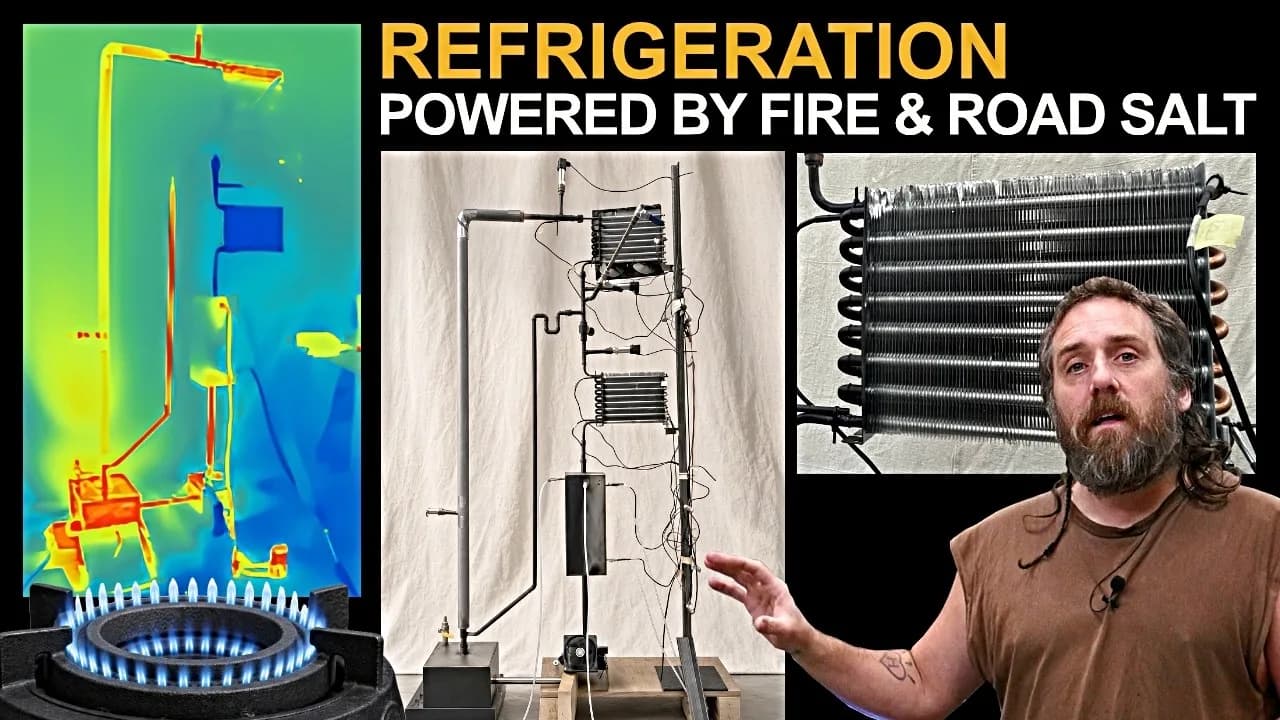
A fire is usually the last thing you would reach for when trying to keep something cold. But a new DIY refrigeration system built by Greenhill Forge flips that logic on its head, using heat, water, and road salt to cool without a conventional electric compressor.
The experimental setup, shown in a YouTube video, cooled the section to around 5°C (41°F) while the surroundings were about 16°C (61°F). That is a substantial temperature drop for a system powered mainly by a fire, although it is still a prototype rather than a proven replacement for a household refrigerator.
The project explores an old engineering idea with a potential modern use. Refrigeration that can operate in places where electricity is scarce or unreliable.
How fire and salt produce cooling
The system uses a technique called absorption refrigeration, a process that has been around for more than a century. Instead of relying on an electrically driven compressor to circulate refrigerant, it uses heat to drive a chemical process that enables cooling.
Greenhill Forge’s design has two main sections: a generator and an absorber. The generator contains a calcium chloride solution and distilled water. When a fire heats the mixture, water vapor separates from the solution and travels through a pipe to a condenser, where it cools and returns to liquid form.
The liquid water then passes through a small adjustable valve into an evaporator operating under a strong vacuum. At the system’s very low pressure, about six millibars, water can evaporate at temperatures far below its usual boiling point. That evaporation absorbs heat from the surrounding area, creating the cooling effect.
But there is a catch. As water vapor accumulates, the pressure would rise and eventually limit further evaporation. To prevent this, the system sprays concentrated calcium chloride solution into the absorber. The solution absorbs the vapor, helping maintain the low pressure needed for cooling. In effect, the fire supplies the heat that drives the cycle, while the salt solution helps sustain the conditions that allow water to evaporate at low temperatures.
An Arduino keeps watch over the system
The device is also a substantial metalworking project. Greenhill Forge fabricated much of it from stainless-steel sheet metal and tubing, welded the enclosures, and silver-brazed smaller pipe connections. The builder formed the cooling coil by filling a tube with water, freezing it, and bending it around the frozen core to prevent the tube from collapsing.
Before filling the system, the builder tested it for leaks and evacuated it with a vacuum pump. Maintaining the vacuum is crucial because even small leaks can interfere with the low-pressure evaporation process.
An Arduino-based controller monitors temperatures and pressures, adjusts pump speeds, and triggers safety alarms. The setup still needs electricity for its circulation pumps and cooling fans. The pumps alone consume about 30–50 watts.
That means the refrigerator is not entirely electricity-free. However, a small solar panel or battery could potentially supply its modest electrical needs while a fire provides most of the thermal energy.
Could fire-powered refrigeration work off-grid?
The first test results are promising, but the temperature figures need context. The system reached about 5°C (41°F) with an ambient temperature near 16°C (61°F), according to Hackaday’s report. That demonstrates a cooling effect, but it doesn’t show how well the prototype would perform in hotter conditions, how much food it could keep cold, or how consistently it could maintain safe storage temperatures.
The technology itself is not new. People have long used absorption refrigerators in settings where conventional electrical compressors are impractical. Greenhill Forge’s project instead explores a DIY implementation using accessible materials and a heat source such as firewood.
With further development, similar systems could be useful in remote workshops, cabins, or other locations where fuel is easier to obtain than reliable grid power.
Related articles