“What happened to my journalism?”: G. Zoljargal calls for a clean-up as Mongolia’s media-contract row deepens
As a row over state media contracts and claims of “blackmail journalism” grips Mongolia, veteran journalist and documentary producer G. Zoljargal says the profession needs a clean-up and points to ethics, pay and journalism education.
This story was prepared automatically by software.
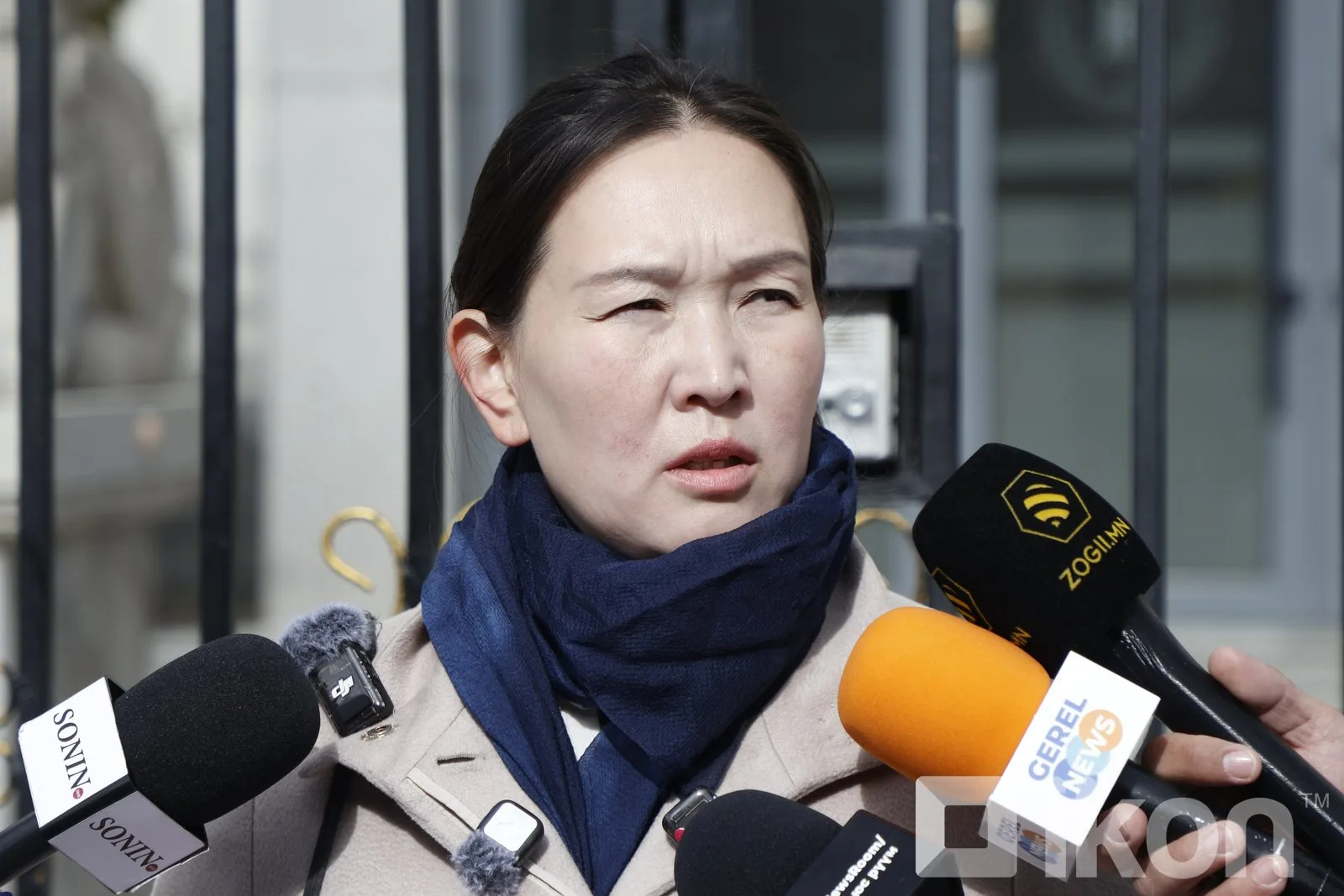
A row over the money Mongolian government bodies pay news outlets has turned into a wider reckoning for the country’s journalism this week. After activist G. Uyanga demanded that police and anti-corruption investigators look into the assets of several website owners and journalists, social media filled with lists of outlets said to receive state money and with the phrase “blackmail journalism” (shantaazhny setguul zui). On Facebook, pages such as one called “State-Funded Press” (Töröös sankhüüzhdeg khevlel) have been sharing names and figures.
Into that debate stepped G. Zoljargal, a journalist and documentary producer who holds the title of Honored Cultural Worker and is known for 72 Hours, a documentary on the March 1990 hunger strike (MNB). In a column titled “What happened to my journalism?”, he writes that “this sector needs a clean-up.” He argues that ethics, pay and how journalists are trained are at the root of the problem.
“A profession with a century of honor”
Zoljargal starts with the generations who built Mongolian journalism. “Hundreds of outstanding people such as Lodongiin Tüdev, Bazaryn Tsedendamba, Khorloogiin Tsevlee and Tserendorjiin Baldorj laid this profession’s golden path,” he writes. He laments that the profession’s reputation has now been badly tarnished.
He credits the activist for forcing the issue: “Had the honest woman Khatigin Uyanga not spoken out like this, we would have simply carried on as we were.” His central question is how to “separate our precious journalism from dirty politicians.”
Doctors, journalists and greed
Zoljargal is blunt about money. “There is no one who dislikes money. But in this world there are professions in which one must not be greedy for it. First the doctor bound by a sacred oath, and second the journalist with a pure heart, are they not?” Poverty can push people toward wrongdoing, he says, but those who could not restrain their greed and never learned to serve a higher purpose “have taken a dark path.” “Everyone needs money. What should set people apart is how they earn it.”
A journalist’s finest quality, he writes, is ethics “as clear as a mirror.” He criticizes media personalities who hid their true nature behind a pen and a microphone, became public idols and set young people a poor example.
Audit the outlets, invest in students
His most concrete proposal is scrutiny. He calls for checks on journalists and media organizations that received large sums, tenders and projects without producing anything of substance, saying such outlets “keep poisoning society.” He does not name anyone.
But he wants the main effort to go elsewhere. “Rather than wrangling with journalists whose morals have broken down, let us focus on the young people who are studying now. They are our future,” he writes. He calls for special attention to how journalism students are trained and shaped as people. He also attacks profit-driven private colleges that, he says, have damaged many young people “in the name of teaching.” His message to newsrooms is to pay close attention to editorial policy and skills.
“Worst of all is journalists’ pay”
Zoljargal also looks at the economics. Compared with trade or mining, he writes, journalists and creative staff earn the least. “If we do not think hard about their pay system, bad people will keep being captured by bad politicians and become society’s brainwashers!” Huge income gaps, he argues, have left journalists poor and drawn some toward whoever has money. He ends with a question: society has devalued the work of journalists, teachers and doctors. “What now?”
The wider debate: what is documented
The audit figures. Uchirtai.mn reported on August 24, 2026, citing a National Audit Office study, that state bodies signed MNT 24.2 billion in contracts with media organizations in 2025. The study covered 411 organizations under five budget governors. The Cabinet Secretariat and its 15 agencies (MNT 3.3 billion) and the Speaker of Parliament (MNT 2.06 billion) topped the list. The Capital City Governor’s office transferred MNT 2.76 billion through its procurement plan and another MNT 1.8 billion outside it. The audit office found that planning and reporting of such contracts was “incompletely implemented” and warned that concentrating this spending in a few budget holders raises the risk to public funds. Read our earlier report.
Separately, ikon.mn reported in June that the Mongolian Youth Alliance NGO had told a budget hearing the capital signed 306 media contracts worth about MNT 3 billion in 2024–2025.
Uyanga’s demands. G. Uyanga coordinates the “Protect the Tuul” movement (polit.mn). On October 14 she spoke outside the Anti-Corruption Agency (ACAA) about the real estate of the owners of two news sites and said she would pass her information to the National Police Agency (ikon.mn). The next day, again at the ACAA entrance, she demanded that former Ulaanbaatar mayor Kh. Nyambaatar be sought through Interpol and brought back for questioning, as egov.mn reported. In a clip posted by NewsPress she said some media figures were “living off our tax money in the name of journalism.” She told Newswire.mn: “Spreading false information, harming citizens and then acquiring land and property with tax money is not journalism.”
No court or law-enforcement body has upheld Uyanga’s allegations. Polit.mn noted that one of the journalists she named says her assets were earned legally. It also noted that property records or the timing of land allocations do not by themselves prove wrongdoing and must be checked by the competent authorities. Uyanga herself is the subject of a violation case linked to an incident at a book fair, iSee.mn and MPress reported. The international monitor CIVICUS has described legal action against her by Nyambaatar and other officials as a SLAPP, a lawsuit meant to silence public participation.
Lists on social media. Pages and users circulating lists of outlets said to hold state contracts are also calling for a ban on “closure contracts,” deals that allegedly buy an outlet’s silence. egov.mn has not independently verified these lists and is not naming any outlet or journalist on the basis of them. A state contract is not in itself illegal or unethical. The real questions are whether it was awarded openly, whether the work was reported, and whether it compromised editorial independence.
Other voices. Journalists are divided. A Graph Media journalist argued on X that contracted outlets did paid work for the state, while acknowledging that some 2025 contracts need scrutiny. Önöödör columnist O. Bat-Undrakh, in remarks shared by Mojo TV, stressed that many honest, ethical and skilled journalists work in the field. Former culture minister Ts. Oyungerel recalled on X that as a minister she repeatedly received offers of “cooperation” contracts, sometimes paired with a promise “not to criticize you.”
The law and proposals. Mongolia’s 1998 Law on Media Freedom says the state “shall not impose control (censorship) over the content of public information,” but it does not specifically regulate state contracts with outlets. Closure contracts are currently banned only during election campaigns, under the election law (ikon.mn, 2021). MP Ch. Lodoisambuu said on October 16 that during debate on the 2027 budget he will propose cutting all media, information and publicity spending. “There is no such thing as a free press with a state cooperation contract,” he said, adding that draft laws to end such arrangements are ready (iSee.mn).
Professional bodies. L. Ninjjamts, president of the Confederation of Mongolian Journalists, said the group will hold a “Thousand Journalists Forum” on October 30. It will discuss professional ethics and newsrooms’ social responsibility and issue a declaration urging strict adherence to ethical rules (reelnews.mn). The confederation earlier protested the detention of Dens.mn editor T. Shinebayar, whom a court released under restrictions on October 16 (details). The Media Council’s Ethics Committee has handled 679 complaints since it was set up, as of October 5, 2026 (mediacouncil.mn). At the time of writing, we found no official statement on the current contract dispute from the Media Council, the ACAA or the government.
Editor’s note
Zoljargal’s column is valuable because it looks at the system rather than at individuals. Four things would make this debate productive:
- Transparency. Every state body should publish its media contracts, including amount, contractor and deliverables. That would replace rumor-driven lists with records. Fixing the planning and reporting gaps the audit office identified is the obvious first step.
- Clear rules. Public-interest information campaigns should be separated from political PR. Lawmakers should decide whether closure contracts should be banned at all times, not just during elections.
- Pay and independence. Zoljargal’s warning that low pay makes journalists vulnerable deserves attention. Newsrooms that are open about pay structures and editorial policy will earn back trust.
- Ethics and education. Allegations belong before courts, investigators and the Media Council’s Ethics Committee, not a social-media tribunal. That protects honest journalists. Investing in journalism education and ethics training is the long-term fix.
Source: Column by journalist and documentary producer G. Zoljargal. Additional reporting from Uchirtai.mn (National Audit Office study), ikon.mn, polit.mn, Newswire.mn, iSee.mn, MPress, reelnews.mn, mediacouncil.mn, MNB and CIVICUS Monitor. Allegations mentioned have not been established in court and do not represent the views of egov.mn.
Related articles