
What Northrop Grumman’s F/A-XX concept reveals about the Navy’s future carrier fighter
An aircraft carrier gives a fighter a moving runway, but it also limits the space...
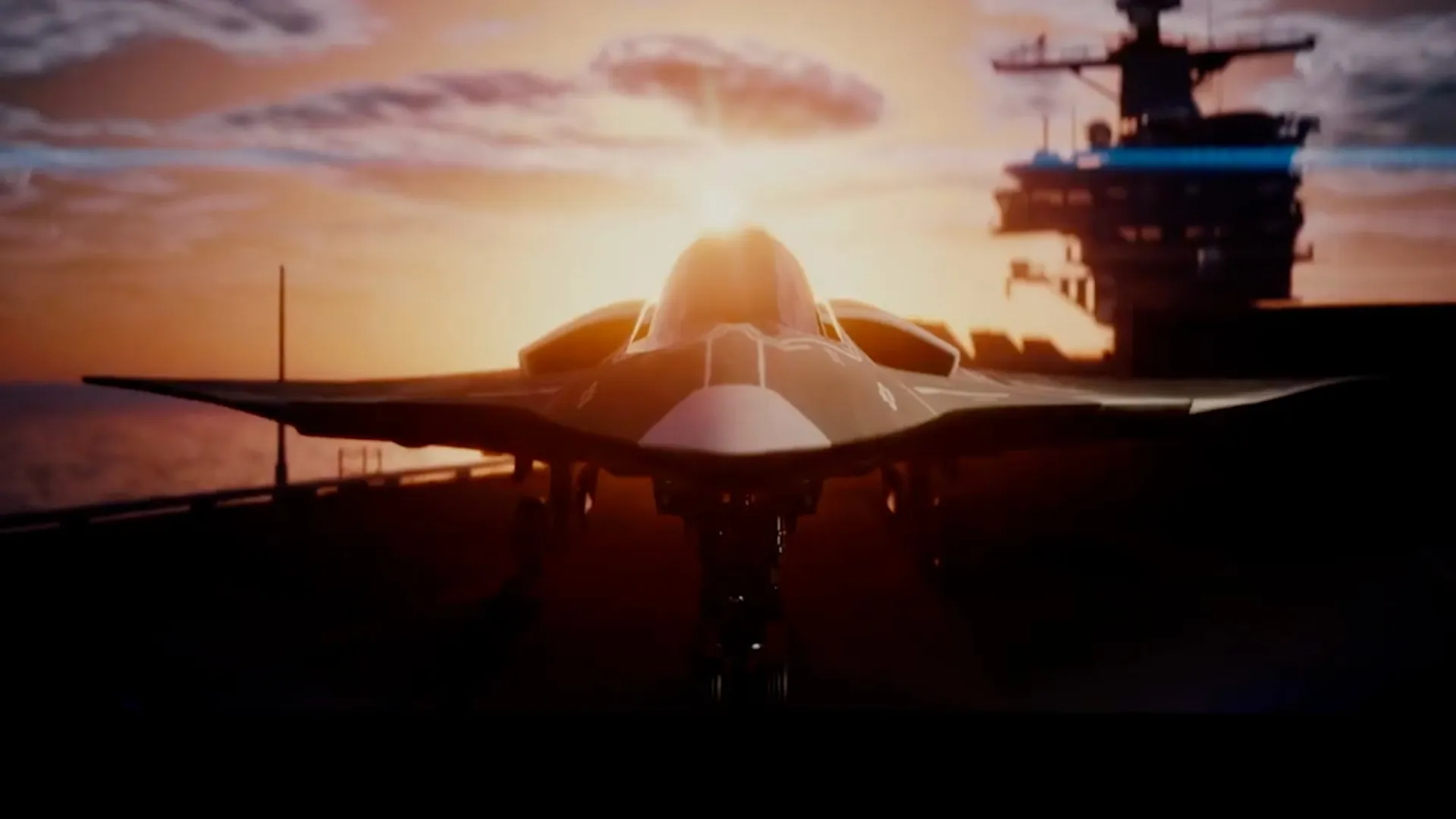
An aircraft carrier gives a fighter a moving runway, but it also limits the space available for fuel, weapons, and storage. The U.S. Navy’s next fighter must work within those limits while flying farther and operating against more capable defenses than today’s carrier aircraft.
Northrop Grumman has offered a glimpse of one possible answer through an F/A-XX rendering and a short video released in April 2026.
They show a tailless aircraft with high-mounted air intakes and folding wings, although the company has not said how closely the imagery matches the design it submitted to the Navy.
Why does the concept have no tail?
Viewed from the front, Northrop’s aircraft has a broad nose and wings that blend into the body without the vertical stabilizers found on most fighters. Removing those surfaces can reduce potential radar reflections, helping explain why a tailless shape appeals to designers of stealth aircraft.
The concept also places its recessed air intakes high on either side of the aircraft. That position could help shield parts of the intake and engine from observers below, but the images cannot establish the jet’s actual radar or infrared detectability.
Its wide nose and the pronounced lines running back from it recall Northrop’s YF-23 fighter prototype.
That family resemblance describes what the concept looks like; it does not confirm that the two aircraft share components, performance, or a design lineage beyond their manufacturer.
How would it work at sea?
Stealth is only part of the challenge because F/A-XX must launch from and land on an aircraft carrier.
Northrop’s video shows the concept with folded wings, a practical feature that would reduce the space it occupies when parked among other aircraft on the flight deck or in the hangar.
An earlier rendering places the fighter on a carrier deck awaiting a catapult launch. The artwork signals its intended role, but it is insufficient to verify claims about the finished aircraft’s nose gear, launch bar, or other structural details.
Carrier operations also put pressure on the aircraft’s size: it needs room for fuel and weapons without becoming impractical to handle aboard a ship.
The concept offers no confirmed dimensions, engine specifications or payload figures, so those trade-offs cannot yet be assessed from its appearance.
What would the fighter do?
The Navy intends F/A-XX to replace the F/A-18E/F Super Hornet and EA-18G Growler, bringing improved range, speed and sensors to the carrier air wing. It also expects the aircraft to work with autonomous drones that could extend the force’s combat and electronic warfare capabilities.
Those goals help explain the interest in a stealthy fighter able to operate farther from its carrier. They do not, however, confirm the frequently repeated claim that Northrop’s aircraft has an unrefueled combat range exceeding 1,000 nautical miles.
Likewise, cooperating with drones is different from flying without a pilot. Neither the Navy’s public plan nor Northrop’s concept imagery establishes that this F/A-XX design would be optionally piloted or equipped with a particular “smart skin” sensor system.
What happens next?
Northrop Grumman’s imagery presents a plausible direction for a future carrier fighter: a low-observable shape adapted for life at sea and missions beyond the reach of today’s air wing.
It remains a concept from one contender, with Boeing also competing for the Navy’s development contract as of the latest public reporting checked here.
The final aircraft may keep some of these features, change them substantially or take a different shape altogether. Until the Navy selects a design and releases more details, Northrop’s video is best understood as a look at what F/A-XX could become.
Source: https://interestingengineering.com/military/northrop-grummans-f-a-xx-fighter-concept
Related articles
Wind turbines reduce radar coverage by 7% and increase blind spots by 15%, study finds
A new Chinese study has found that offshore wind turbines can confuse shore-based radar systems....

Tesla close to making 1,000 Optimus humanoids a week, but robots struggle with tasks
Tesla has reported that it is now in a position to produce hundreds of its...

These Data Centers Could Use More Power Than Major Cities
Meta is building a data center in Louisiana which at full power could consume nearly as much energy as New York City.

Ranked: Countries Importing the Most Military Drones
Ukraine and Russia received more than 91% of the 16,822 large military drones traded internationally from 2022 to 2025.

Can an ‘eSUV’ e-bike really go from trail to town?
Have you ever wanted an electric bike that easily transitions from the drudgery of urban asphalt to adventures in gravel and dirt?

Commercially viable fusion energy that delivers limitless clean power could be closer to reality
A British company has demonstrated the key fuel compression principle underpinning FLARE, its proprietary approach...