
Where Work-Life Balance Is Best and Worst in the U.S.
Maine ranks first for work-life balance, while nine of the 10 lowest-ranked states are in the South. See how all 50 states compare.
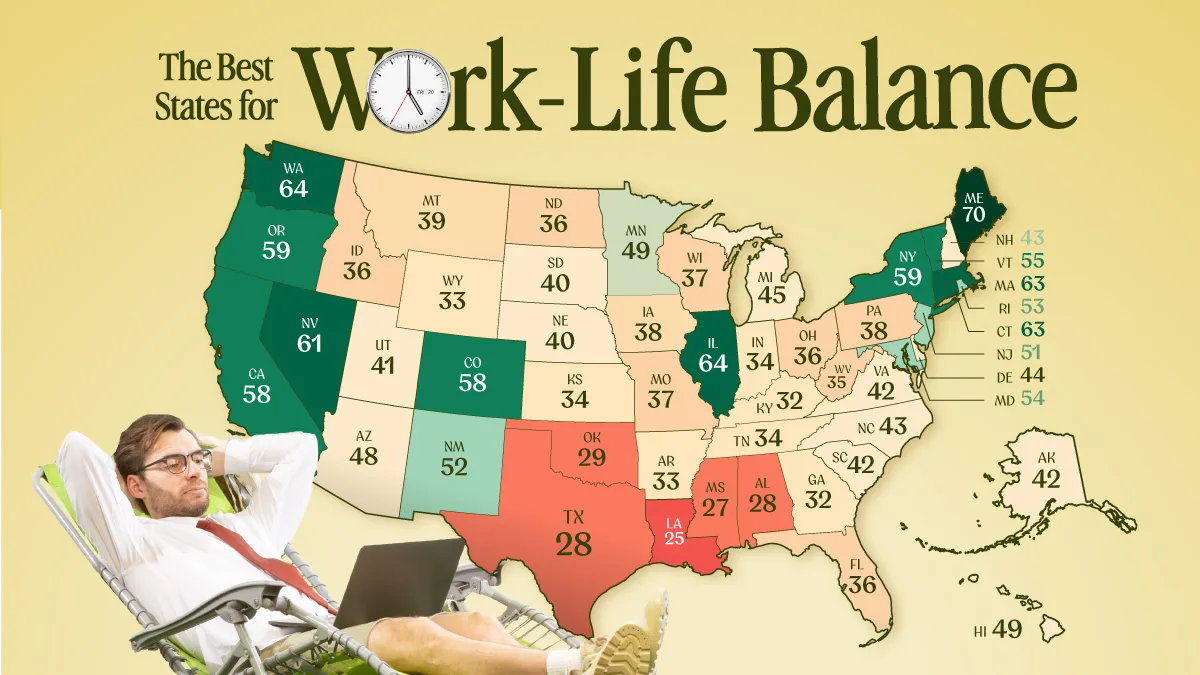
How Work-Life Balance Varies Across the U.S.
Key Takeaways
Maine ranks first for work-life balance at 69.62, followed by Washington at 64.26 and Illinois at 63.65.
Nine of the 10 lowest-scoring states are in the South.
Alaska has the shortest workweek in the dataset but ranks just 23rd overall, showing that working hours are only part of the picture.
Where Americans live can shape how much they earn, how much time they spend working, and the protections available when they need time away from work.
This map compares all 50 states using Remote’s 2025 Life-Work Balance Index, which considers factors including average working hours, happiness, inclusivity, minimum wages, statutory leave, and public safety.
Which States Score Highest for Work-Life Balance?
Maine leads the country with a work-life balance score of 69.62, followed by Washington at 64.26 and Illinois at 63.65. Connecticut and Massachusetts round out the top five.
Across all 50 states, the average work-life balance score is 43.81 out of 100.
RankStateScore (0–100)
1Maine69.62
2Washington64.26
3Illinois63.65
4Connecticut63.07
5Massachusetts62.58
6Nevada61.37
7New York59.46
8Oregon59.06
9California58.37
10Colorado58.26
11Vermont55.00
12Maryland54.09
13Rhode Island52.84
14New Mexico51.68
15New Jersey51.07
16Hawaii49.03
17Minnesota48.63
18Arizona48.33
19Michigan44.80
20Delaware43.68
21New Hampshire43.16
22North Carolina42.63
23Alaska42.10
24South Carolina42.08
25Virginia41.59
26Utah41.36
27South Dakota40.49
28Nebraska40.41
29Montana38.56
30Pennsylvania38.36
31Iowa37.66
32Wisconsin37.43
33Missouri37.21
34Idaho36.36
35North Dakota36.00
36Ohio35.56
36Florida35.56
38West Virginia34.91
39Indiana34.42
40Kansas34.41
41Tennessee34.27
42Arkansas33.37
43Wyoming32.71
44Kentucky32.17
45Georgia31.99
46Oklahoma28.80
47Texas28.28
48Alabama27.88
49Mississippi27.08
50Louisiana25.01
-- U.S. State Average43.81
The highest scores are concentrated in the Northeast and West. Eight of the top 10 states come from those two regions, with Illinois and Nevada the exceptions.
Maine’s top ranking is supported by a broad mix of factors rather than one standout measure. The state provides five statutory annual leave days and five sick days, alongside a $14.15 minimum wage. Its 39.2-hour average workweek is also shorter than in many best-ranked states.
New York ranks seventh and California ninth, both well above average. Both offer paid maternity leave and five sick days, while minimum wages stand at $15.50 in New York and $16 in California. In both cases, stronger worker protections help offset relatively long working hours.
The South Dominates the Bottom of the Ranking
At the other end of the ranking, the geographic pattern is striking. Nine of the 10 lowest-ranked states are in the South, with Wyoming the only exception.
Louisiana ranks last at 25.01, followed by Mississippi at 27.08. Alabama and Texas also sit near the bottom, scoring 27.88 and 28.28, respectively.
Several factors help explain the divide. Many Southern states combine comparatively low wage floors and limited state-mandated paid leave with longer working hours.
Louisiana has the longest average workweek at 44.3 hours, while Texas averages 43.5 hours, among the highest in the country.
Work-Life Balance Is About More Than Working Hours
Alaska offers the clearest example of why fewer working hours do not automatically translate into a higher ranking. Despite having the shortest average workweek in the dataset at 27.7 hours, Alaska ranks just 23rd overall. New Hampshire averages 36.9 hours but ranks 21st.
That matters in a country where Americans work around 1,800 hours per year on average, more than workers in many other advanced economies.
But time on the job is only one part of the equation. Where workers live can also affect the wages, paid leave, safety, and other protections that shape quality of life outside of work.
Learn More on the Voronoi App
To learn more about this topic, check out this graphic on the best countries for work-life balance.
Related articles
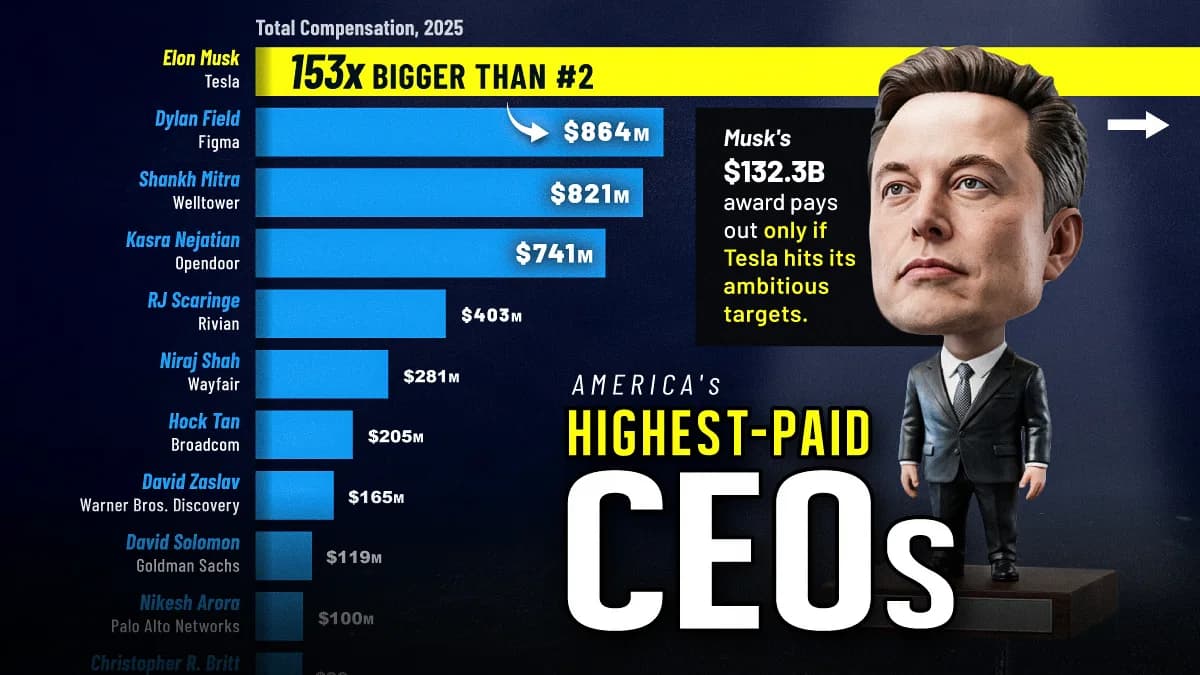
Ranked: America’s Highest-Paid CEOs in 2025
See America's highest-paid CEOs in 2025, led by Elon Musk's record $132.3 billion compensation package.