
World’s first FDA-cleared self-balancing personal exoskeleton launched, offers hands-free upright mobility
A Paris-based company has announced the U.S. commercial launch of Eve, the world’s first FDA-cleared...
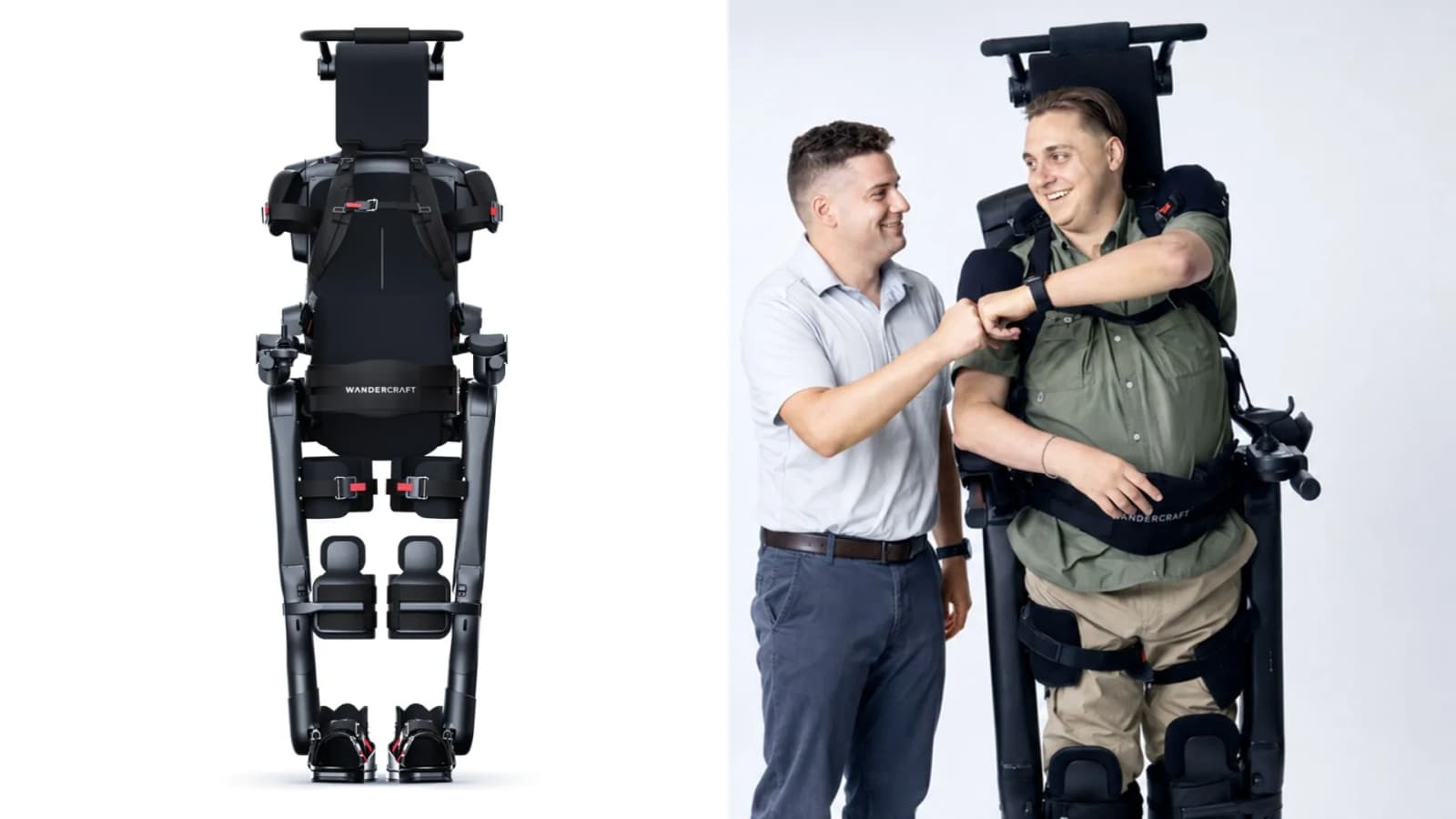
A Paris-based company has announced the U.S. commercial launch of Eve, the world’s first FDA-cleared self-balancing personal exoskeleton.
The system makes hands-free upright mobility available to eligible wheelchair users living with spinal cord injuries at any level, who can manually operate the device’s controller.
Exoskeleton uses self-balancing technology powered by physical AI
“FDA clearance showed that Eve was ready to move forward. Today is about making it a reality for the people we built it for,” said Matthieu Masselin, co-founder and CEO of Wandercraft.
“We have spent years developing the robotics, but our breakthroughs only matter when we’re able to better connect people to the world around them. That’s why we built an infrastructure that supports people every step of the way, from evaluation and fitting to reimbursement, training, and ongoing service.”
The company revealed that the Eve uses self-balancing technology powered by physical AI, allowing users to stand and move upright while keeping their hands free to reach, carry objects, prepare food, open doors, and participate in other activities of daily living. Eve is designed to complement, not replace, a wheelchair, offering another mobility option for moments when users choose to be upright.
“With Eve, being upright isn’t just about standing. It’s about having the freedom to use my hands, move through my home, and connect with people in a new way,” said Caroline Laubach, a Wandercraft test pilot. “Those everyday moments bring me so much joy. What makes this milestone especially meaningful is knowing that more people will now have the chance to experience Eve for themselves and find that same joy in their own way.”
Eve is the first FDA-cleared device in this category
Eve is the first FDA-cleared device in this category without restrictions based on the neurological level of spinal cord injury. Instead, eligibility extends to adults with spinal cord injuries at any level who can safely operate the controller and have no contraindications listed in the User Manual. This significantly expands the potential user population compared with previously cleared exoskeletons and reflects the breadth of the safety data, clinical evidence, and usability testing Wandercraft developed to support its FDA submission, according to a press release.
Eve maintains its balance without crutches or a walker, leaving users’ hands free for everyday activities. After receiving a prescription from a provider, Eve is custom-fit and manufactured for each individual user.
Wandercraft’s dedicated access team helps users, their care teams navigate benefits
Wandercraft’s dedicated access team helps users and their care teams navigate benefits, documentation, reimbursement, financing, and coordination with clinicians and payers. For individuals who meet eligibility and medical necessity requirements, Medicare covers qualifying personal exoskeletons as custom-fitted orthoses under HCPCS billing code K1007, subject to individual coverage requirements, as per the release.
Source: https://interestingengineering.com/innovation/self-balancing-personal-exoskeleton-launched
Related articles

Chinese researchers find link between prenatal rare earth exposure and low birthweight
A study of nearly 4,900 pregnant women in China has found an association between prenatal...
World’s first zero-degradation elastocaloric cooling device maintains 1 million operational cycles
Researchers from the Hong Kong University of Science and Technology (HKUST) have unveiled the world’s...
Beijing to Shanghai in 30 minutes: China ready to test its Supersonic TMS-10 plane
China is moving its next-gen supersonic passenger aircraft research into a more demanding phase, with...

MARTAC expands US drone boat production with 100 more Devil Rays per year
MARTAC partners with SŌLACE Boats to increase production of its Devil Ray autonomous vessels by...

Why promising battery materials break down when researchers build real cells
A battery material can look impressive in a laboratory and still fail when turned into...

China showcases Type 99B tank in live-fire drills after 2025 parade debut
China has released footage of live-fire drills of its Type 99B main battle tank roughly...