
World’s first zero-degradation elastocaloric cooling device maintains 1 million operational cycles
Researchers from the Hong Kong University of Science and Technology (HKUST) have unveiled the world’s...
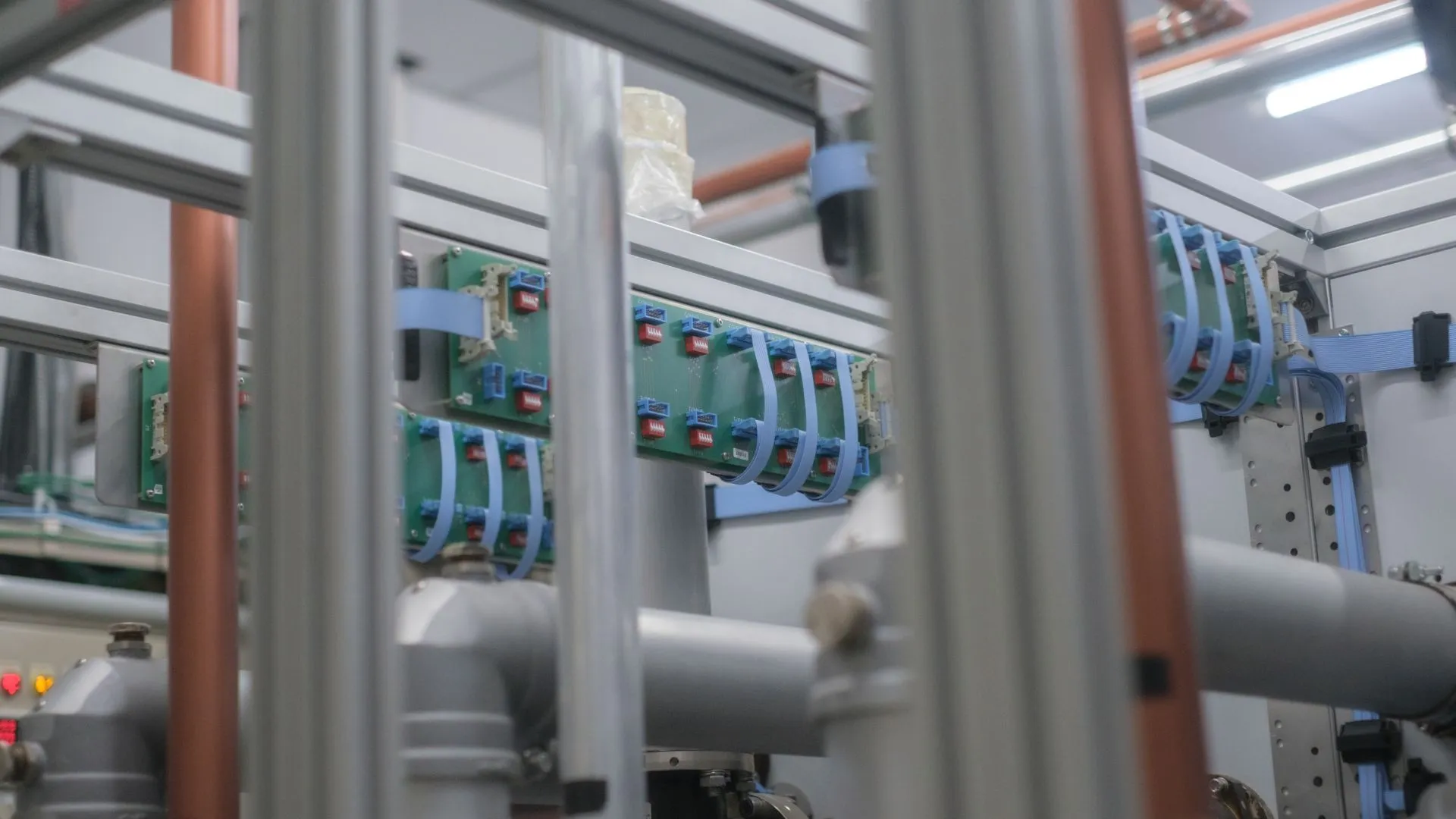
Researchers from the Hong Kong University of Science and Technology (HKUST) have unveiled the world’s first zero-degradation elastocaloric cooling device. The team claims that their innovation delivers durable and green cooling, maintaining its stable performance even over a stunning one million operational cycles.
Powered by a fatigue-resistant, solid-state refrigerant, the innovation is expected to usher in highly efficient eco-friendly cooling, driving progress towards sustainable global development.
Promising green alternative to traditional refrigeration
Researchers highlighted that elastocaloric cooling, which is based on the reversible stress-induced phase transformation of shape memory alloys (SMAs), offers a promising green alternative to traditional refrigeration. Despite its great potential, commercialization has been impeded by performance degradation and low reliability. The prevalent use of commercial NiTi SMA as the refrigerant in most existing elastocaloric cooling devices is a key challenge. This material is prone to functional fatigue, causing its cooling power to decline over extended use.
The team developed a fatigue-resistant SMA and integrated it into an innovative refrigerant structure. By combining advanced SMA materials with device-level design and engineering, they have successfully addressed the critical issues of material functional fatigue and structural reliability. The breakthrough has resulted in a zero-degradation elastocaloric cooling device capable of maintaining stable cooling performance over long-term operation, according to a press release.
Constant cooling power of 400W
Utilizing this novel material and device design, the research team constructed a novel elastocaloric cooling device integrated with multiple refrigerant units. This device achieved a constant cooling power of 400W and maintained a constant temperature span of 41K (a temperature difference of 41°C) over one million operation cycles without degradation. Accelerated fatigue testing of the TiNiCuCo refrigerant also showed no functional degradation after 100 million cycles. Under real-world cooling conditions, the refrigerant is expected to operate reliably for more than a decade, as per the release.
“While significant progress has been made in cooling performance over the past decade, long-term cooling stability is crucial for practical deployment. By integrating advanced shape memory alloy materials with innovative device engineering, we have tackled this key challenge,” said Prof. SUN Qingping, Chair Professor in the Department of Mechanical and Aerospace Engineering at HKUST, and corresponding author of the paper.
“This breakthrough in cooling stability, achieved at both the material and device levels, brings the technology one step closer to real-world applications beyond laboratory demonstrations. We are currently developing an air-conditioner based on this technology. Moving forward, we aim to further enhance energy efficiency, power density, and cost competitiveness of elastocaloric refrigeration systems to accelerate their market adoption as a sustainable cooling solution.”
Previous research has demonstrated increasingly powerful elastocaloric cooling systems, including a kilowatt-scale device developed by HKUST researchers in 2025. That earlier system achieved 1,284 watts of cooling power and demonstrated the potential of elastocaloric technology for air-conditioning applications.
The latest development addresses a different part of the commercialization challenge: how to keep such systems working consistently over very long periods.
HKUST’s latest research addresses one of the technology’s central weaknesses, which is durability. By combining a fatigue-resistant TiNiCuCo alloy with a redesigned refrigerant structure and a more compact system architecture, the researchers have demonstrated that elastocaloric cooling can maintain stable performance through extremely large numbers of cycles.
Related articles

Beijing to Shanghai in 30 minutes: China ready to test its Supersonic TMS-10 plane
China is moving its next-gen supersonic passenger aircraft research into a more demanding phase, with...

MARTAC expands US drone boat production with 100 more Devil Rays per year
MARTAC partners with SŌLACE Boats to increase production of its Devil Ray autonomous vessels by...
Why promising battery materials break down when researchers build real cells
A battery material can look impressive in a laboratory and still fail when turned into...

China showcases Type 99B tank in live-fire drills after 2025 parade debut
China has released footage of live-fire drills of its Type 99B main battle tank roughly...
Sentinel ICBM explained: Inside America’s next-generation nuclear missile
For more than five decades, the U.S. land-based nuclear deterrent has relied on the LGM-30...
Raytron brings AI understanding to thermal imaging with new infrared vision-language model
Thermal imaging is moving beyond simply capturing heat signatures. At CIOE 2026, Raytron unveiled an...