
World’s largest diesel reactor could turn fuel into hydrogen for army vehicles, camps
Scientists have built a diesel reformer for what they describe as the world’s largest reformer-fuel...
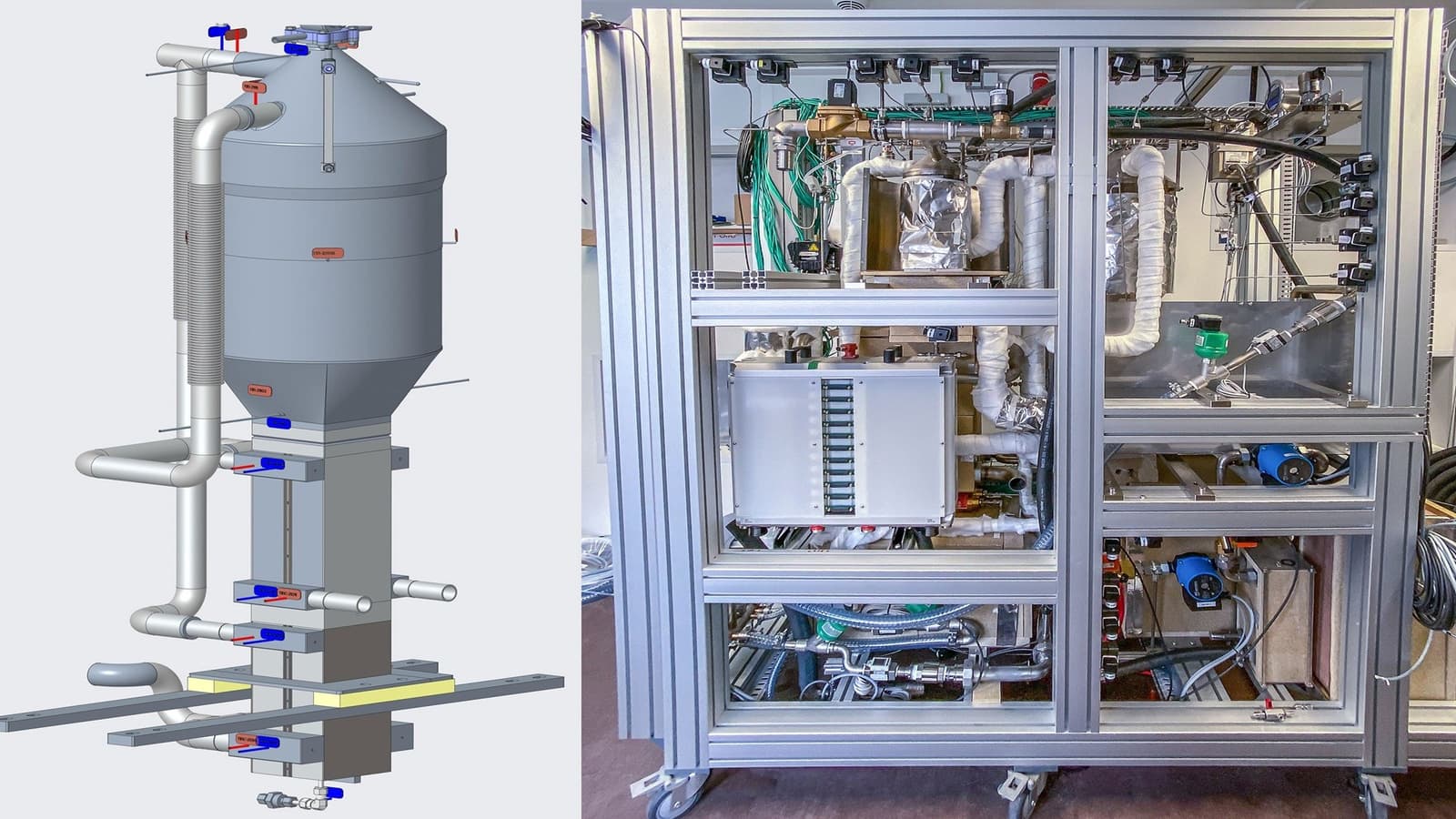
Scientists have built a diesel reformer for what they describe as the world’s largest reformer-fuel cell system, which can turn fuel into hydrogen-rich gas to generate 25 kilowatts (kW) of electricity for ships.
The technology was created by the Fraunhofer Institute for Microengineering and Microsystems (IMM) in Mainz, Germany. Funded by Germany’s Central Innovation Program for SMEs (ZIM), it is part of the DIMARIT research project, which focuses on fuel cell power generation for maritime applications.
The system could allow ships to generate electricity without the need for separate hydrogen storage tanks. The team plans to exhibit the reformer at the Hydrogen Technology World Expo in Hamburg from October 20 to 22, 2026.
According to the team, the technology could also be useful for military operations because it produces less noise and heat. “The reformer converts the onboard fuel into a gas that, after further processing, supplies the fuel cell,” the researcher said.
A new way to power ships
Hydrogen fuel cells generate electricity through an electrochemical reaction that combines hydrogen and oxygen without combustion. Unlike conventional engines, they generate electricity without burning fuel.
However, supplying them with hydrogen can be difficult, particularly aboard ships where space is limited. What’s more, hydrogen requires dedicated storage tanks, which take up valuable space and add complexity to onboard power systems.
CAD rendering of the diesel reformer and the complete system. Credit: Fraunhofer IMM
The team’s reformer solves this problem by converting diesel stored onboard into hydrogen-rich gas. The gas then undergoes further processing before it can be used by the fuel cell. As a result, the fuel cell can generate power without storing hydrogen separately.
During the project, the team examined how the different stages of the conversion process work together. The research also explored ways to manage the heat and ensure the system’s components work reliably under changing conditions.
Additionally, they are assessing the possibility of using synthetic diesel fuels in the reformer. This means the system could eventually run on both conventional diesel and suitable synthetic fuels.
Military applications
Fraunhofer IMM suggests the technology could have applications in the military sector, as military equipment often requires reliable electricity in locations where access to conventional power infrastructure is limited.
While traditional diesel generators produce considerable noise and heat, making military positions easier to detect, the new diesel reformer-fuel cell system could offer a quieter alternative. That’s because it has fewer large moving parts, which could significantly reduce noise and heat emissions.
“Compared with engine-driven diesel generators, the system requires fewer large moving parts and can reduce acoustic and thermal signatures,” the research team elaborated in a press release. “Potential applications include supplying power to command and surveillance vehicles or field camps.”
Fuel availability and equipment weight are also key for military use. Since diesel is already widely used by the military, converting it into hydrogen-rich gas could offer several advantages. “In addition to fuel availability, low noise emissions, low heat output, and low weight are crucial there,” the team concluded.
At the expo, Fraunhofer IMM will present the technology alongside its methanol reformer, hydrogen production technologies using ammonia, as well as carbon dioxide methanation technology.
Source: https://interestingengineering.com/energy/worlds-largest-diesel-hydrogen-reactor-powers-ships
Related articles
Microsoft’s new Maia 300 packs 96 chips into one 167-kW rack with 40% token efficiency
Microsoft plans to break free from NVIDIA and deploy its next-generation Maia 300 AI accelerator...

Elon Musk has donated over $276 million to Republican midterm efforts
Elon Musk has handed out at least $276 million to Republican groups since July, The New York Times reports, making him both the party's top known donor and the biggest established midterm donor.

Meta has some Wonder Full new AI models
Meta is making up for lost time in the AI race.

The Yandex outage probably didn’t blitz Russian bots
Multiple Ukrainian drone strikes over the last week have taken Russian data centers offline and reportedly caused online bot traffic to plummet - but in reality it's probably not the kind of bot…

China’s tote-moving wheeled humanoid, 110-pound robot arm target factory automation
Chinese robotics firm JAKA has unveiled two new industrial robots at the 26th China International...

Mechanism’s first Switch 2 case is as awesome as I hoped it would be
Most companies have slowed down releasing new Switch 2 cases, but one of my favorite accessory makers recently debuted its first, after a few delays.