
NASA and DOE sign agreement to develop nuclear power and propulsion for space
Deep-space exploration is trading chemical rockets for nuclear fission. To expand human presence beyond Earth,...
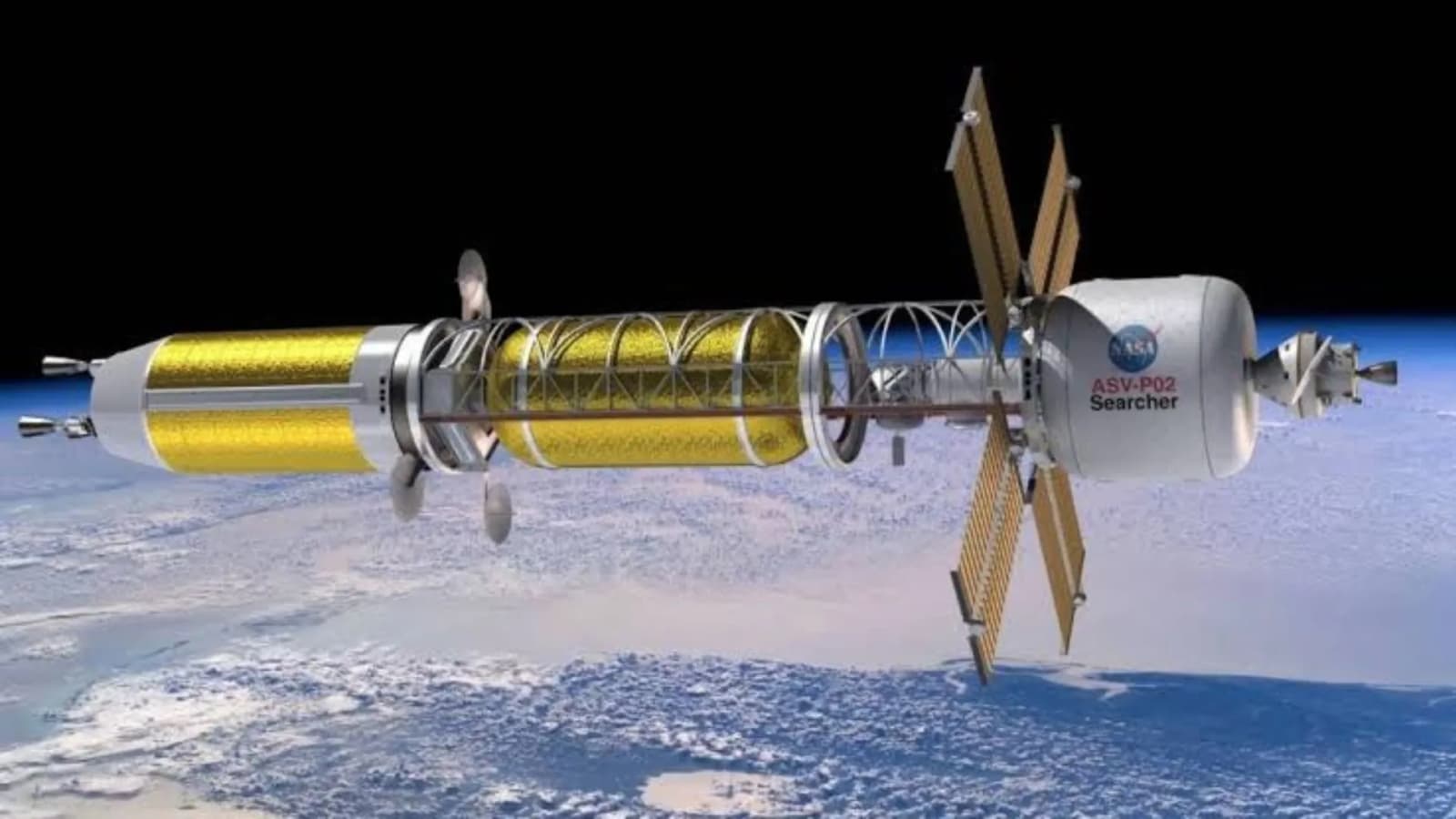
Deep-space exploration is trading chemical rockets for nuclear fission. To expand human presence beyond Earth, NASA and the U.S. Department of Energy (DOE) have signed a comprehensive agreement to build, test, and deploy next-generation space nuclear reactors.
The strategic pact establishes an end-to-end framework covering nuclear fuel production, advanced research, launch integration, and operational safety.
NASA Administrator Jared Isaacman and U.S. Energy Secretary Chris Wright signed the deal at the Science: A Golden Age Summit in Washington, formalizing a shared effort to secure American leadership in deep-space exploration.
“We are entering the ‘Nuclear NASA-era,’ which represents a major transformation for space exploration,” said NASA Administrator Jared Isaacman. “Nuclear power will allow us to go farther, operate longer, and field more capable spacecraft and instruments than ever before. The work we’re doing today is laying the foundation for the fission-powered spacecraft of tomorrow and opening an entirely new frontier for exploration and discovery.”
Strategic NASA–DOE partnership
NASA and the U.S. Department of Energy are advancing a suite of nuclear technologies designed to support long-term space exploration. The 2028 Space Reactor-1 Freedom mission will test operational fission capabilities in deep space along a trajectory toward Mars. It is expected to establish a foundation for the 2030 Lunar Reactor-1 surface power system designed to sustain Moon bases through periods of complete darkness.
Radioisotope power systems are also expanding NASA’s reach, with the 2028 Dragonfly rotorcraft using a radioisotope generator and 24 heater units to study habitability on Saturn’s moon Titan. Similar radioisotope heater units will protect sensitive instruments aboard the European Space Agency’s Rosalind Franklin rover as it searches for evidence of life in the freezing Martian environment.
Isaacman and U.S. Secretary of Energy Chris Wright executed the agreement during the summit hosted by the Office of Science and Technology Policy at the Donald J. Trump Institute of Peace in Washington. Set to take effect on Sunday, November 1, the partnership establishes a formal framework for interagency collaboration across space nuclear operations.
“Thanks to President Trump, America’s nuclear renaissance is reaching a new frontier,” said Wright. “The Energy Department is proud to partner with NASA as we help American space missions reach uncharted territory.”
Deep space exploration
Nuclear electric propulsion provides higher efficiency and continuous thrust, accelerating spacecraft to much higher speeds than standard chemical rockets.
The accelerating transit speeds shorten the overall duration of journeys across deep space, directly minimizing the amount of cosmic radiation human crews absorb. Plus, the nuclear system can also decrease crew exposure to prolonged interstellar radiation. It could protect long-term astronaut health and enhance overall mission safety during future crewed flights to Mars.
Global interest in space nuclear technology is growing rapidly, with several major spacefaring nations developing their own reactors and propulsion systems. China is advancing compact megawatt-class fission reactors for high-thrust deep-space travel. It is also partnering with Russia to build an automated nuclear power plant on the lunar surface to sustain a future joint research station.
Meanwhile, Russia continues developing its “Zeus” nuclear-powered space tug, designed to move heavy payloads and clear orbital debris using megawatt-class electric propulsion.
Related articles

Nuclear war, malicious AI pose extinction risk by 2100 among 17 health threats: Lancet
Nuclear war and the malicious use of artificial intelligence top a list of 17 major...
Meteorite, desert soil and AI: New electrical method takes aim at hunt for alien life
Researchers in Japan have developed an electrical method that tells mirror-image forms of amino acids...

NASA dumped over 800GB of Artemis II data online
If you thought you'd seen all there is to see from the Artemis II mission, you're wrong.
Scientists stop a quantum particle using a magnetic field it never crossed
Quantum particles can move between two locations through a process called tunneling. However, what if...
Ultraviolet laser creates new defects in diamond without disturbing quantum centers
Deep inside a diamond, a misplaced atom or an empty spot in the crystal lattice...
US astronomers track Earth-like cloud changes on world 7.5 light-years away
Water clouds are growing thicker and thinner on a frigid world just 7.5 light-years from...