100 million laser bars: Germany launches project to power laser-driven fusion plants
German researchers have kicked off a project to develop test standards for high-power diode lasers...
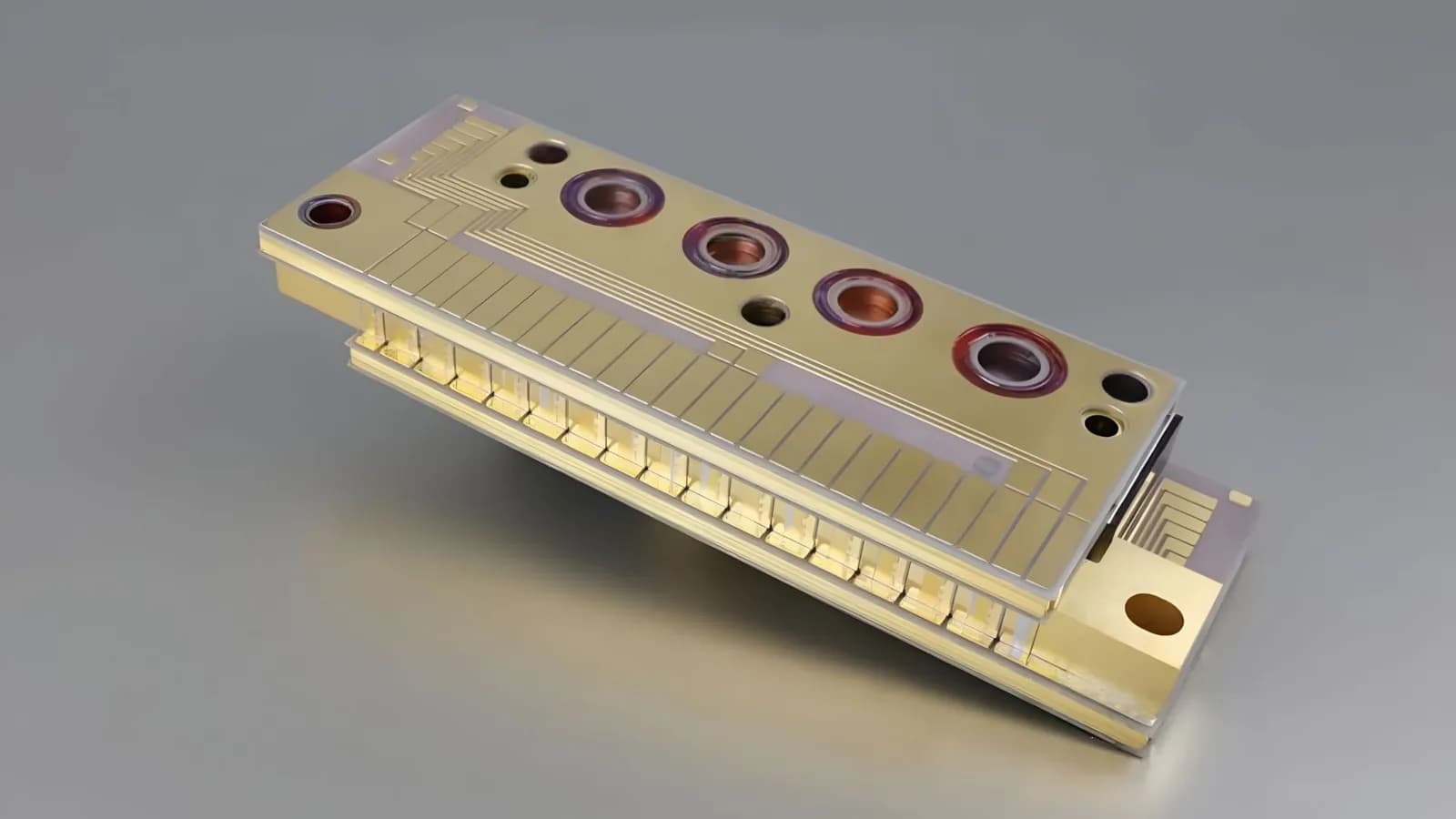
German researchers have kicked off a project to develop test standards for high-power diode lasers that could one day be used to power laser-driven fusion plants. Each plant may require some 100 million laser bars, which are required to fire 10-20 billion pulses without failure.
The Ferdinand-Braun-Institut (FBH) and Germany’s national metrology institute, the Physikalisch-Technische Bundesanstalt (PTB), have launched the ATLase project, which is intended to develop a qualification framework for the lasers in question. They are expected to be the pump sources for the solid-state lasers to be used in inertial confinement fusion (ICF).
The project, which began on October 1, 2026, aims to establish standardized measurement methods for evaluating the performance, efficiency, and long-term reliability of high-power diode lasers, with the intention of forming the basis of an international qualification standard.
Preparing lasers for fusion power
Fusion energy is widely viewed as a potential long-term source of carbon-free electricity. In inertial confinement fusion, also known as laser-induced fusion, extremely powerful laser pulses compress and heat tiny fuel pellets until light atomic nuclei fuse and release energy.
Future commercial fusion plants are going to be using solid-state laser systems pumped by huge numbers of high-power diode lasers. The economics of the technology are going to be very much dependent on those components being both efficient and reliable over the billions of firings that will be required.
According to the researchers, each fusion power plant could require about 100 million diode laser bars, with every unit expected to survive between 10 billion and 20 billion laser pulses during its operational lifetime. The durability and efficiency of these lasers will therefore play a major role in determining both construction and operating costs.
To achieve that aim, ATLase will be developing new test methods and standardized qualification procedures which will allow diode lasers from different manufacturers to be evaluated under comparable conditions.
Measuring power and lifetime
As part of the project, FBH is building an advanced testing infrastructure to measure the optical power, efficiency, lifetime, and reliability of high-power diode lasers.
The institute will also conduct accelerated aging tests to better understand how these devices gradually lose optical power or fail during quasi-continuous-wave (QCW) operation. The experiments will involve next-generation wavelength-stabilized diode lasers with multiple p-n junctions.
The results are expected to help researchers improve both the lifetime and reliability of future pump lasers.
Another major focus is power conversion efficiency, which measures how effectively a diode laser converts electrical energy into laser light. Improving efficiency is considered essential for reducing the operating costs of future fusion plants.
Meanwhile, PTB will contribute its expertise in precision optical measurements by developing a calibration system capable of measuring pulsed laser power of up to one kilowatt with a relative measurement uncertainty below one percent.
The institute will also build an identical secondary reference system for FBH to ensure that future qualification measurements are consistent and traceable to the German national measurement standards.
Beyond developing testing infrastructure, the partners plan to establish a standardized qualification protocol that manufacturers, research organizations, and system integrators can use to assess diode lasers under reproducible conditions.
FBH expects to begin offering qualification services during the third year of the project.
Source: https://interestingengineering.com/energy/100-million-laser-power-laser-driven-fusion-plants
Get the latest news delivered to your inbox.
Related articles