
17-gigawatt Texas power project passes key hurdle for world’s largest private grid
A planned nuclear-powered supercomputing hub in the Texas Panhandle has cleared a major federal regulatory...
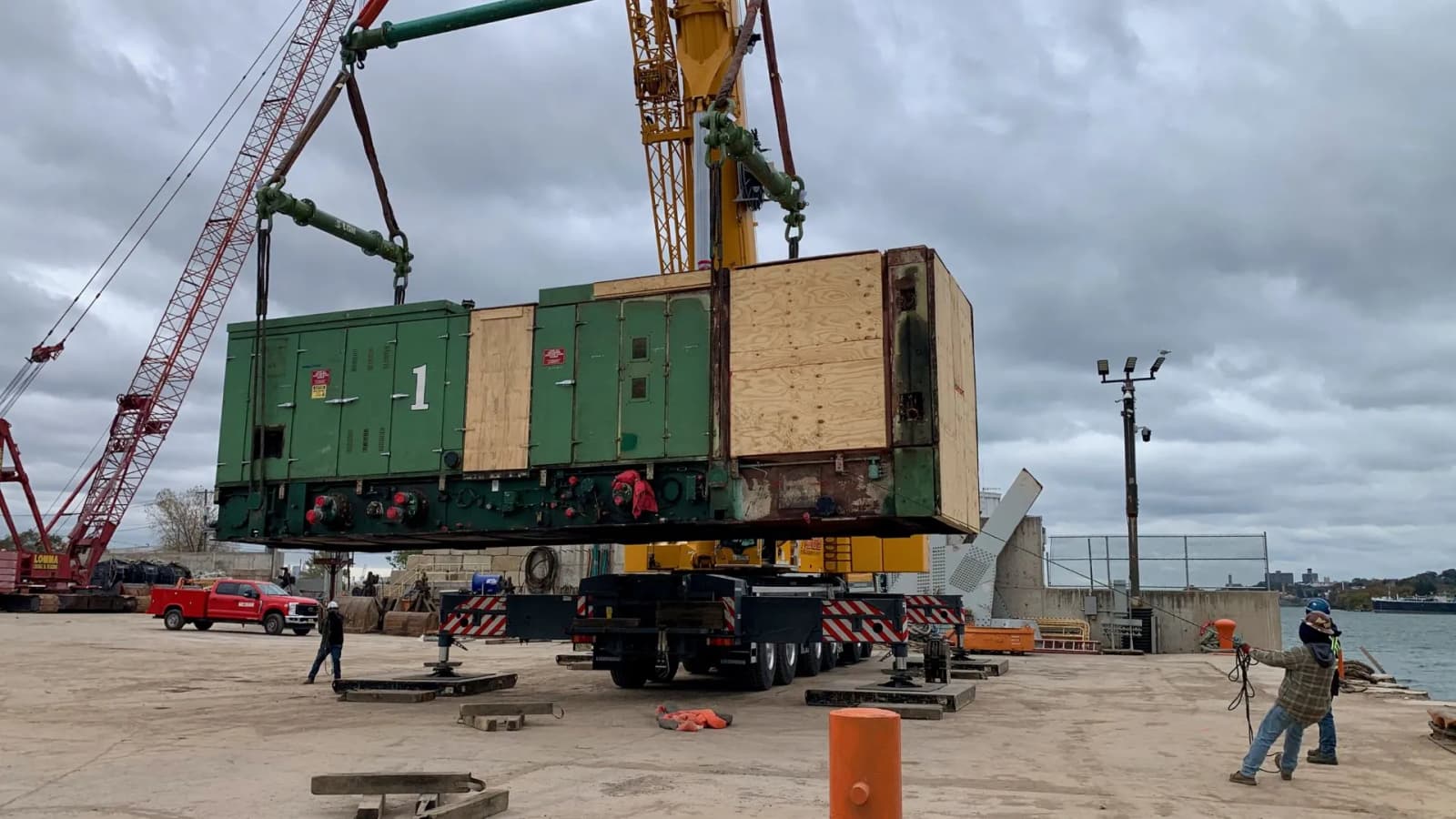
A planned nuclear-powered supercomputing hub in the Texas Panhandle has cleared a major federal regulatory hurdle.
The US Nuclear Regulatory Commission (NRC) has published its draft environmental review for Project Matador, an energy and artificial intelligence campus run by developer Fermi America. Crucially, NRC staff issued a preliminary recommendation to approve combined licenses for four Westinghouse AP1000 nuclear reactors, provided the project passes an ongoing safety evaluation.
The positive assessment arrived just 15 months after Fermi America filed its application. In the nuclear industry, federal environmental reviews typically take years to complete. Reaching this stage so quickly marks significant momentum for an initiative designed to power high-demand computing facilities.
Proposing a new power outlook
With Project Matador, the overall technology infrastructure could get a new outlook. It does not rely solely on the public grid. Instead, Fermi America is building a dedicated private system in Carson County, near Amarillo. The private network will combine commercial nuclear reactors with natural gas units, solar arrays, and utility-scale battery storage.
Original plans for the site called for an 11-gigawatt (GW) campus, anchored by 4.4 GW of nuclear power. However, developers recently expanded their ambitions to nearly 17 GW. The upgrade aims to meet the relentless power appetite of next-generation artificial intelligence models and high-performance computing clusters, which require round-the-clock baseload electricity that intermittent renewables cannot supply alone.
The site is being developed across 18 million square feet in partnership with Texas Tech University. Construction is scheduled to bring the facility online in stages, starting in the late 2020s and running into the mid-2030s.
The federal recommendation builds directly on state-level regulatory wins from earlier this year. In February, Texas environmental authorities granted Project Matador a six-gigawatt Clean Air Permit. That decision stands as the second-largest air permit in US history, paving the way for the fossil fuel generation that will support the campus alongside its planned reactors.
Clearing crucial regulatory hurdles
Despite the recent progress, several crucial regulatory steps remain before safety-related construction on the nuclear reactors can begin. The NRC must complete and publish its final environmental impact statement.
Simultaneously, regulators must complete a Safety Evaluation Report to verify that the standardized AP1000 design is compatible with the local geology, seismic conditions, and water resources. Only after both reviews conclude will the full Commission hold a vote on final license approval.
Fermi America is advancing the complex design with several engineering and nuclear partners. The coalition includes reactor designer Westinghouse Electric Company, Hyundai Engineering & Construction, ENERCON, and Preferred Licensing Services.
Largest private energy installations
The project’s nuclear division is led by Mesut Uzman, alongside development leads Sezin Uzman, Andrew Bryant, and Dannie Weaver. If the remaining approvals follow smoothly, Project Matador will stand as one of the largest private energy installations in the world.
It aims to bridge conventional nuclear engineering with the expanding power demands of the digital economy.
“As Project Matador continues to advance, Fermi America remains focused on progressing through the remaining regulatory milestones and developing the energy infrastructure needed to power America’s AI future,” concluded the company.
Related articles

Anthropic adds live dashboards and animated explainers to Claude with Dashboards and Motion
Anthropic launched Claude Dashboards, which builds auto-updating dashboards from data platforms and CRMs, and Claude Motion, which turns reports and charts into editable animations, in beta, while making Docs, Slides and Design available on every plan.

Microsoft launches Microsoft-Decision-1, a fast decision-scoring model, on Foundry and OpenRouter
Microsoft released Microsoft-Decision-1, a model that returns calibrated probabilities over fixed options instead of generating text. Microsoft says it topped a 36-benchmark comparison and ran 35 times faster than GPT-6 Sol.
Microsoft’s Satya Nadella says advanced AI needs a human-controlled ‘emergency brake’
Microsoft CEO Satya Nadella urged the industry to treat frontier AI models like insider risks, wrapping them in containment, independent controls and an “emergency brake” that lets an authorized person pause or shut down a model mid-task.

Amazon in talks to buy AI startup Decart for around $7 billion, WSJ reports
Amazon is negotiating to acquire Decart, maker of real-time video-editing and robotics-simulation AI models, in a deal that could be valued at about $7 billion, The Wall Street Journal reported. Decart was valued at nearly $4 billion in May.

A college in Illinois tried to cancel its Flock contact and it refused
In April of 2025, Elgin Community College had six Flock safety cameras installed to "enhance the safety and security of students.

Silicon Valley is falling in line with Trump’s attempt to rename AI
When President Donald Trump announced his plans to rebrand artificial intelligence as "super intelligence," you'd be forgiven for being skeptical that it would catch on.