
Ranked: The World’s Top 25 Cities in 2026
Discover the world's top 25 cities in 2026, ranked by Oxford Economics across economic strength, quality of life, human capital, and more.
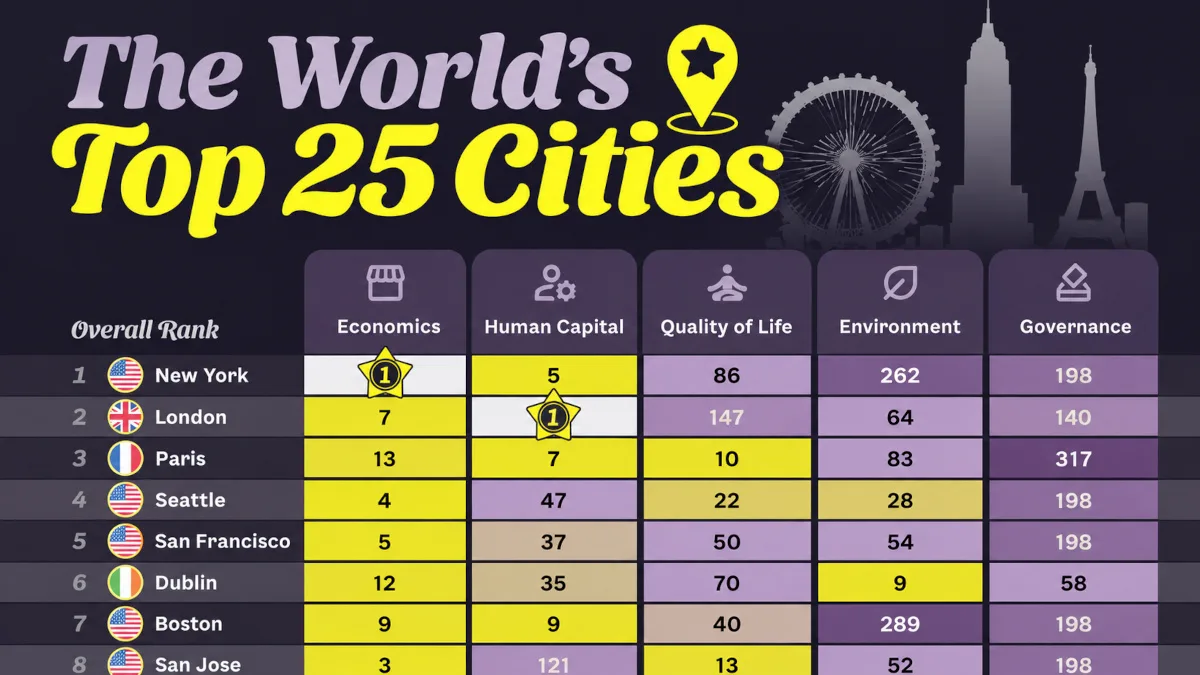
Why These Are the World’s Top 25 Cities in 2026
Key Takeaways
New York ranks first overall in the 2026 Global Cities Index, followed by London and Paris.
Five U.S. cities rank among the global top 10, highlighting the economic strength of America’s leading metropolitan areas.
Even top-ranked cities have weaknesses: New York places 262nd for Environment, while London ranks 147th for Quality of Life.
The world’s leading cities attract businesses, investment, and talent from across the globe. But even the most successful cities face challenges, from housing affordability to environmental risks.
This visualization ranks the world’s top 25 cities in 2026, showing how they perform across five categories and where their biggest strengths and weaknesses lie.
The data comes from Oxford Economics’ Global Cities Index 2026, which evaluates 1,000 cities across Economics, Human Capital, Quality of Life, Environment, and Governance.
Economics accounts for 30% of the overall score, while Human Capital and Quality of Life each contribute 25%. Environment and Governance account for 10% apiece. Governance is assessed at the national level, meaning cities within the same country receive the same ranking.
Why New York and London Lead the Rankings
New York remains the world’s highest-ranked city, supported by its enormous $2.6 trillion metropolitan economy in 2025, the largest of any city in the index. Its strengths span finance, technology, media, and corporate headquarters, helping it rank first in Economics and fifth in Human Capital.
Overall RankCityEconomicsHuman CapitalQuality of LifeEnvironmentGovernance
1 New York1586262198
2 London7114764140
3 Paris1371083317
4 Seattle4472228198
5 San Francisco5375054198
6 Dublin123570958
7 Boston9940289198
8 San Jose31211352198
9 Tokyo4539945421
10 Zurich29271412446
11 Oslo30486508
12 Los Angeles255165158198
13 Sydney2663176813
14 Washington, DC810130308198
15 Stockholm362877710
16 Melbourne1768544913
17 Dallas621275378198
18 Copenhagen2853160151
19 Munich31611616890
20 Toronto191425929261
21 Amsterdam33583521251
22 Berlin50391518290
23 Geneva3493518046
24 Vancouver52192152961
25 Brussels324311918685
London follows in second place and leads the Human Capital category, thanks to its concentration of universities and highly educated workers. Around 40% of London’s residents are foreign-born, reflecting its ability to attract international talent.
Paris rounds out the top three with a different mix of advantages. Alongside its trillion-dollar economy, the French capital ranks 10th globally for Quality of Life, supported by high life expectancy, relatively strong incomes, and access to cultural amenities, including roughly 130 museums.
American Tech Hubs Dominate, but Face Trade-Offs
Seattle ranks fourth overall, benefiting from its technology sector anchored by Microsoft and Amazon, alongside major aerospace and retail companies.
San Francisco and San Jose rank fifth and eighth, respectively, highlighting Silicon Valley’s outsized economic influence.
San Jose has the highest GDP per person of all 1,000 cities, at an estimated $238,700 in 2025, reflecting the extraordinary productivity of its technology industry.
Yet economic success doesn’t guarantee strong performance across every category. San Jose ranks third for Economics but 121st for Human Capital, while Boston places ninth for Economics but 289th for Environment, partly reflecting its exposure to flooding.
Oxford Economics also highlights high housing costs, income inequality, and economic concentration among the challenges facing major U.S. technology hubs.
Quality of Life and Strong Institutions Set Other Cities Apart
Economic size isn’t everything. Dublin, ranked sixth overall, stands out for its Environmental performance, placing ninth globally thanks partly to low pollution and a temperate climate, although housing affordability remains a major challenge.
Other European cities excel in different areas. Oslo ranks sixth for Quality of Life and eighth for Governance, while Copenhagen holds the top spot in Governance despite ranking 18th overall.
Zurich also places in the global top 10, supported by productive financial services, strong educational institutions, and high living standards.
Tokyo offers another striking contrast. Asia’s highest-ranked city places ninth overall and third for Human Capital, reflecting its deep pool of skilled workers and major educational institutions.
However, the Japanese capital ranks just 454th for Environment, the lowest placement in this category among the global top 10. Its exposure to earthquakes, typhoons, and other natural hazards weighs on its environmental performance.
Looking ahead, the rankings could become more competitive. Oxford Economics notes that eight of the 2025 top 10 cities remain in the top 10 this year, but forecasts that rapidly growing Asian cities will gain economic influence as they expand into advanced manufacturing, technology, and business services.
Learn More on the Voronoi App
If you enjoyed today’s post, check out The World’s Most Populous Cities Over Time (1975–2050) on Voronoi.
Related articles
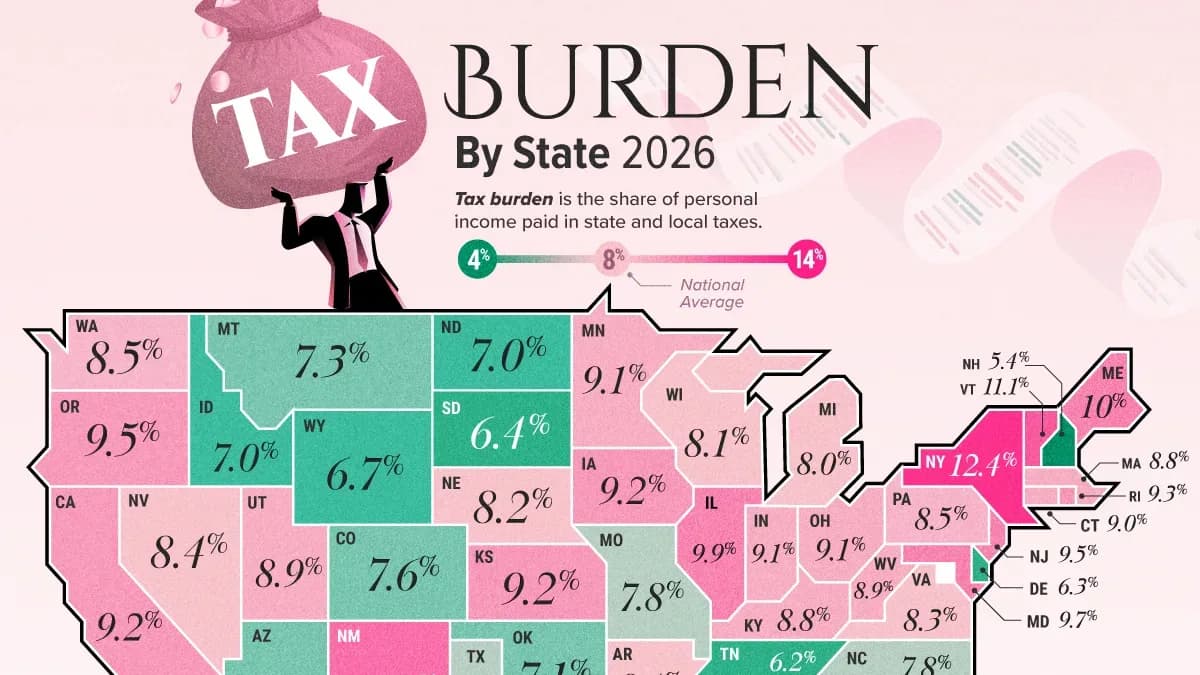
Mapped: U.S. States With the Highest Tax Burden in 2026
Hawaii's state and local tax burden is 13.3% of personal income, nearly triple Alaska's 4.9%. See where your state ranks in 2026.
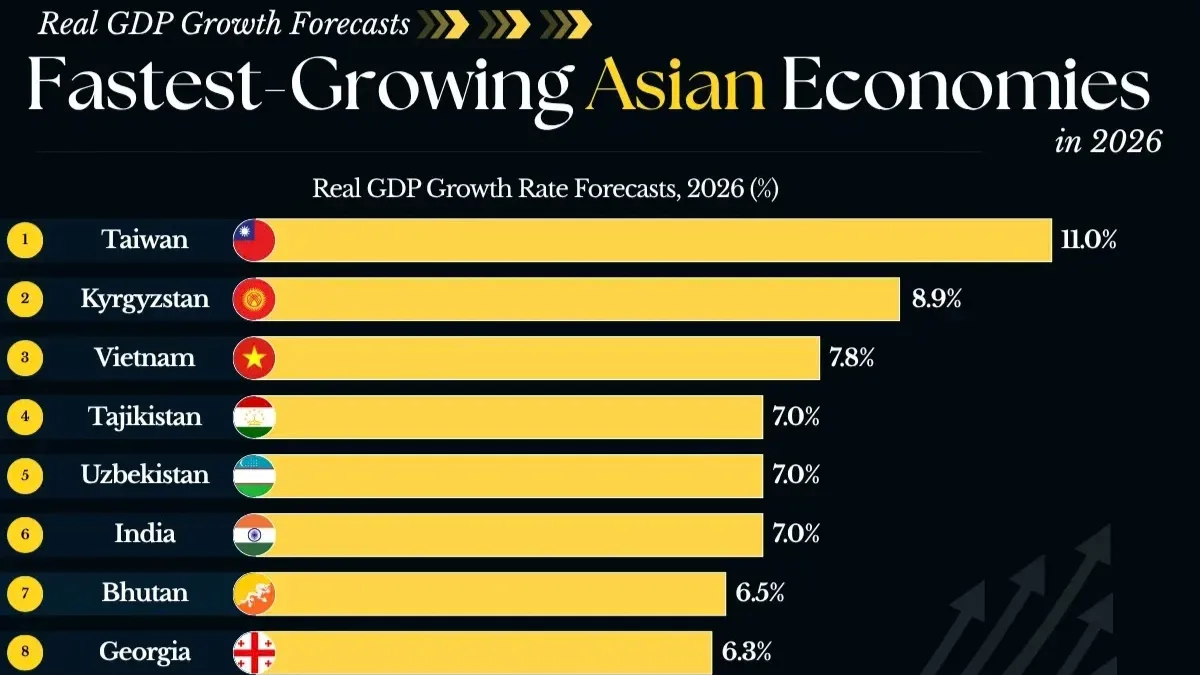
Ranked: The Fastest-Growing Asian Economies in 2026
Taiwan leads Asia’s fastest-growing economies in 2026, fueled by booming AI and semiconductor demand.
Ranked: Countries With the Highest Consumer Confidence
Californians and New Yorkers may face high taxes, but residents of one state can expect to pay over $100,000 more over their lifetimes.
How Much You’ll Pay in Lifetime Income Taxes, by State
Californians and New Yorkers may face high taxes, but residents of one state can expect to pay over $100,000 more over their lifetimes.
Ranked: The World’s Richest Countries (2006-2026)
European microstates are among the wealthiest countries worldwide. They face new competition from an emerging petrostate.