
US Army integrates electronic warfare systems for enemy signal disruption
The US Army has demonstrated how three electronic warfare and cyber technologies can work together...
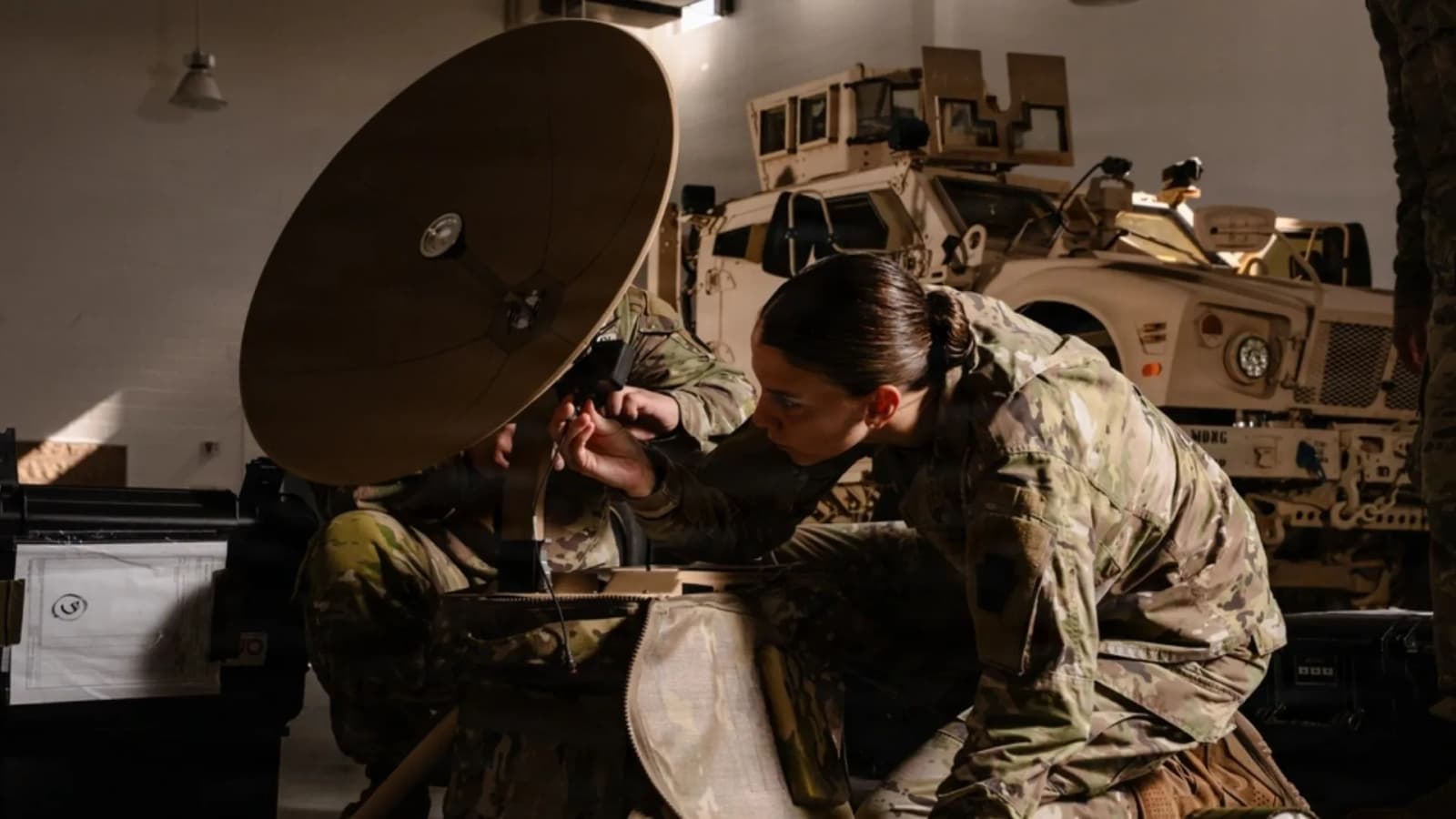
The US Army has demonstrated how three electronic warfare and cyber technologies can work together to identify hostile communications and disrupt them using software-driven radio-frequency effects, potentially shortening the time needed to counter adversary signals on the battlefield.
The demonstration, led by the Army’s Combat Capabilities Development Command (DEVCOM) Command, Control, Communications, Computers, Cyber, Intelligence, Surveillance and Reconnaissance Center (C5ISR Center), took place at Aberdeen Proving Ground, Maryland, from August 5 to 8. Soldiers from the 11th Cyber Battalion participated in the exercise, which connected three previously separate programs for the first time.
The integrated system combines the Tactical Development Kit (TDK), Tactical Radio Frequency Application Chassis (TRAC), and Warped Alloy software. Together, they are designed to detect signals, analyze their characteristics, and generate electronic effects to interfere with adversary communications.
Three systems work as one
Each component has a distinct role in the process. TRAC is a ruggedized, open-architecture platform that monitors the electromagnetic spectrum, supports mission planning, and delivers non-kinetic electronic effects. It is built around the Army’s Cyber/EW, Intelligence, Surveillance, and Reconnaissance Modular Open Suite of Standards (CMOSS), which supports modular integration of capabilities.
When TRAC detects a signal of interest, it can pass the information to TDK. The system contains a forward-deployed library of known adversary signals, based partly on the US Cyber Command Arsenal’s list of signals of interest. It also uses artificial intelligence and machine learning to help analyze unfamiliar signals and identify their frequencies and waveforms.
That information can then inform a response through Warped Alloy, a software framework that generates radio-frequency effects at the communications-protocol level. According to the Army, this approach differs from older electronic warfare methods that primarily attempt to overpower hostile communications with electromagnetic energy. Instead, Warped Alloy is designed to interfere with the protocols governing how communications systems operate.
Adapting to changing enemy signals
During the demonstration, the Army simulated a battlefield scenario in which hostile forces communicated while preparing an attack. TRAC detected the signal and passed relevant data to TDK for analysis. The resulting information was then used to determine a Warped Alloy response, delivered through a software-defined radio hosted by TRAC.
The Army says Warped Alloy can dynamically reconfigure compatible tactical software-defined radios to maintain communications denial as adversaries switch between primary, alternate, contingency, and emergency communications channels.
The system is designed to continue denying communications until the underlying protocol changes, at which point the signal-identification and response process can begin again.
The goal is to reduce the time between detecting a transmission and delivering an appropriate electronic countermeasure. Rather than relying entirely on fixed capabilities or lengthy development cycles when new threats emerge, the Army wants to develop modular effects that can be adapted to changing requirements.
However, the August event was a demonstration of the systems’ integration, not evidence that a finished, fully automated battlefield capability is ready for deployment.
Toward a common electronic warfare framework
Army officials described the demonstration as a step toward a “develop once, deploy everywhere” framework for non-kinetic cyber and electromagnetic effects. The idea is to develop reusable software capabilities that can operate across compatible hardware platforms, reducing the need to build a separate solution for every new threat.
The Army released the underlying Warped Alloy software framework to industry in January to encourage developers to integrate it into different software-defined radio architectures. Data collected during the demonstration will inform further development. Planned work includes additional exercises with soldiers, improvements to usability, and integration into a single interface so operators do not have to move between separate computers to manage the process.
For the Army, the objective is to give cyber warfare units more adaptable tools for operating in contested electromagnetic environments, where adversaries can change their communications methods to evade detection and disruption. The demonstration showed how spectrum monitoring, AI-assisted signal analysis, and software-based electronic effects could be integrated into a coordinated workflow. However, further testing and refinement are needed before the planned integrated system is complete.
Related articles

AI agent makers are promising privacy — will they deliver?
At this year's OpenAI DevDay, CEO Sam Altman unveiled the company's new AI agent Dots - and told the crowd that the company wants to "set a new standard for privacy in frontier AI.

LG’s RGB LED TV is good for certain situations, but an OLED is better
When it comes to TVs, the LG name has long been synonymous with OLEDs, continually leading Samsung and Sony as the top OLED manufacturer. But 2026 is all about RGB LED TVs.

Pentagon expands quantum computing push to secure military tech superiority
The Pentagon is committing around $350 million to advance US quantum computing capabilities, as Washington...

Autonomous heavy cargo drones airlift 143-pound loads to North Sea wind turbines
Ørsted reports that it has completed a new trial of a large cargo delivery drone...

Vision-based waste-sorting robot identifies high-value recyclables in real time
Scotland-based Danu Robotics has just received $5 million in seed funding for its novel waste...
US firm aims to speed 390 MW nuclear reactor deployment with phased build plan
Terrestrial Energy has submitted its Thermal and Electric Facility (TEF) Topical Report to the US...