
US firm aims to speed 390 MW nuclear reactor deployment with phased build plan
Terrestrial Energy has submitted its Thermal and Electric Facility (TEF) Topical Report to the US...
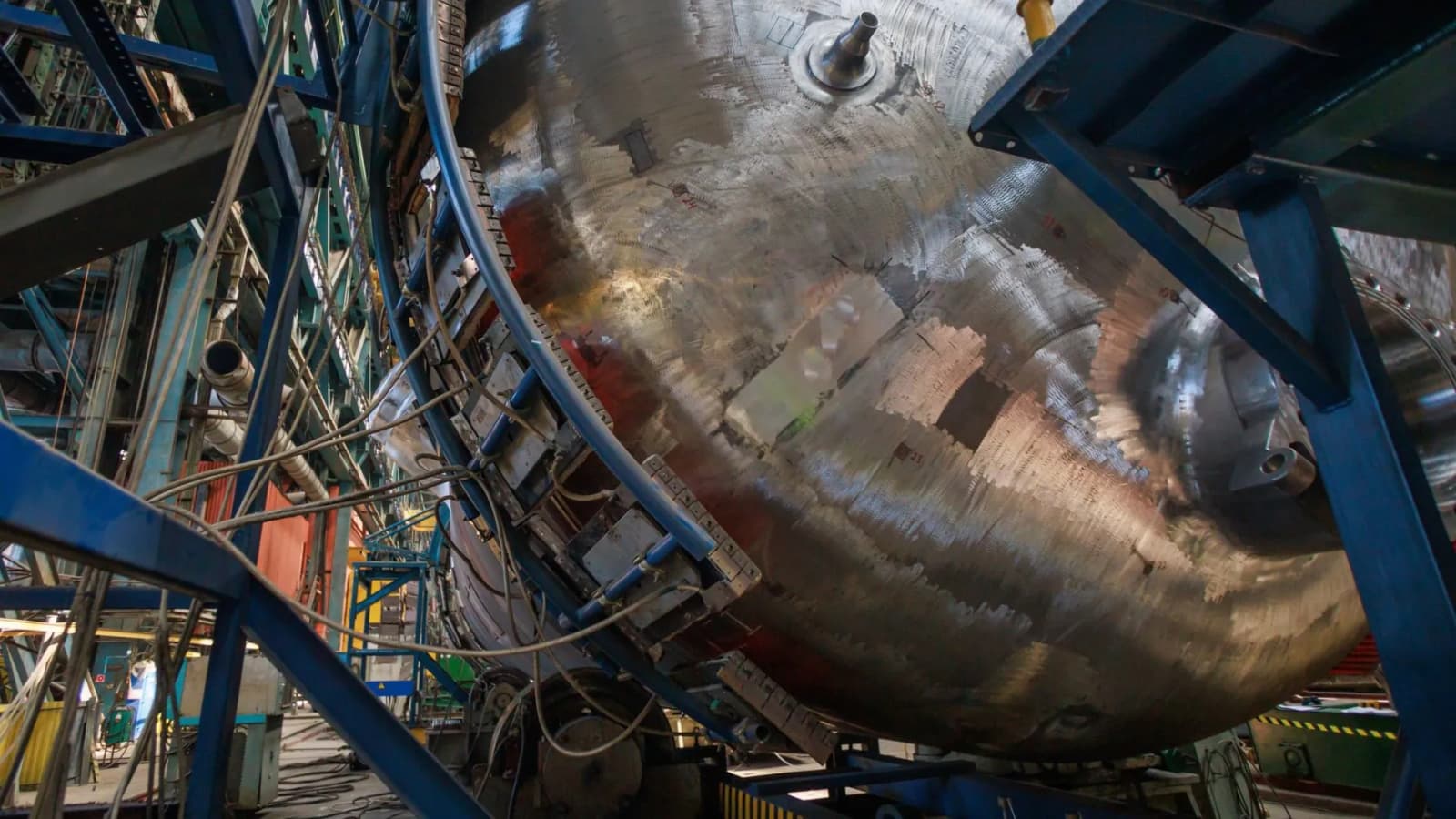
Terrestrial Energy has submitted its Thermal and Electric Facility (TEF) Topical Report to the US Nuclear Regulatory Commission (NRC). The filing proposes a bifurcated regulatory model that could allow key non-nuclear components of its power plant to be built and operated prior to receiving a full nuclear license.
If accepted, this strategy would resolve one of the atomic sector’s steepest economic hurdles. Traditional atomic projects often face extensive delays because safety reviews generally encompass both the reactor and its major steam-generating systems.
Under this new pathway, only the nuclear module follows the exhaustive atomic licensing schedule, while the turbine complex proceeds under standard commercial timelines.
To roll out commercial units
The regulatory gambit comes as major institutional energy consumers seek dependable, round-the-clock clean power. The US Army’s Aberdeen Proving Ground in Maryland is reportedly set to host a 390-megawatt-electric (MWe) IMSR plant. The installation at the military’s oldest active test base would help shield critical defense operations from wider grid failures.
To roll out these commercial units quickly during the 2030s, the developer relies on an architectural divide. The design physically splits the site into two distinct zones. The primary module contains the nuclear core.
A separate auxiliary building houses standard energy equipment, such as steam systems, heat exchangers, and electrical turbines. Terrestrial Energy wants federal regulators to formally confirm that assembling this turbine wing falls outside federal nuclear construction rules.
That administrative distinction carries immediate financial benefits. Erecting the non-nuclear wing under commercial industrial building codes allows developers to offer lenders predictable timetables and lower capital risks.
Operators could customize the power block for local industrial demands before nuclear fuel arrives. Sites could even fire the turbines using natural gas as a temporary heat source. This bridge would generate revenue while reactor permits finish their regulatory run.
Independence from power-conversion systems
Safety remains the decisive factor for federal overseers. Terrestrial Energy’s technical filing demonstrates that the core nuclear module operates with complete independence from the power-conversion systems.
Relying on accident assessment methods that the NRC has already approved, the company proved that an equipment breakdown within the turbine building cannot spread into the nuclear core.
The filing represents Terrestrial Energy’s third formal submission delivered to federal regulators this year. The agency has already approved the company’s baseline design standards alongside its core safety criteria.
Separate technical submission
A separate technical submission covering the qualification of reactor-grade graphite is currently under review. Once ratified, these findings create permanent licensing precedents. They eliminate repetitive technical evaluations for subsequent commercial builds.
“Approved Topical Reports establish foundational elements of the IMSR licensing basis that may be referenced in future applications without re-evaluation, reducing the scope of subsequent technical review,” noted Terrestrial Energy.
Unlike conventional high-pressure light water reactors, the IMSR runs at atmospheric pressure and extreme heat using standard-assay low-enriched uranium fuel.
“The IMSR Plant is small, modular and designed to supply low-cost, reliable, high-temperature heat and electricity for industrial applications, including data centers, and chemical and petrochemical supply,” concluded the company.
Related articles

AI agent makers are promising privacy — will they deliver?
At this year's OpenAI DevDay, CEO Sam Altman unveiled the company's new AI agent Dots - and told the crowd that the company wants to "set a new standard for privacy in frontier AI.

LG’s RGB LED TV is good for certain situations, but an OLED is better
When it comes to TVs, the LG name has long been synonymous with OLEDs, continually leading Samsung and Sony as the top OLED manufacturer. But 2026 is all about RGB LED TVs.
US Army integrates electronic warfare systems for enemy signal disruption
The US Army has demonstrated how three electronic warfare and cyber technologies can work together...
Pentagon expands quantum computing push to secure military tech superiority
The Pentagon is committing around $350 million to advance US quantum computing capabilities, as Washington...
Autonomous heavy cargo drones airlift 143-pound loads to North Sea wind turbines
Ørsted reports that it has completed a new trial of a large cargo delivery drone...

Vision-based waste-sorting robot identifies high-value recyclables in real time
Scotland-based Danu Robotics has just received $5 million in seed funding for its novel waste...