7 realistic solutions that could help US data centers manage electricity demand
Artificial intelligence has turned data centers into the hungriest tenants on the American power grid....
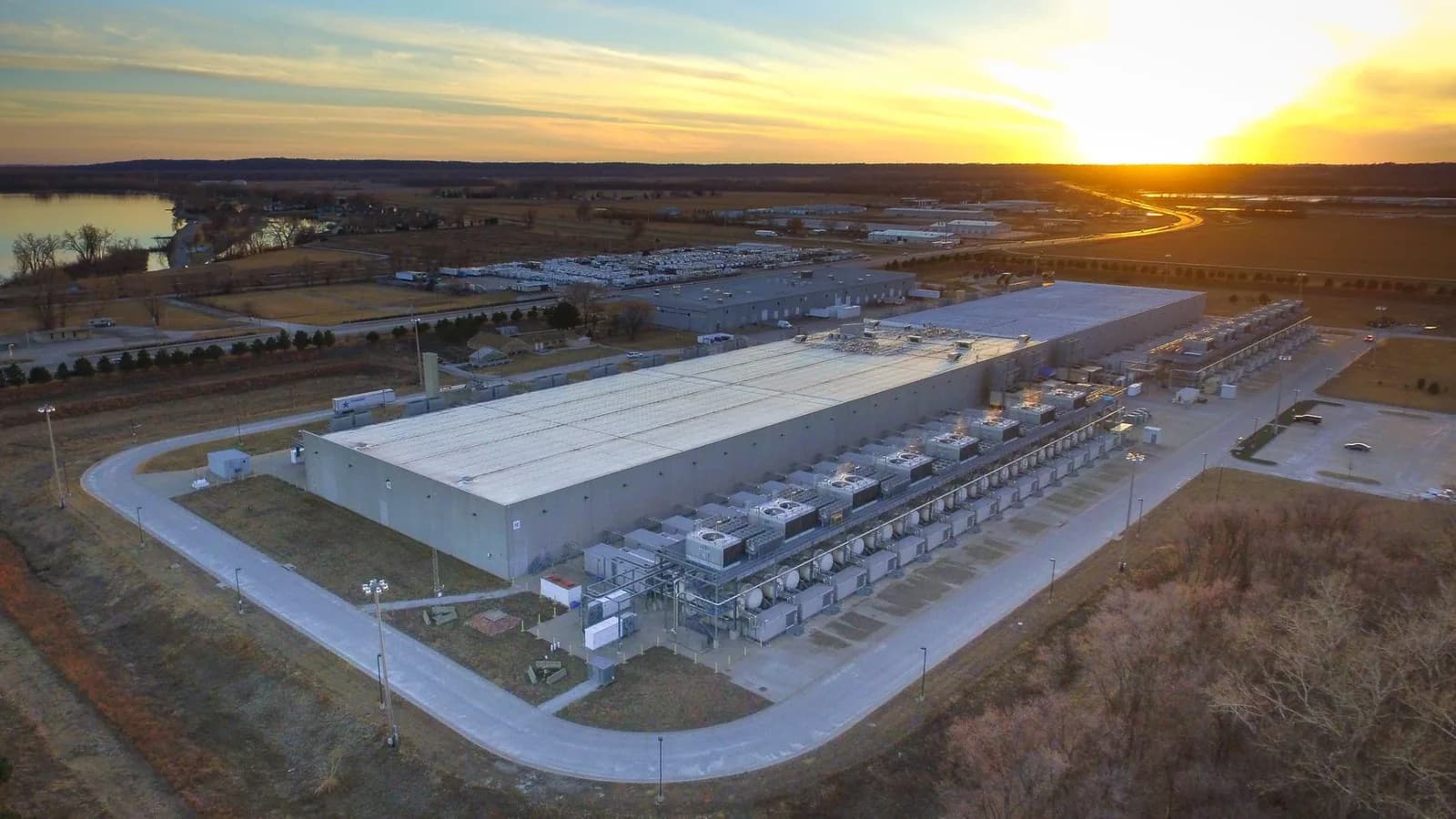
Artificial intelligence has turned data centers into the hungriest tenants on the American power grid. As megawatt-scale server campuses cluster in regions like Northern Virginia, Texas, and the Midwest, utilities face mounting transformer bottlenecks, multi-year interconnection queues, and a rising risk of local voltage instability during peak demand.
Building brand-new high-voltage transmission corridors can take a decade, while AI compute demand is scaling in months. To bridge that gap without triggering blackouts or stalling expansion, engineers, utilities, and hyperscalers are deploying a mix of smart grid hardware, behind-the-meter generation, and compute-level power controls. Here are seven technologies helping U.S. data centers keep both the lights and the GPUs on.
1. AI workload shifting and demand curtailment
Instead of treating data centers as rigid, around-the-clock power hogs, grid-interactive software lets operators pause or relocate non-urgent compute jobs, such as large AI model training runs, when regional electricity demand spikes.
According to a February 2026 modeling study by Duke University’s Nicholas Institute, curtailing data center power consumption during just a tiny fraction of peak hours can cut new natural gas plant investments by 10 to 50 percent and save the U.S. electricity system tens of billions of dollars.
2. Dynamic line rating (DLR) sensors
Most overhead power lines are governed by static thermal limits calculated for worst-case hot, windless days, leaving substantial transmission capacity untapped the rest of the year.
Dynamic line rating systems mount weather and conductor-sag sensors along transmission towers to measure real-time wind cooling and wire temperature. Under Federal Energy Regulatory Commission Order 881, utilities are increasingly adopting DLR to safely unlock 15 to 40 percent more capacity on existing lines without waiting years to string new steel towers.
3. Solid-oxide fuel cell microgrids
Facing multi-year waitlists for utility grid hookups, several data center developers are turning to “bring-your-own-power” microgrids anchored by solid-oxide fuel cells. Unlike conventional combustion turbines, systems from companies like Bloom Energy convert natural gas or hydrogen into electricity through a non-combustion electrochemical reaction, achieving high electrical efficiency without water consumption.
Because modular fuel cell blocks can be installed in weeks rather than years, operators can run isolated microgrids while awaiting permanent transmission upgrades.
4. Long-duration energy storage (LDES)
Standard lithium-ion backup batteries keep servers alive for minutes until diesel generators kick in, but they cannot carry a 100-megawatt campus through multi-day renewable lulls or heatwaves.
Long-duration energy storage technologies, including iron-air batteries, redox flow batteries, and thermal energy storage, store gigawatt-hours of electricity for 10 to 100 hours at a time. Paired with on-site solar or wind, LDES flattens spiky AI power draws and shields surrounding distribution networks from sudden load surges.
5. Direct-to-chip and immersion liquid cooling
Cooling fans and chillers can consume up to 40 percent of a traditional air-cooled data center’s total electricity. As next-generation AI server racks push past 100 kilowatts each, liquid cooling circulates dielectric fluid or cold plates directly over hot processors, capturing heat roughly 3,500 times more efficiently than air.
Slashing cooling overhead lowers a facility’s overall Power Usage Effectiveness (PUE), freeing up megawatts of existing grid allocation for actual computing hardware.
6. High-voltage DC (800-volt) rack power architectures
Inside conventional data centers, electricity undergoes multiple inefficient conversions between alternating current (AC) and low-voltage 48 or 54 volt direct current before reaching server chips, wasting energy as heat and requiring thick copper busbars.
Next-generation 800-volt DC power architectures step down high-voltage utility feeds far more directly to the rack level, reducing conversion losses, cutting copper mass, and easing upstream substation strain as campuses scale toward gigawatt capacities.
7. Small modular nuclear reactors (SMRs)
For 24/7 carbon-free baseload power independent of weather or overloaded regional grids, hyperscalers are backing advanced nuclear fission. Rather than giant custom-built plants, small modular reactors, such as molten-salt designs from Kairos Power, sodium-cooled fast reactors from TerraPower, and high-temperature gas reactors from X-energy, rely on factory-fabricated modules rated between 50 and 345 megawatts.
While most commercial SMRs will not come online until the early 2030s, federal construction permits issued in 2026 mark a major step toward dedicated nuclear-powered data campuses.
The road ahead for grid-friendly compute
No single breakthrough will solve America’s data center power crunch overnight. While liquid cooling, dynamic line ratings, and workload curtailment are already easing pressure on strained regional grids, fuel cell microgrids, long-duration storage, and small modular reactors are laying the groundwork for self-sufficient campuses over the next decade. Together, these technologies are transforming data centers from passive grid burdens into active, flexible partners in power system reliability.
Source: https://interestingengineering.com/energy/7-technologies-that-could-help-us-data-centers
Get the latest news delivered to your inbox.
Related articles