930 mph unmanned supersonic aircraft gets advanced systems for military missions
American defense startup Hermeus is joining forces with Northrop Grumman to develop advanced mission capabilities...
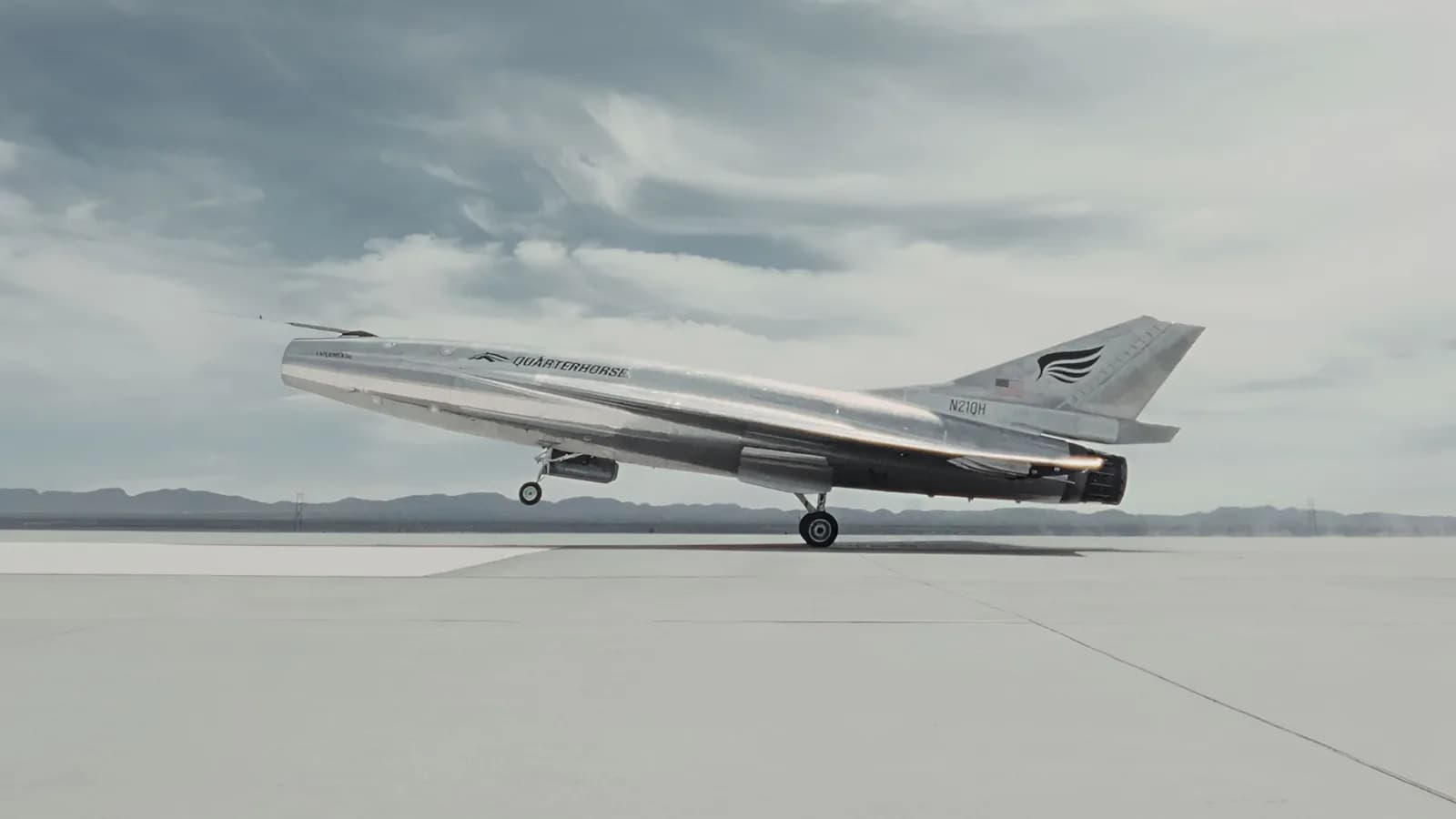
American defense startup Hermeus is joining forces with Northrop Grumman to develop advanced mission capabilities for next-generation unmanned military aircraft. The partnership aims to combine high-speed flight technology with sophisticated onboard systems for future U.S. military operations.
The agreement brings Northrop Grumman into Hermeus’ aircraft development efforts. The defense contractor will help design, develop, integrate, and maintain mission systems for Hermeus’ reusable, high-Mach aircraft. These platforms aim to give American forces faster and more affordable options for demanding missions.
Hermeus wants to develop aircraft that can operate at speeds beyond conventional military platforms. Its recent supersonic flight milestone offers an indication of how quickly the startup is advancing its aircraft development program.
Integrating advanced mission systems
Northrop Grumman will contribute technologies that help unmanned aircraft perform more complex military tasks. Its work will cover sensing, communications, navigation, and command-and-control capabilities. These systems will help aircraft process mission information and coordinate operations.
The collaboration also combines two different engineering approaches. Northrop Grumman brings decades of experience developing mission equipment for military aircraft. Hermeus contributes a faster development process and an internally developed mission management system.
Hermeus’ mission management system uses an open, modular architecture. It separates flight-critical functions from mission-critical operations. This distinction allows engineers to update mission capabilities without disrupting essential aircraft controls.
The architecture follows several U.S. government standards. These include the Agile Mission Suite and Autonomy Government Reference Architectures. It also supports Open Mission Systems and the Universal Command and Control Interface.
Such compatibility could make future upgrades considerably easier. Hermeus says its architecture can help engineers integrate new capabilities within weeks instead of years. That flexibility matters as military requirements change and new technologies become available.
Hermeus CEO Zach Shore said Northrop Grumman’s experience would help expand what its aircraft can accomplish. He also pointed to the potential for faster deployment of operational capabilities.
Supersonic testing gains momentum
Hermeus has already demonstrated progress with its Quarterhorse aircraft program. Its Quarterhorse Mk 2.1 recently completed its first supersonic flight, reaching Mach 1.21. The aircraft achieved that speed during its third test flight over White Sands Missile Range airspace.
The milestone arrived less than three months after the aircraft’s maiden flight. It also came 364 days after the first flight of Hermeus’ earlier Mk 1 demonstrator.
Quarterhorse Mk 2.1 represents the first of three F-16-sized supersonic aircraft in Hermeus’ development roadmap. It uses the Pratt & Whitney F100 engine, which comes from RTX’s Pratt & Whitney business.
Hermeus follows an iterative development strategy. Engineers build successive aircraft and use flight-test data to refine their designs. Each prototype helps the company evaluate performance and address technical risks before advancing further.
Work on the next aircraft has already begun. Quarterhorse Mk 2.2 is undergoing development and testing, with Mk 2.3 expected to follow.
Each aircraft will push the program toward sustained high-Mach flight. The Northrop Grumman partnership could also help bring increasingly sophisticated mission equipment into that development process.
Both companies intend to pursue advanced defense programs that need high-performance aircraft and established mission technologies. Their combined expertise could help the U.S. military explore new unmanned aviation capabilities without waiting for traditional aircraft development cycles.
Source: https://interestingengineering.com/military/hermeus-northrop-grumman-930-mph-aircraft
Get the latest news delivered to your inbox.
Related articles