Researchers use wood stove to recreate wildfire smoke, find tenfold boost to nitrogen oxide
Researchers at the Paul Scherrer Institute (PSI) in Switzerland have used a wood-burning stove to...
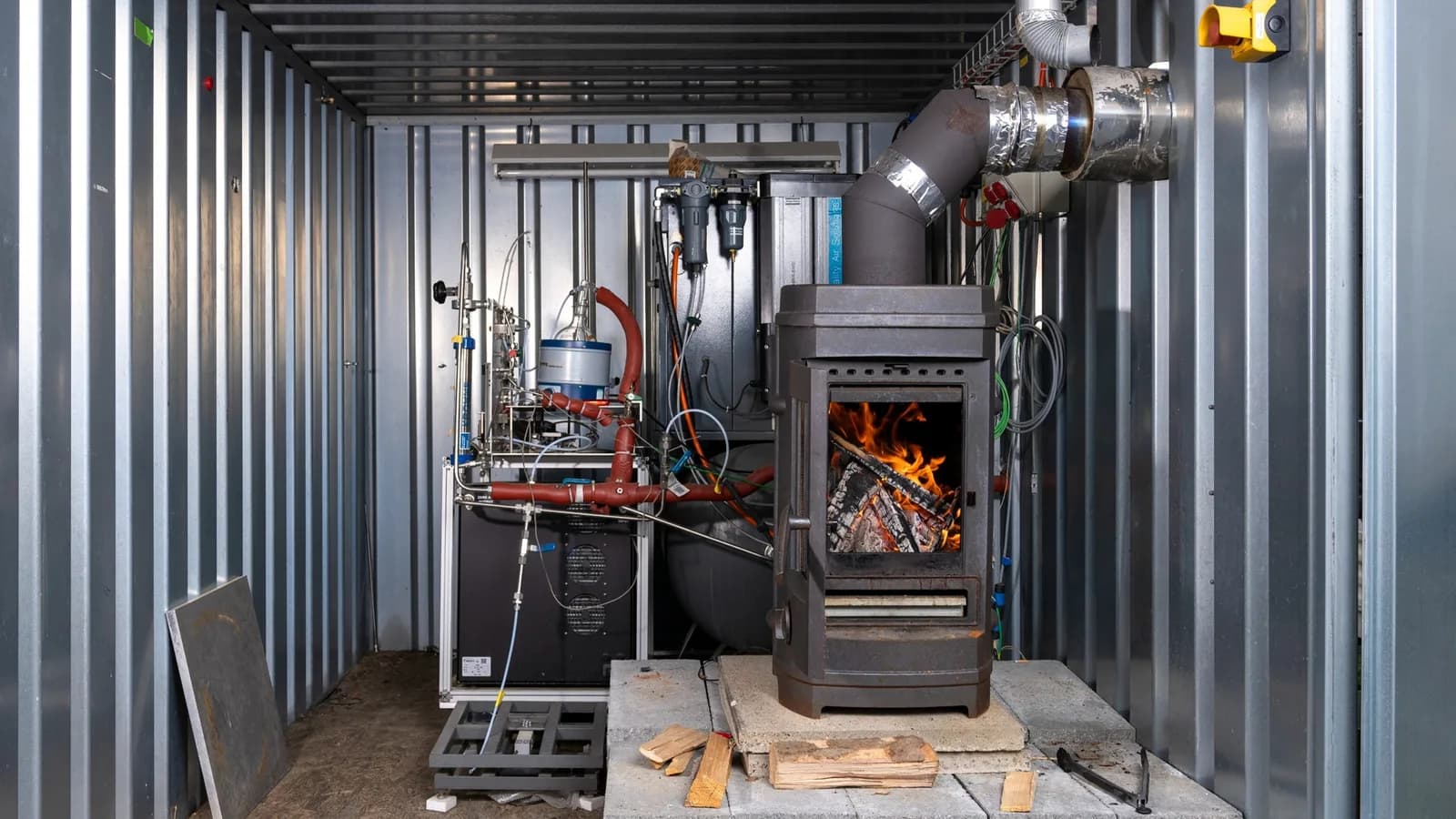
Researchers at the Paul Scherrer Institute (PSI) in Switzerland have used a wood-burning stove to recreate wildfire smoke and uncover why nitrogen oxides linger far from the flames. Their lab experiments show brown carbon in the smoke speeds up the conversion of nitrate into nitrogen oxide tenfold compared with the known hard-UV process.
The findings could improve predictions of how wildfires affect air quality and climate. The team was led by Markus Ammann of PSI’s Center for Energy and Environmental Sciences, with Fengxia Bao as first author.
Smoke that travels far
Wildfire plumes rise a few miles into the air and can travel across continents and oceans. Pollutants from wildfires in Canada can still be detected, for example, at the Jungfraujoch in the Swiss Alps.
Those pollutants include particulate matter, carbon dioxide and nitrogen oxides, which contribute to respiratory illness and, through the greenhouse effect, climate change. Ammann’s team wanted to explain why elevated nitrogen oxide concentrations persist even far from wildfires.
An atmospheric puzzle
Nitrogen oxides form during combustion. Wildfires and lightning are natural sources, but fossil fuel burning has pushed urban levels many times above pre-industrial ones. In the lower atmosphere, they help form ozone, a greenhouse gas and irritant, and oxidize to nitric acid, which dissolves as nitrate in aerosol particles. Rain then carries the nitrate to soil.
That steady conversion should leave far less nitrogen oxide in the air than is observed. A reverse path exists: sunlight can turn nitrate back into nitrogen oxide through photolysis, but Ammann said it is “far too slow” to explain the amounts measured.
One hypothesis was that something released during wildfires drives a second, faster photolysis route.
Smoke from a stove
Wildfires differ from other nitrogen oxide sources because incomplete combustion of wood and other biomass also produces organic particulate matter, including some soot. Some of those organic compounds absorb visible light and are collectively called brown carbon.
To test its role, the researchers cut the air supply to a wood-burning stove to make more smoke and more brown carbon. They collected it on filters, dissolved it in water, and placed it in a temperature-stabilized glass tube.
They then exposed nitrate to various UV lamps simulating sunlight, once without brown carbon and once with it, and measured the nitrogen oxide produced. Light with a high-energy, hard UV component always produced nitrogen oxide, but samples with brown carbon produced significantly more.
With lamps lacking hard UV, nitrogen oxide appeared only when brown carbon was present, said Bao. The researchers concluded the route is indirect: brown carbon absorbs soft UV light, enters an excited state and donates an electron to nitrate, converting it to nitrogen oxide.
That pathway accelerates nitrogen oxide production tenfold compared with the known process under hard UV light.
What remains unexplained
This is a “clear, powerful result,” Ammann said, one that shows experimentally what had only been vaguely suspected.
The result explains a larger share of atmospheric nitrogen oxides, but not all, so other formation pathways need further research.
Ammann wants to make the experiments more realistic, for example by using all of the burned material in PSI’s simulation chamber instead of only filtered, dissolved components. The work was funded by the ETH Board’s ReCLEAN project.
The findings were published Nov. 11 in Science Advances.
Source: https://interestingengineering.com/science/wildfire-brown-carbon-nitrogen-oxide-experiment
Get the latest news delivered to your inbox.