Airbus gives passenger-carrying A320 a pointed fighter jet nose, tests Eurofighter radar
An Airbus A320 has had a pointed Eurofighter jet nose fitted to allow it to...
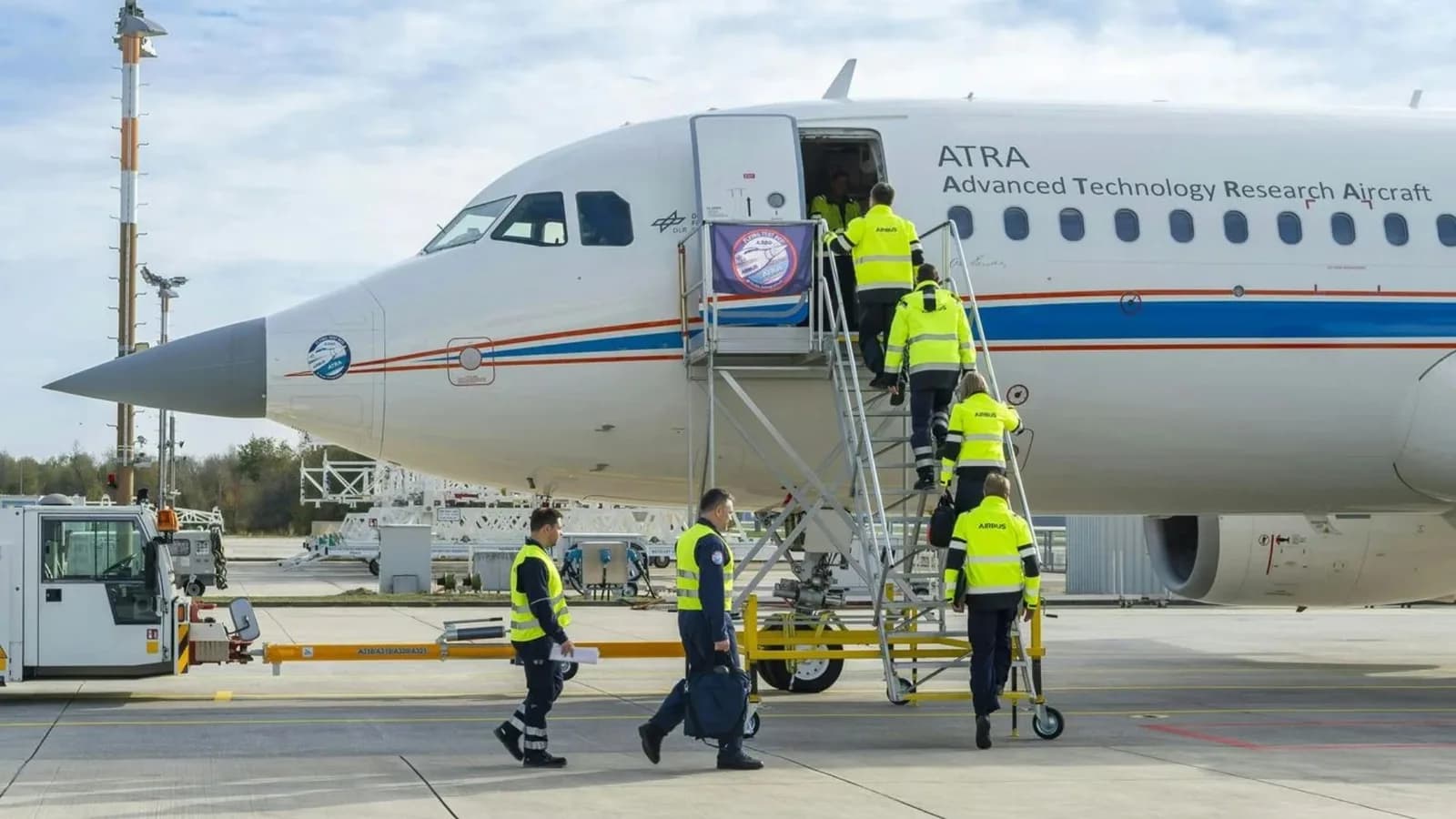
An Airbus A320 has had a pointed Eurofighter jet nose fitted to allow it to fly more. The aircraft has been modified to act as a test bed for the new fighter technology.
This aircraft, known as the A320 ATRA (Advanced Technology Research Aircraft), belongs to the German Aerospace Center (DLR). Airbus completed commissioning flights at their Manching location in Germany on the 6th November 2026. This proved that the aircraft and radar can work together as one. The aircraft will be used to develop and test the Eurofighter Common Radar System Mk1 (ECRS Mk1), also known as E-Scan radar. This will be used by Germany’s Quadriga and Tranche 5 Eurofighters and Halcóns in Spain. Airbus are also looking to upgrade existing aircraft with this radar.
The ECRS Mk1 works using Active Electronically Scanned Array (AESA) technology. This means there is an electronic beam steering system rather than mechanical. This means multiple targets can be tracked with a reconfigurable radar footprint. This will increase performance in the air-to-air and air-to-ground roles.
Eurofighter radar fitted to passenger jet
To fit the Eurofighter radaronto the A320, significant changes were made to the front of the aircraft. The Airbus engineers redesigned and strengthened the nose of the aircraft to fit the bespoke nose section. Hundreds of meters of data cabling was added to allow connection to the systems on the aircraft. Cooling of the radar was also a challenge. As radars produce heat, liquid and air cooling systems were added.
The passenger section of the aircraft has been changed to provide engineering stations. While the aircraft is flying, specialists can look at the radar display that would be displayed to a Eurofighter pilot. They can also monitor further data about the systems in the nose section. This helps ensure the hardware is performing as intended, new versions of the software can be tested, and the changes to radar functions can be assessed. The A320 also provides more space to fit the technical equipment and people. This makes it easier to conduct longer test flights.
The A320 can also remain airborne longer than a Eurofighter and benefits from a shorter clearance process. This gives engineers more time to test the radar under real flying conditions and gather information about its performance. This helps accelerate the radar’s development before it is integrated into operational Eurofighter aircraft.
Modified A320 completes radar commissioning flights
The aircraft was modified a long time ago. The modified A320 ATRA conducted it’s first flight with the new nose section but no radar in January 2025. This allowed engineers to verify if the aircraft was safe to fly after the modifications. After ground testing, the aircraft entered the commissioning programme with the radar now fitted.
Airbus has now completed the validation process with the recent flights. Sebastian Ritz, Head of A320 Flying Test Bed Program at Airbus Defense and Space says “The aircraft has demonstrated good performance with the radar.”
Get the latest news delivered to your inbox.
Related articles