US scientists find new way to control magnetic waves for efficient quantum computing
Researchers at the United States Department of Energy’s Ames National Laboratory discovered how to control...
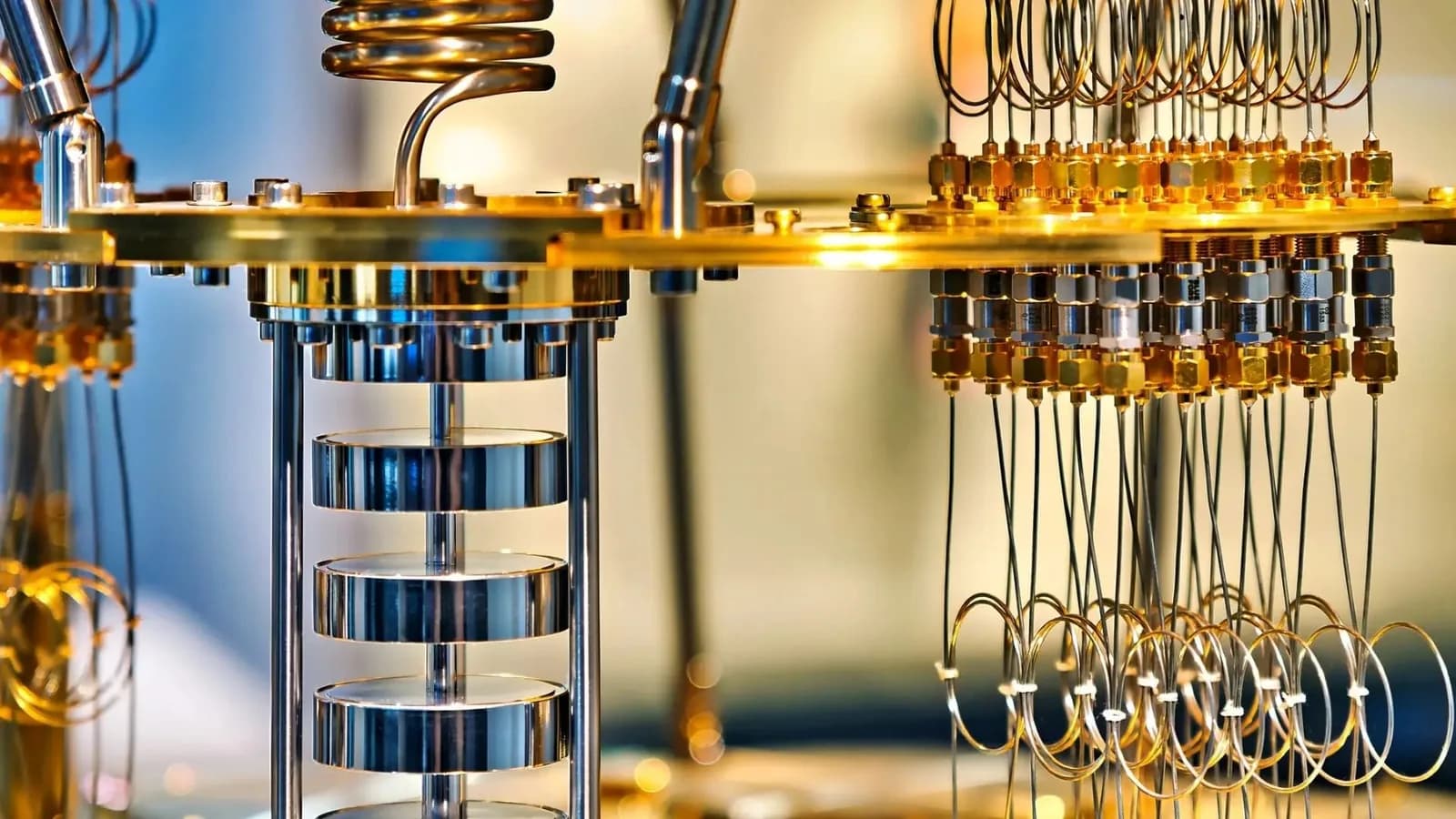
Researchers at the United States Department of Energy’s Ames National Laboratory discovered how to control the handedness, or chirality, of magnons. By changing a material’s magnetic states through the application of an external magnetic field, scientists gained the ability to manipulate magnon behavior, resulting in a substantial solution to a long-standing hurdle in physics. This discovery is paving the way for research into high-efficiency quantum computing and quantum information technologies.
Magnons are elementary excitations of magnetic motion. As microscopic spin waves traveling through atomic lattices, magnons exhibit right- or left-handed motion, similar to how a spinning toy can rotate clockwise or counterclockwise. Since magnons transmit energy and digital information without the physical movement of electrical charge, they avoid the heat generation and power loss found in conventional electronics.
Uncompensated sublattices in ferrimagnets
The researchers investigated magnons’ handedness in ferrimagnets, a special type of magnetic compound in which both left- and right-handed magnons occur naturally.
Ferromagnets possess spins with purely right-handed precession, whereas in antiferromagnets, materials characterized by the cancellation of opposing magnetic sublattices, left- and right-handed magnons are degenerate (sharing identical energy levels) unless an applied field splits them apart. Between the two are ferrimagnets, which contain two different types of magnetic atoms located in separate sublattices. Their respective magnetic moments point in opposite directions but have different magnitudes and therefore do not cancel each other out completely.
The uncompensated spin moments of the sublattices give rise to both right- and left-handed magnon bands, separated in energy by internal molecular fields that exist within the compound.
Crossing bands in Kagome metals
A particular group of quantum materials that exhibit unusual magnetic behavior is known as Kagome metals. Their magnetic excitations were investigated at Ames National Laboratory by a team led by scientist Rob McQueeney, which focused its study on compounds such as TbMn₆Sn₆ and ErMn₆Sn₆.
Researchers observed that in TbMn₆Sn₆, separate bands of left- and right-handed magnons cross at finite momentum without interacting. Conversely, in ErMn₆Sn₆, right- and left-handed magnons interact, opening an energy gap and preventing the crossing. Normally, left- and right-handed magnons require separate energy inputs and activation mechanisms for excitation.
Researchers have also determined the exact momentum points at which the two states mix, based on the findings of Rob McQueeney’s group.
Momentum-dependent chirality and quantum applications
Depending on the symmetry of the ferrimagnetic order, band crossings either remain as nodal lines or become gapped. The scientists discovered how to manipulate this symmetry by changing the rare-earth magnetic anisotropy or applying an external magnetic field. Because the gapped modes contain hybridized chiral excitations, their net handedness depends directly on the magnon’s momentum.
Hybridization makes it possible to switch a magnon’s handedness using a relatively small amount of energy. Controlling magnon handedness addresses a long-standing challenge in quantum materials research, the Ames National Laboratory researchers discovered.
“Magnons have certain advantages for moving information,” McQueeney said. “But manipulating the handedness was not a solved problem. And now it is.”
Source: https://interestingengineering.com/science/magnon-quantum-computing-magnetic-waves
Get the latest news delivered to your inbox.
Related articles