
Beyond lithium-ion: Qnetic’s 200kWh Pulsar system enters low-speed testing phase
Flywheel-based energy storage system manufacturer Qnetic has reached an important milestone after it began low-speed...
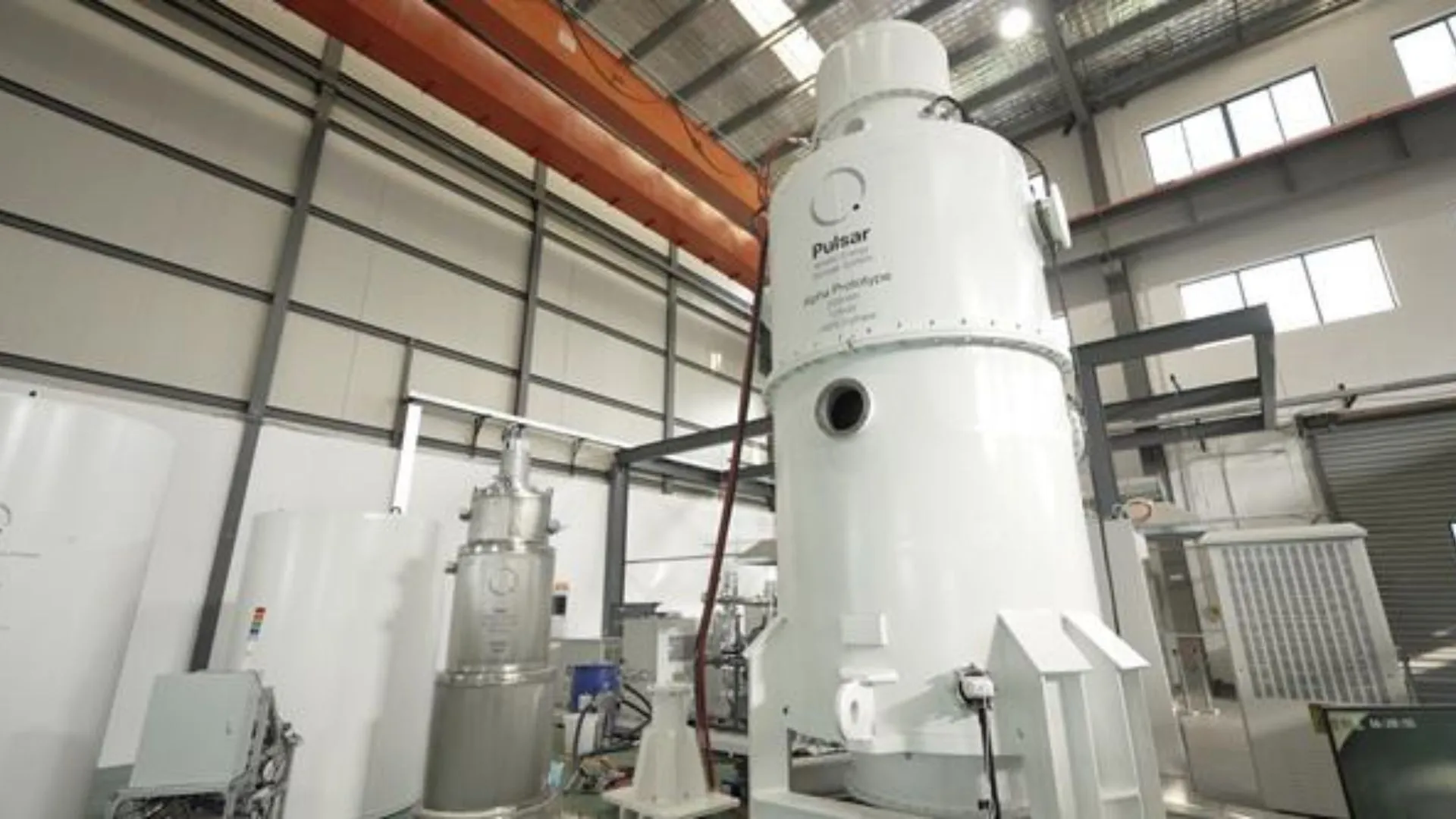
Flywheel-based energy storage system manufacturer Qnetic has reached an important milestone after it began low-speed testing of Pulsar, its 200kWh prototype system. The testing will validate the control and safety systems before moving onto higher rotational speeds.
The rapid increase in renewable energy installations has also driven higher demand for energy storage systems. The intermittent nature of solar and wind energy systems makes them unfit to be connected to the grid directly, prompting the need for a reliable energy storage system.
While lithium-ion batteries are the best solution that we have in terms of high storage capacities, they are also extremely expensive and have limited life cycles. Researchers have been looking for alternative approaches that can deliver the power densities of lithium-ion batteries at a fraction of the cost, while maintaining performance characteristics. Flywheel-based energy storage is a top contender for this spot as it offers low-cost and highly scalable options.
How a flywheel energy storage system works
Qnetic’s alternative to the lithium-ion battery consists of a flywheel, or a heavy rotor, capable of spinning at supersonic speed in a frictionless vacuum chamber. The energy generated at renewable energy power plants is used to accelerate the flywheel and store it as kinetic motion, instead of carrying out the chemical reactions in a lithium-ion battery.
When electricity demand picks up, the rotor can be decelerated by connecting it to a generator that converts the kinetic motion into electric charge that can then be supplied to the grid on demand. Since the energy storage involves no chemical conversion, there is no risk of degradation of the rotor even after many years.
Recently, Qnetic completed its first 100 continuous charge-discharge cycles with zero faults or degradation, a key indicator of its reliability. Additionally, the motor generated 130 kW of power output at 97.3 percent efficiency, with speeds over 11,000 rpm (revolutions per minute), validating the power conversion architecture of the system.
Since the amount of energy stored in the system places high demands on the mechanical systems, controls, and containment in the system, Qnetic is using a staged validation program approach to validate the system.
Independent validation
This milestone follows Pulsar’s mechanical assembly, completed in June, and multiple component and structural tests. These tests aim to reduce the system’s technical risk before it operates at full speed
“Our approach is to increase operating conditions methodically, validating the data at each stage and resolving issues before moving on. That process fundamentally de-risks a system of this scale before full-speed testing and eventual customer deployment,” said Michael Pratt, CEO of Qnetic, in a press release.
Results from Pulsar testing are also being shared with the Electric Power Research Institute (EPRI) as part of Readiness Informed by Shared Knowhow, Evaluation, and Data (deRISKED) program, where Qnetic is a participant.
“Independent validation is a critical part of moving an emerging energy storage technology from development into the field,” added Pratt in the press release.
“The data we’re generating with Pulsar allows us, EPRI, and ultimately utilities and customers to evaluate the technology based on measured performance. We’re deliberately building that evidence as we move toward commercialization.”
Related articles

San Francisco sues Trump Media for selling early access to Trump posts
San Francisco is suing the Trump Media & Technology Group, the parent company behind Truth Social, for selling early access to President Donald Trump's posts on the social media site.

Save $30 on Apple’s Magic Keyboard with Touch ID and a numpad
Until the end of the day on September 22nd, 2026, Best Buy and Amazon have the black Apple Magic Keyboard on sale for $169.99, a $30 discount from the usual price.


Anthropic launches Claude Opus 5.5 with stricter safeguards for cybersecurity
Anthropic says its new Claude Opus 5.5 model comes with stronger safeguards in the wake of recent rogue AI hacking incidents. In an announcement on Tuesday, Anthropic says Opus 5.

Andreessen Horowitz is launching an ‘academy’ with no homework and partnerships with Palantir, Google, and Meta
Venture capital firm Andreessen Horowitz (a16z) is creating an "academy" positioned as a pipeline for young people to build or join a Silicon Valley startup.

Apple is reportedly working on a Whoop-like fitness tracker
Apple is working on a new fitness tracker with a screenless design, similar to the one made by Whoop, according to a report from Bloomberg.