
Bill Gates-backed nuclear fusion firm inks record 6,200-mile reactor tape deal for grids
Commercial nuclear fusion has moved one step closer to reality. Commonwealth Fusion Systems (CFS) has...
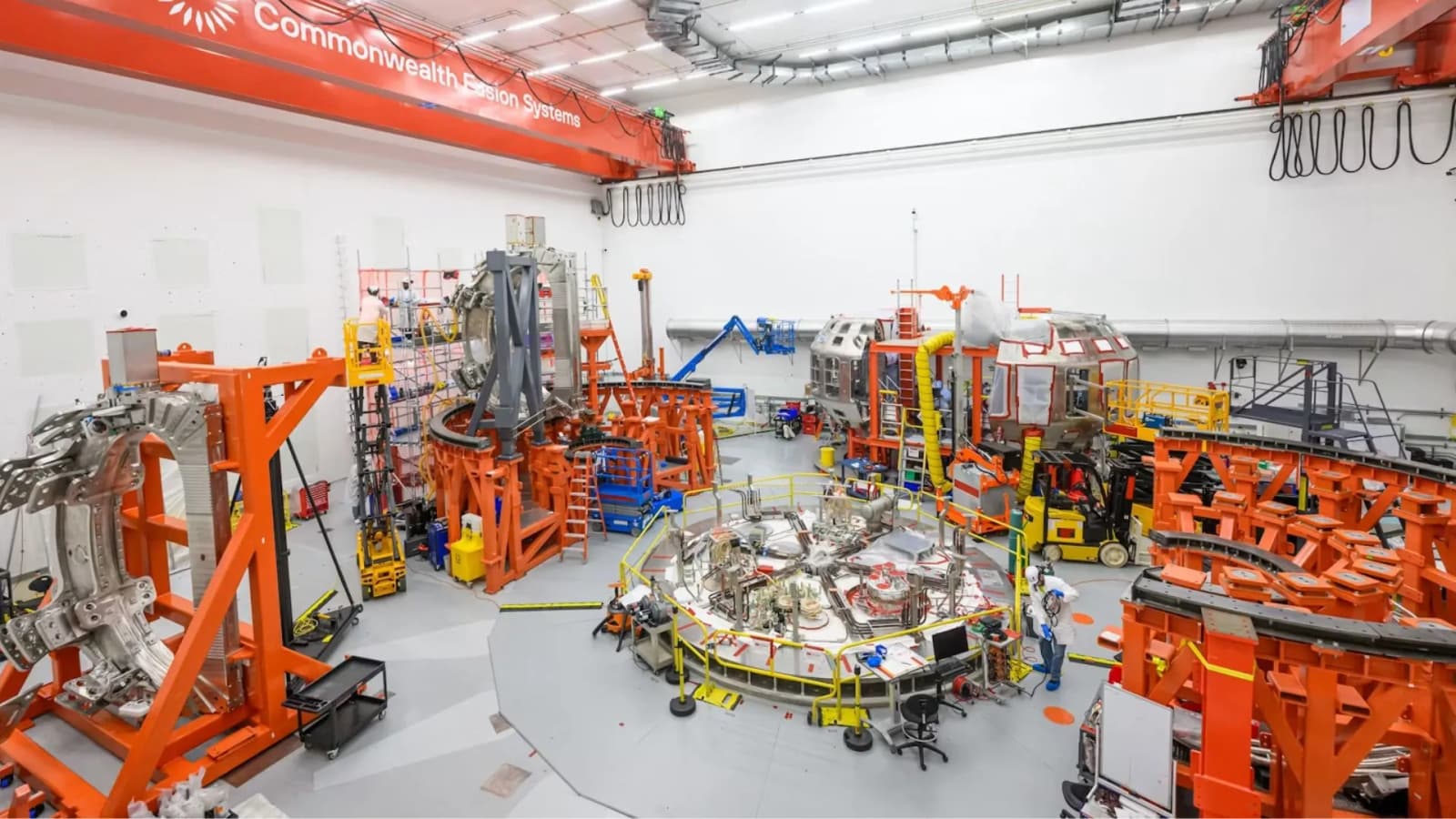
Commercial nuclear fusion has moved one step closer to reality. Commonwealth Fusion Systems (CFS) has signed the largest supply deal of its kind with Japanese manufacturer Fujikura Ltd.
Under the agreement, CFS will purchase more than 10,000 kilometers (around 6215 miles) of high-temperature superconducting (HTS) tape to build its first fleet of commercial power stations.
Fujikura is expanding its production lines in Japan. The agreement signals a critical shift for the fusion industry. Teams are moving past small-scale lab tests and assembling the industrial supply chain needed to build actual power stations.
The first tape deliveries will head to Chesterfield County, Virginia. There, CFS is preparing its flagship Fall Line Fusion Power Station, designed to be the world’s first grid-scale fusion facility.
Keeping the energy contained
CFS’s design centers around a tokamak, which is a hollow, ring-shaped chamber designed to recreate the conditions of a star. Inside the tokamak, extreme heat and pressure force atomic nuclei together.
The challenge is keeping that reaction contained. The resulting plasma reaches temperatures of over 100 million degrees, far hotter than the center of the sun, and would vaporize any physical wall it touches. Only invisible, highly concentrated magnetic fields can suspend it safely in place.
This engineering hurdle explains why the Fujikura contract is so pivotal. Early fusion reactors relied on bulky, low-temperature magnets that generated modest magnetic fields and demanded sprawling cooling systems. To generate sufficient power, those experimental facilities had to be built on an enormous scale.
Building stronger electromagnets
HTS tape allows engineers to build stronger electromagnets within a compact footprint. These intense magnetic fields trap high-energy plasma inside a far smaller vessel, dramatically reducing construction costs and engineering complexity.
CFS is currently constructing SPARC, a prototype machine designed to prove net energy gain—meaning the reaction produces more power than it consumes. Once SPARC hits that milestone, the company plans to replicate the design at commercial scale under the plant name ARC.
“This partnership with Fujikura demonstrates how we’re actively placing orders and getting ready to execute our ARC power plant,” said Bob Mumgaard, chief executive of CFS. He noted that scaling the technology requires global partners willing to invest ahead of commercial deployment.
Global funding support
The move also tightens trade ties between Tokyo and Washington in advanced manufacturing. Fujikura chief executive Naoki Okada said the deal will establish a long-term business base extending into the 2030s, when commercial fusion plants are expected to feed electricity into regional grids.
The announcement caps a busy funding period for CFS. Backed by Bill Gates, the American developer recently raised $1bn in fresh capital. That round included direct investment from South Korea’s Hyundai Motor Group to explore manufacturing partnerships.
With money in hand and key components secured, the company is betting that private industry can deliver clean fusion energy ahead of state-run initiatives.
Source: https://interestingengineering.com/energy/bill-gates-nuclear-firm-reactor-deal
Related articles

Google announces Gemini 4 and says it’s so capable that only ‘trusted cyber defenders’ can have it right now
Google today revealed its next AI frontier model, which it's calling Gemini 4 Argon.
OpenAI builds model that can run chip tools and keep improving designs on its own
OpenAI and Synopsys are developing a specialized model that can directly operate professional chip-design tools,...
Chinese lidar laser sensor detects 1,200-mph US F-35 fighter from 38 miles at night
A Chinese missile research team has simulated a laser-based seeker detecting an F-35 stealth fighter...
Ranked: The 10 Youngest U.S. Billionaires on the Forbes 400
America's youngest billionaires are increasingly tied to AI, with seven of the top 10 building fortunes in the industry.

The AI Tamagotchis are coming
While AI has made plenty of inroads on people's phones and computers, it's largely failed in dedicated devices.

Bio-inspired airborne robot makes soft water landing, converts to autonomous sailboat
Mother Nature spent millions of years perfecting the maple seed’s gentle spiral to the forest...