
Chinese lidar laser sensor detects 1,200-mph US F-35 fighter from 38 miles at night
A Chinese missile research team has simulated a laser-based seeker detecting an F-35 stealth fighter...
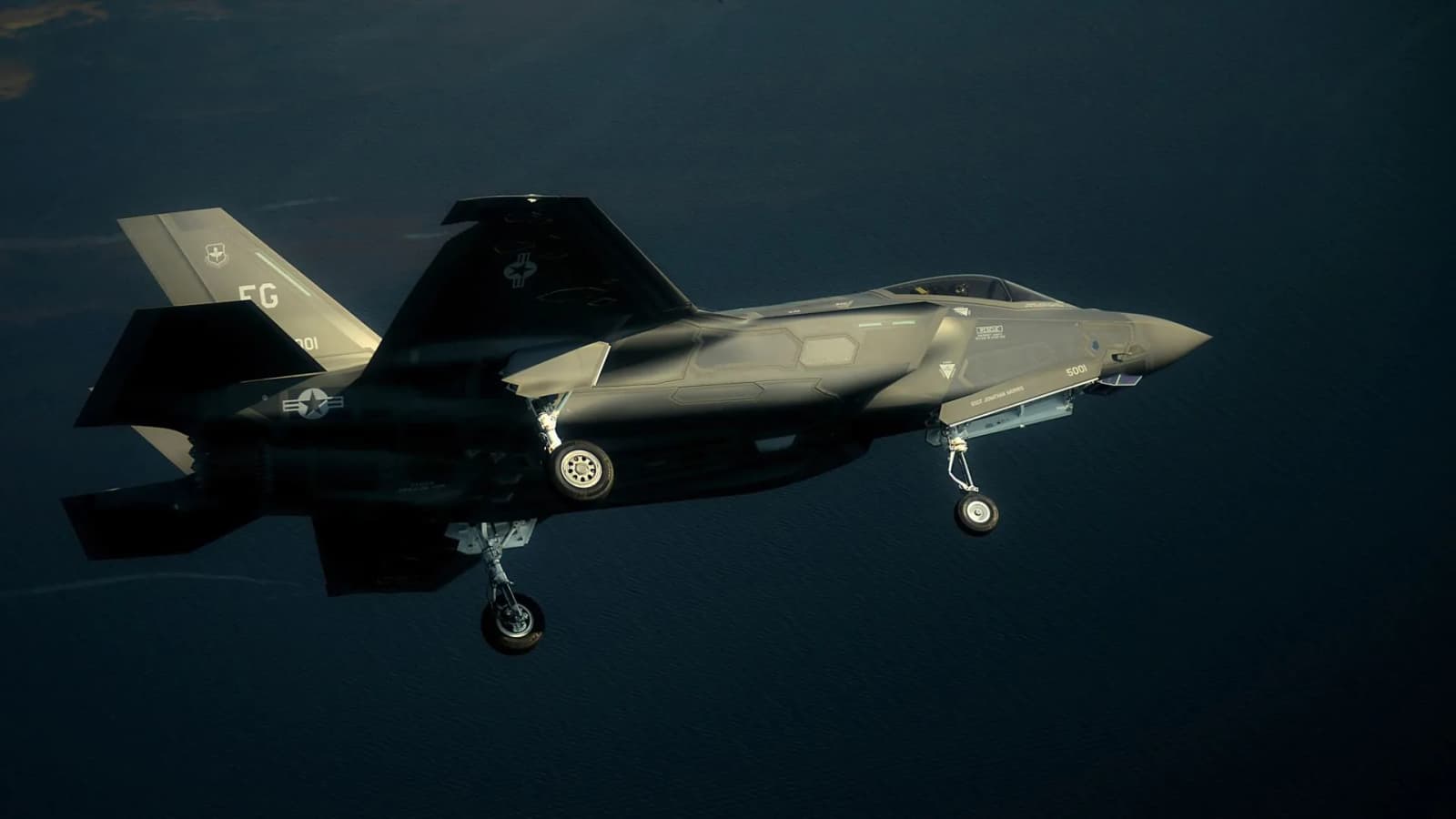
A Chinese missile research team has simulated a laser-based seeker detecting an F-35 stealth fighter from 38 miles away at night.
The concept uses single-photon lidar to detect faint laser reflections from an aircraft. If developed into a missile seeker, the technology could offer another way to track stealth fighters beyond visual range.
The research explores a sensing method that could complement the radar and infrared systems already used in air combat.
Lidar targets stealth aircraft
Researchers at the China Airborne Missile Academy modeled a single-photon lidar designed for missile deployment. The system operates at a wavelength of 1,064 nanometers.
Lidar sends laser pulses toward a target and measures the light that returns. Single-photon systems can detect exceptionally weak signals, which makes them attractive for compact sensing applications.
Missile designers face strict limits on available space, weight, and electrical power. The researchers therefore modeled a relatively small optical system rather than a large airborne sensor.
The simulation used 1-millijoule laser pulses and a 100-millimeter lens. Atmospheric transmission, sky background, and detector noise also factored into the calculations.
Detector recovery time received particular attention in the model. After registering a photon, the detector needs a brief period before it can record another signal.
The researchers calculated that the lidar needed a signal-to-noise ratio of 8.8 decibels. A minimum of 9.4 detected photons would provide enough return signal to establish a track.
Night pushes range to 38 miles
Lighting conditions produced a substantial difference in the modeled performance. The simulated seeker detected the F-35C from 17.2 miles during daylight.
At night, the maximum range increased to 38.2 miles. Reduced background light gave the lidar a cleaner optical environment for detecting weak returns.
The model also examined the quality of the target information available at shorter distances. At 17.2 miles, depth accuracy reached roughly 8 inches.
Transverse resolution came in at approximately 20 inches at the same range. Such measurements could provide a missile seeker with more information than simple target detection. The figures remain predictions from a computer model.
Narrow beam creates problem
A longer detection range does not automatically solve the problem of finding an aircraft. Lidar relies on a narrow laser beam rather than the broad search coverage of radar.
The issue matters because the F-35 already carries weapons capable of engaging targets beyond the simulated lidar range. The AIM-120D-3 AMRAAM provides a long-range air-to-air option.
For closer engagements, the F-35 can carry the AIM-9X Sidewinder. Its imaging infrared seeker provides another method for identifying and tracking aircraft.
The Chinese researchers chose the 1,064-nanometer wavelength partly because stealth aircraft have fewer dedicated countermeasures against active laser sensing.
China has also displayed other airborne laser concepts. The 303 Research Institute recently exhibited a suspended laser weapon pod at an event in Beijing.
Shenyang Aircraft Corp. has separately referenced laser weapons in design material associated with future Chinese stealth fighters.
The lidar study adds another potential application for airborne laser technology. Turning the modeled performance into a practical missile system would require further development and testing.
The study is published in the peer-reviewed Chinese journal Aero Weaponry.
Source: https://interestingengineering.com/military/chinese-lidar-laser-sensor-f35-38-miles
Related articles

Google announces Gemini 4 and says it’s so capable that only ‘trusted cyber defenders’ can have it right now
Google today revealed its next AI frontier model, which it's calling Gemini 4 Argon.

Bill Gates-backed nuclear fusion firm inks record 6,200-mile reactor tape deal for grids
Commercial nuclear fusion has moved one step closer to reality. Commonwealth Fusion Systems (CFS) has...
OpenAI builds model that can run chip tools and keep improving designs on its own
OpenAI and Synopsys are developing a specialized model that can directly operate professional chip-design tools,...

Ranked: The 10 Youngest U.S. Billionaires on the Forbes 400
America's youngest billionaires are increasingly tied to AI, with seven of the top 10 building fortunes in the industry.

The AI Tamagotchis are coming
While AI has made plenty of inroads on people's phones and computers, it's largely failed in dedicated devices.

Bio-inspired airborne robot makes soft water landing, converts to autonomous sailboat
Mother Nature spent millions of years perfecting the maple seed’s gentle spiral to the forest...