
US scientists create soft porous material that guides lithium ions for better batteries
An interdepartmental research team at Rice University in the U.S. has developed a soft porous,...
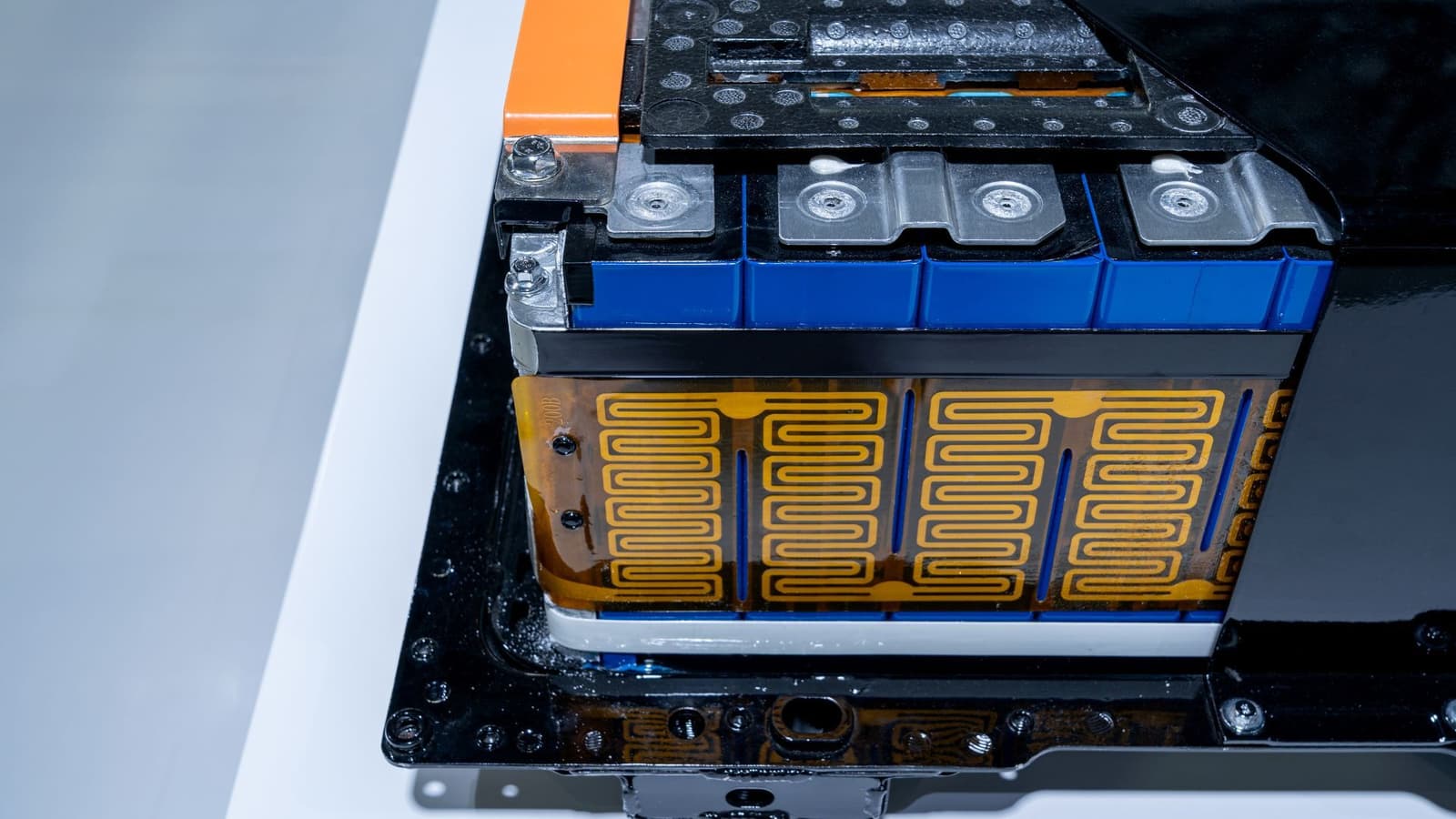
An interdepartmental research team at Rice University in the U.S. has developed a soft porous, and flexible material that selectively allows the movement of lithium ions and could help build better solid-state batteries in the future.
Solid-state batteries are considered the future of energy storage as they rely on a solid electrolyte, which is safer and has higher energy densities. The liquid electrolyte in conventional batteries is prone to catching fire, and replacing it with one in solid state makes it less flammable.
Moving lithium ions is only a part of the challenge in solid-state batteries; how the material behaves can be important too. Metal-organic frameworks (MOFs), a type of porous crystalline material, are usually used as solid-state electrolytes since they contain tiny, ordered channels that can either hold or move specific ions. This is a much preferred quality of an electrolyte material, but MOFs are rigid by nature, which can affect how they can remain in contact with electrodes.
Porous, flexible MOF
The team of researchers from the departments of Chemical and Biomolecular Engineering, Chemistry and Materials Science and Nanoengineering, as well as the Advanced Materials Institute at Rice University, developed ZnBTCA that uses an aliphatic linker that makes the MOF softer and more adaptable.
“MOF electrolytes are often designed primarily around how effectively they transport ions,” said Zina Deriche, a graduate student at Rice who was involved in the research. “Here, we’re showing that the mechanical properties of the framework can also be an important part of the design.”
Both Zn and the aliphatic linker it is made from are abundant and hence low-cost components. In addition, the negatively charged structure makes it easier for positively charged lithium ions to move through its channels.
“Bringing these properties together gives us a new way to design MOF electrolytes by considering how ions move and how the material behaves mechanically at the same time,” added Stavroula Alina Kampouri, assistant professor of chemical and biomolecular engineering at Rice in a press release.
Overcoming short circuits
The charging and discharging process inside a lithium-ion battery can create unwanted pathways through an electrolyte, raising concerns about short circuits. When they incorporated a flexible polymer into the electrolyte and placed it between lithium metal electrodes, the cells operated stably for over 300 hours, even as current increased during testing, without any short-circuiting.
The researchers also replaced the sodium ions in the structure with lithium. They found that 95 percent of the mobile charge-balancing ions were lithium, and yet the structure did not break apart. This shows that mechanical flexibility, too, alongside chemical composition, pore structure, and charge, can be a design tool for researchers working on MOF electrolytes.
“To our knowledge, ZnBTCA is the first MOF electrolyte built from an aliphatic linker with a flexible carbon-chain backbone,” said Sibani Lisa Biswal, chair of chemical and biomolecular engineering, at Rice. “What this work shows is that we can think beyond just the chemistry and pore structure of these materials. Mechanical flexibility can also become a design tool for developing MOF electrolytes for solid-state batteries.”
The research findings were published in the journal Chemical Science.
Source: https://interestingengineering.com/energy/soft-porous-material-for-solid-state-batteries
Related articles

US scientists develop catalyst to turn woody biomass into jet fuel components
A Rowan University research team is investigating how woody biomass could replace petroleum-derived components in...

Arctic secrets revealed: Seven-year hydrophone record exposes what lurks beneath the ice
A hydrophone sitting half a kilometer beneath the Beaufort Sea has spent seven years listening...

Quantum battery: Scientists use charging to balance power, stable energy delivery
A collaboration of researchers from various parts of the world has identified the fundamental limits...

High-speed water droplets could damage supersonic vehicles, study reveals
A team of Boston University (BU) researchers led by Associate Professor Sheryl Grace is studying...

US scientists find solid battery material moves lithium ions rapidly above 260°F
A promising solid battery material lets lithium ions move rapidly when heated above 260°F (400...

Argonne scientists evaluate gravity-driven safety systems for advanced nuclear reactors
Even when a nuclear reactor goes dark, it is not truly asleep. The chain reaction...