China tests next-generation stealth drone operations aboard 40,000-ton warship
China has reached another milestone in naval aviation after the GJ-21 stealth unmanned aerial vehicle...
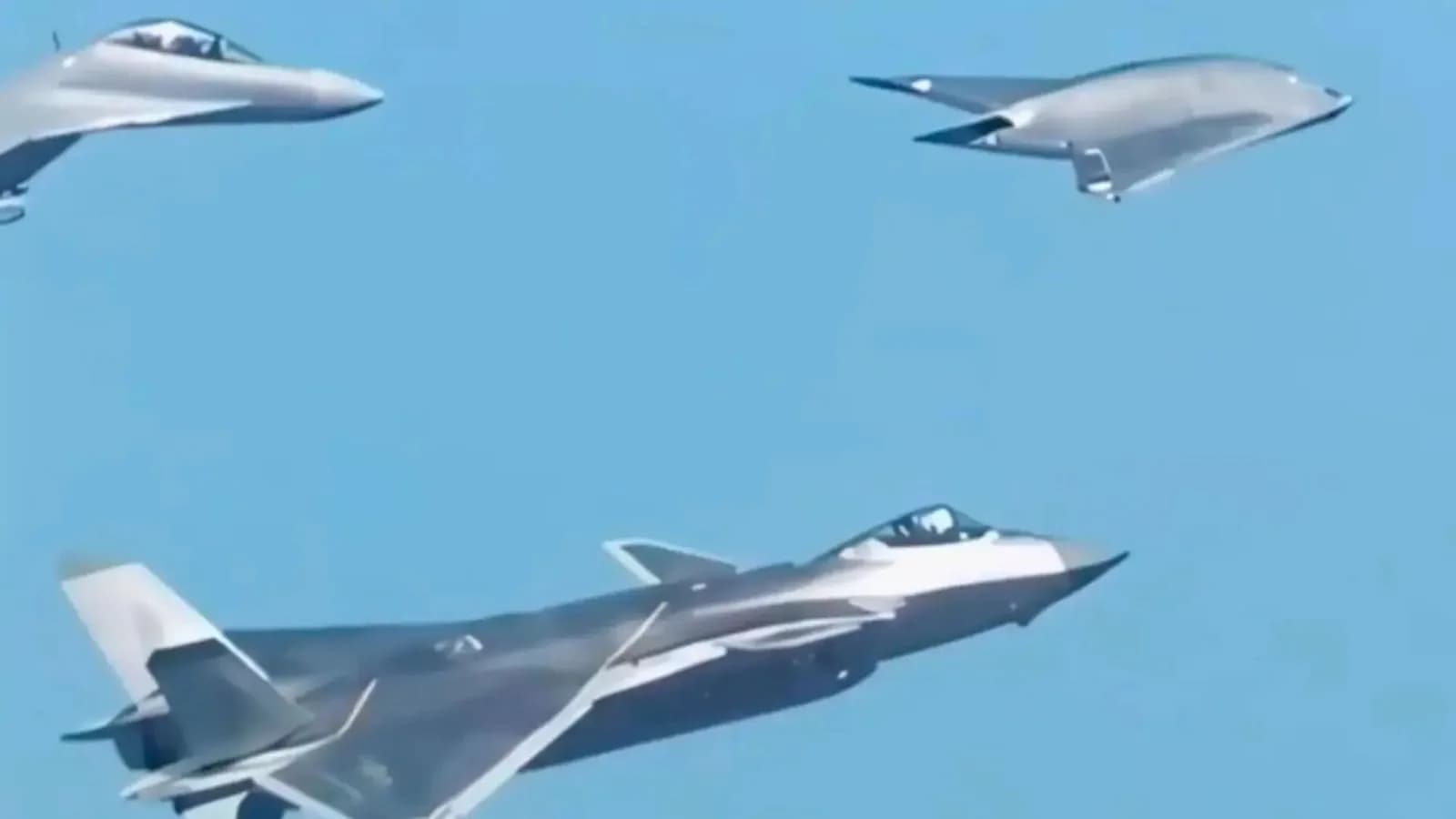
China has reached another milestone in naval aviation after the GJ-21 stealth unmanned aerial vehicle (UAV) successfully completed takeoff and landing operations aboard the Type 076 amphibious assault ship Sichuan. The development highlights China’s efforts to expand the use of unmanned aircraft in naval operations. Military experts say automated assistance and intelligent flight-control systems are essential for drones operating safely from moving ships, where changing conditions make takeoff and landing challenging.
Wei Dongxu, a Chinese military affairs commentator, said carrier-based landings are technically challenging because aircraft carriers are constantly moving at sea. Pilots must adjust an aircraft’s altitude, flight angle and speed while ensuring its tailhook catches an arresting cable on the flight deck, according to CCTV News. Unmanned aircraft face additional challenges because they have no onboard pilot to make immediate adjustments. The GJ-21 therefore relies on intelligent control and automated assistance systems to coordinate its movements with the ship. Wei explained that the drone could use signals to identify the vessel’s navigation conditions and adjust its position during the final approach.
“For example, through signals, the GJ-21 could autonomously sense the Sichuan’s navigation conditions to a certain extent, adjust itself and adapt accordingly, ultimately completing the entire landing sequence efficiently, quickly and precisely,” Wei added.
The GJ-21 features a tailless flying-wing design with a blended wing-body configuration, along with an internal weapons bay and fuel storage facilities. The Sichuan is China’s first Type 076 amphibious assault ship, independently designed and built by the country. Its full-load displacement exceeds 40,000 tons.
Automated flight systems support drone operations at sea
Chinese military expert Wang Yunfei told the Global Times that unmanned aircraft offer advantages during ship-based operations because they are not subject to the physical stress experienced by human pilots during demanding maneuvers. Wang suggested that the GJ-21 could take off and land more quickly than smaller, lighter manned aircraft. Its climbing and descending angle requirements may also be less restrictive, potentially allowing it to complete more sorties. However, operating drones from ships presents technical challenges. Wang noted that UAVs need advanced flight-control and command systems to handle changing atmospheric conditions, including updrafts and downdrafts. Unlike human pilots, who can respond directly to unexpected changes, drones depend on onboard artificial intelligence (AI), automated flight controls and remote-control systems to make adjustments during flight.
Wang said the successful operations aboard the Sichuan demonstrate China’s progress in adapting unmanned aircraft for carrier-based missions. He also described the country’s capabilities in this area as being at the world’s highest level.
GJ-21 technology could extend to other Chinese aircraft carriers
Wang suggested that the automated assistance technology could eventually be adapted for conventionally powered aircraft carriers. If the system proves reliable aboard the Sichuan, it could potentially be used on other vessels in China’s carrier fleet. He added that after testing aboard the Type 076 is completed and sufficient technical data has been collected, the technology could also be considered for aircraft carriers equipped with electromagnetic catapult systems. The development could give the Chinese Navy greater flexibility in operating different aircraft from its ships and support the expansion of unmanned aviation capabilities in future naval operations.
Get the latest news delivered to your inbox.
Related articles