
China’s new 25-ton heavy lifter copying SpaceX’s wildest rocket recovery
The race for cheap, lightning-fast access to orbit has a new, giant metallic contestant. On...
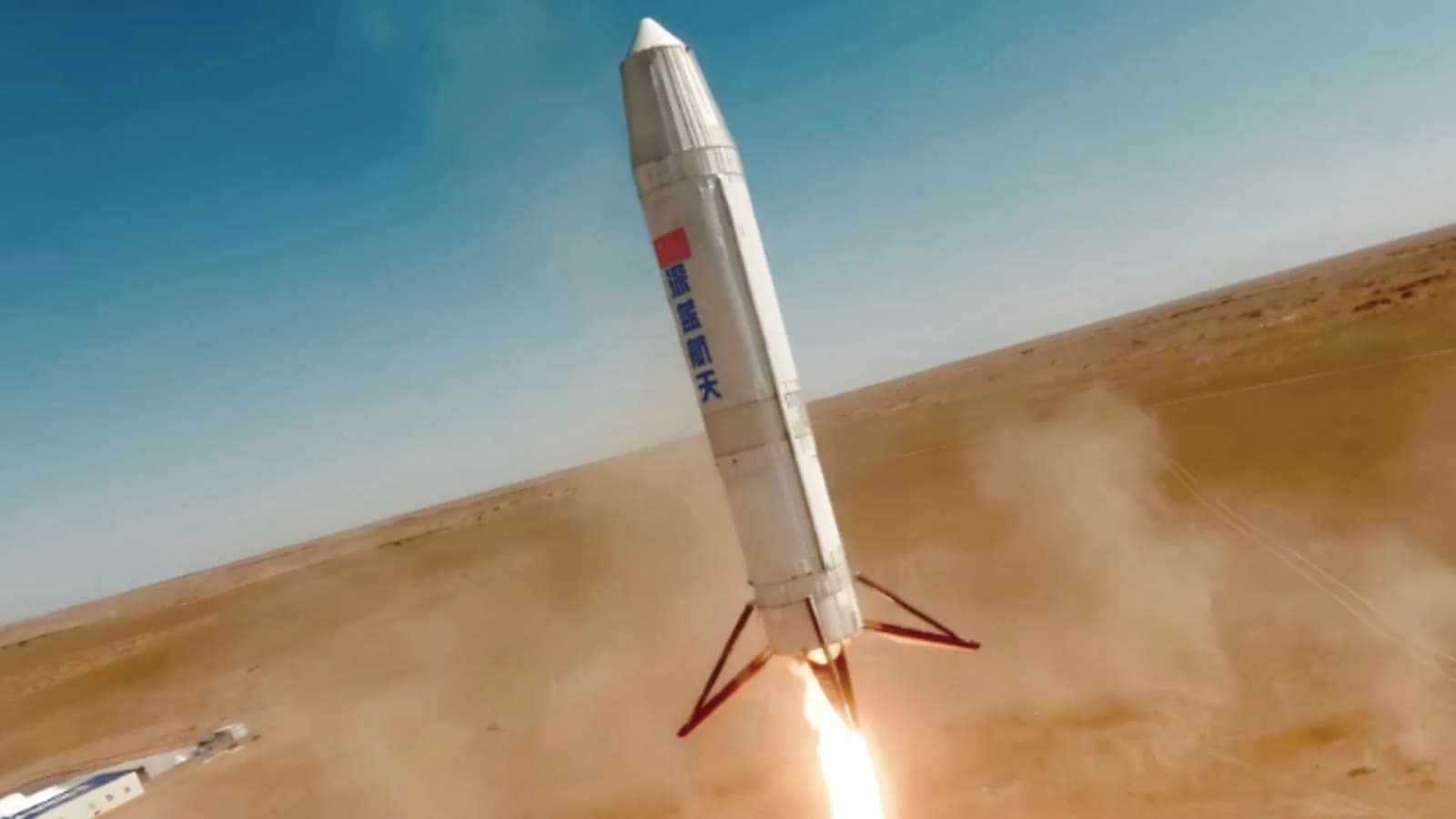
The race for cheap, lightning-fast access to orbit has a new, giant metallic contestant.
On Monday, Chinese commercial startup Deep Blue Aerospace announced that the 5-meter-diameter (16ft) stainless steel propellant tank for its Nebula-2 rocket has rolled off the assembly line.
It is a massive piece of technology. Above all, it shows that China’s private space sector is ready to clone one of the most audacious tricks in modern rocketry: catching a returning booster mid-air with giant mechanical “chopsticks.”
Reusability and rapid turnaround times remain the core measures of success in modern commercial spaceflight. Deep Blue Aerospace is narrowing the technological gap with Western space leaders through its pad-captured, stainless-steel rocket design.
The heavy lifter
Designed to haul up to 25 tons into low Earth orbit, Nebula-2 is built for high-tempo commercial work. The first stage packs 11 Thunder-RS engines generating an immense 12,446 kilonewtons of liftoff thrust, while a single vacuum-optimized engine carries the upper stage.
Global Times reported that the Nebula-2 has been designed for over 20 reuses. It aims to become the workhorse for China’s expanding satellite internet network and commercial payload demands.
The newly completed 5-meter propellant tank sets a record for large-diameter stainless steel tank manufacturing in China’s private space sector. Tanks form the structural backbone of any rocket. Completing this component paves the way for a second-stage propulsion system test slated for the end of the year.
Designed for high payload capacity and cost efficiency, Nebula-2 can support a wide range of space missions. The rocket will deploy large-scale satellite internet constellations. It will also launch high-value payloads into medium Earth orbit, geosynchronous transfer orbit, and other destinations for clients worldwide.
Taking a page from SpaceX’s playbook
If the design feels familiar, that is because SpaceX pioneered it.
SpaceX demonstrated that massive rockets can forgo heavy landing legs when its “Mechazilla” tower arms caught the 233-foot Super Heavy booster during Starship Flight 5. Catching the booster directly out of the sky at the pad reduced the need for sea-barge recoveries.
Now, Deep Blue Aerospace wants a piece of that efficiency. The firm aims to eliminate separate landing zones and slash launch costs through an in-situ chopstick-style capture system on the Nebula-2 pad. Equipping the rocket with this mechanism enables faster turnaround times right at the launch site. As a result, the streamlined recovery process offers a far more efficient alternative to conventional off-site landings.
China is actively advancing its reusable spaceflight capabilities at sea and on land. State-backed Long March-10B reached a major milestone on July 10 when it recovered its first stage at sea using an offshore platform net system. Shortly after, on August 19, LandSpace’s Zhuque-3 Y2 rocket completed China’s first successful land-based booster recovery using deployable landing legs. Together, these achievements show the country’s rapid progress in mastering diverse booster recovery techniques.
There’s also high competition among the companies to build out the nation’s low-Earth orbit satellite internet infrastructure. Enterprise contenders like LandSpace, Space Pioneer, i-Space, and Galactic Energy are working to win contracts for national megaconstellations such as Guowang and Qianfan. Deep Blue Aerospace joins these rivals in attempting to capture market share in a rapidly expanding sector.
Related articles

Epic shifts to ‘AI-accelerated development’ for upcoming Disney game
Epic Games plans to use AI to generate code and art for an unannounced Disney game, which is now delayed from its original March release window, according to a report from Bloomberg.

Here are all the new HomePod Mini 2 colors
Apple's HomePod Mini 2 is here, and we've gotten a close-up look at the second-gen smart speaker.

DLSS 5 gets toned down for its Hogwarts Legacy debut next month
When Nvidia originally showed off DLSS 5 earlier this year, the technology immediately got branded as gen AI for video games. To gamers, Nvidia had lost the plot.

Apple’s HomePod Mini 2 is available to preorder
After nearly six years, Apple debuted a new, improved HomePod Mini. The $149 HomePod Mini 2 will launch on Friday, October 30th, and you can place a preorder now through Apple.
New two-phase system for chip cooling could reduce short-circuit risks
Researchers at Peking University in China have developed an embedded cooling system that uses an...
Old smartphone, new legs: UCLA’s open-source PhoneBot walks on a $400 robot body
Old Android phones gathering dust in drawers could soon have a second career as the...