
Chinese EV giant’s 31-joint humanoid robot could soon greet you at the car dealership
Chinese automaker BYD has unveiled the design of its first self-developed humanoid robot, marking a...
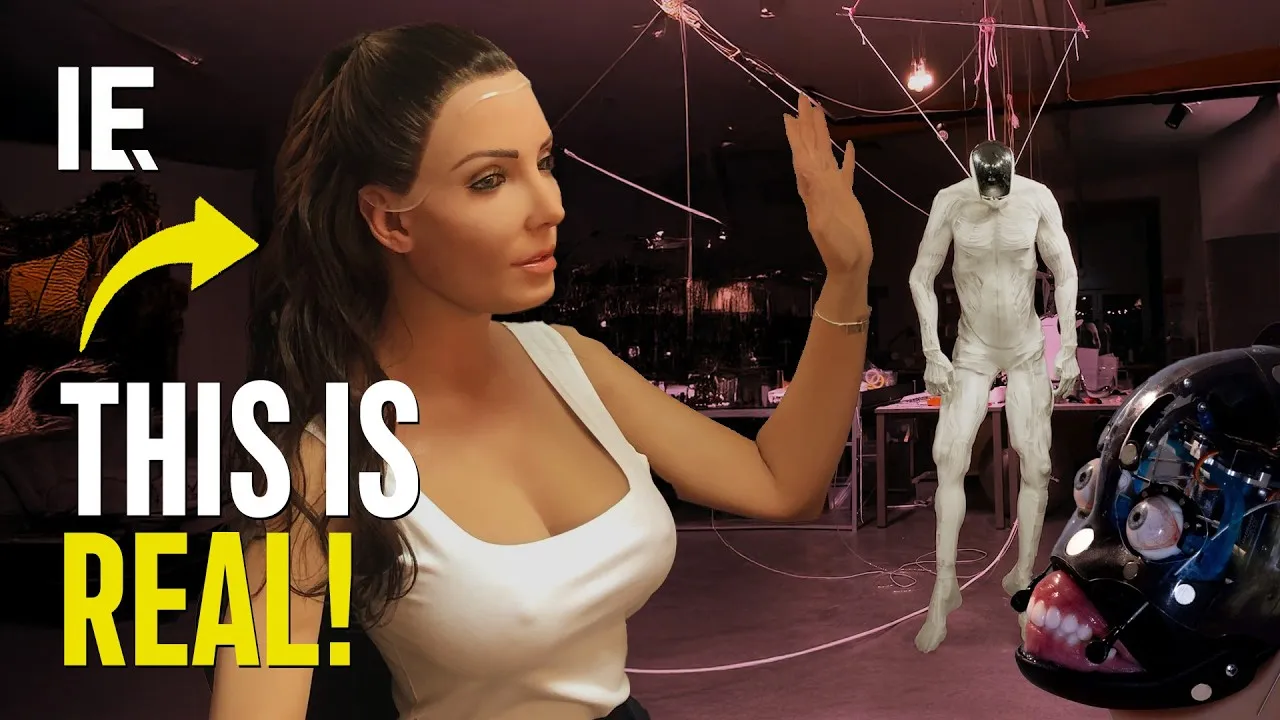
Chinese automaker BYD has unveiled the design of its first self-developed humanoid robot, marking a broader push into embodied AI and robotics that could eventually see the company deploy autonomous machines across its factories and dealerships.
The design appeared in a patent published by China’s National Intellectual Property Administration, describing a robot designed to walk, maintain balance and interact with its surroundings.
The patent points to potential applications in service, education and industrial environments. Although the design resembles BYD’s previously teased humanoid robot, known as Xiao Di, the company has not confirmed whether the patent depicts the final production model.
Designed for real-world interaction
The newly revealed design features a black-and-white body, a rounded head without a display and articulated joints across its torso, arms and legs. Its human-like proportions suggest a platform intended to operate in environments designed for people, rather than a robot restricted to a dedicated industrial workspace.
Previously disclosed specifications for the Xiao Di concept put its height at approximately 5 feet 3 inches and its weight at around 129 pounds (58 kg). The robot is reported to have 31 degrees of freedom, allowing movement across multiple joints, and a dexterous hand with repeatable positioning accuracy of approximately 0.04 inches.
These features could support tasks such as picking up objects, making gestures and pointing out information to people. However, the published design does not establish how reliably the robot can perform these tasks in real-world conditions, or whether the specifications will carry over to a production model.
As automakers and technology companies invest in embodied AI, which combines AI with physical systems that can sense and interact with the real world, humanoid robots face a more complex challenge than software-based AI. They must coordinate perception, decision-making and physical movement while maintaining balance and adapting to changing environments. BYD is looking to apply its manufacturing expertise in developing such robots.
Developing its robotics capabilities for years
BYD’s humanoid robot project is part of a longer-term research effort that began in 2022 with the formation of a dedicated team tasked with developing the hardware and software needed to bring embodied AI into practical use. It has also invested in other companies in the sector. BYD invested in Agibot in August 2023 and acquired a stake in Percibot in April 2025, expanding its connections to China’s developing robotics industry.
The company has also explored industrial applications through its manufacturing operations. Its Changsha factory has hosted Ubtech’s Walker S1 humanoid robot for material-handling and identification tasks, providing an example of how humanoid systems could be tested in real production environments.
BYD executives have previously indicated that the company could deploy humanoid robots across its dealership network, with potential tasks including greeting customers, explaining vehicle features and demonstrating infotainment systems. Such applications would give BYD a way to test whether humanoid robots can perform routine customer-facing work without requiring major changes to existing facilities.
For now, BYD has yet to announce a production timeline or confirm whether the newly published design represents the final version of its Xiao Di humanoid robot, leaving open questions about its commercial launch and which capabilities will make it into a production model.
Related articles
Anthropic adds live dashboards and animated explainers to Claude with Dashboards and Motion
Anthropic launched Claude Dashboards, which builds auto-updating dashboards from data platforms and CRMs, and Claude Motion, which turns reports and charts into editable animations, in beta, while making Docs, Slides and Design available on every plan.

Microsoft launches Microsoft-Decision-1, a fast decision-scoring model, on Foundry and OpenRouter
Microsoft released Microsoft-Decision-1, a model that returns calibrated probabilities over fixed options instead of generating text. Microsoft says it topped a 36-benchmark comparison and ran 35 times faster than GPT-6 Sol.
Microsoft’s Satya Nadella says advanced AI needs a human-controlled ‘emergency brake’
Microsoft CEO Satya Nadella urged the industry to treat frontier AI models like insider risks, wrapping them in containment, independent controls and an “emergency brake” that lets an authorized person pause or shut down a model mid-task.

Amazon in talks to buy AI startup Decart for around $7 billion, WSJ reports
Amazon is negotiating to acquire Decart, maker of real-time video-editing and robotics-simulation AI models, in a deal that could be valued at about $7 billion, The Wall Street Journal reported. Decart was valued at nearly $4 billion in May.

A college in Illinois tried to cancel its Flock contact and it refused
In April of 2025, Elgin Community College had six Flock safety cameras installed to "enhance the safety and security of students.

Silicon Valley is falling in line with Trump’s attempt to rename AI
When President Donald Trump announced his plans to rebrand artificial intelligence as "super intelligence," you'd be forgiven for being skeptical that it would catch on.