Fully solar-powered drone with 30-hour endurance makes debut flight in China
China’s first commercial-grade solar-powered drone has completed its maiden flight in the country’s northwest, where...
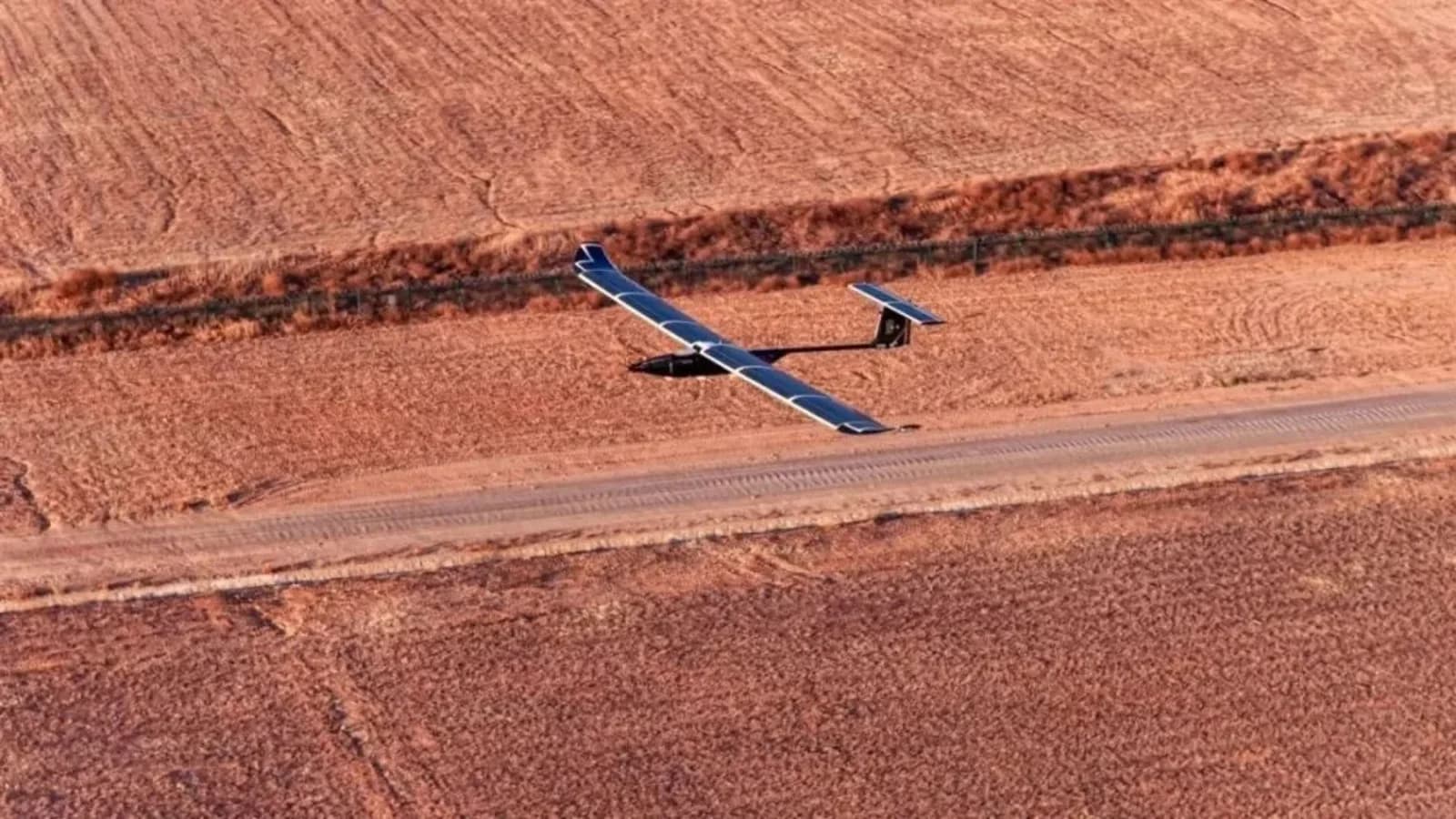
China’s first commercial-grade solar-powered drone has completed its maiden flight in the country’s northwest, where it took off, climbed, circled, and landed safely.
The China Aerospace Science and Technology Corporation’s 11th Research Institute developed the aircraft, called Light Cavalry. Powered entirely by solar energy, Light Cavalry has a maximum design endurance of 30 hours.
The institute developed the aircraft for commercial missions that require sustained low-altitude coverage, such as inspecting infrastructure and surveying land. The maiden flight tested its controls, avionics, and energy storage system, as well as its stability and handling.
A solar aircraft built for commercial payloads
Light Cavalry measures 10.5 feet long and has a 26-foot wingspan. It has a takeoff weight of 99 pounds and a service ceiling of 23,000 feet. The aircraft can carry more than 11 pounds of equipment.
Its payload can be swapped to suit different assignments. The aircraft can carry electro-optical instruments for observation, communications equipment, or detection systems. That gives operators the option to use the same airframe for jobs ranging from land surveys to ecological monitoring.
The developer said all systems were functioning normally after landing. The reported tests covered the aircraft’s behavior from takeoff through landing, with 30 hours specified as its maximum design endurance.
A vehicle-mounted launcher replaces the runway
The drone uses a vehicle-mounted takeoff system and takes about 20 minutes to prepare on the ground. Launching without a fixed runway allows crews to work in places where airfields are scarce, including mountainous regions, remote coastlines and wilderness areas.
The developer sees potential uses in disaster assessment, water resource monitoring and surveys of coastlines and ports.
For infrastructure operators, long endurance could help crews cover more of an inspection area in a single flight. The launch system would also allow crews to choose a departure point closer to the area they need to survey.
Smaller solar drones face tighter power constraints
Much of the development work on solar-powered drones has focused on large and ultra-large aircraft. Those platforms have mainly served as research aircraft or high-altitude pseudo-satellites.
Smaller aircraft could serve a wider range of commercial jobs closer to the ground, but their size complicates the task of powering them entirely with sunlight. A smaller airframe offers less surface area for solar panels, limiting how much electricity the aircraft can generate. At the same time, the structure, avionics and energy storage equipment still account for a substantial share of its weight.
Improvements in materials, motors and energy storage could help narrow the gap between what the panels generate and what the aircraft needs to stay aloft. The institute expects Light Cavalry to fill a gap in the market for long-endurance, low-altitude aircraft. It sees the solar design as a way to extend flight times and reduce operational carbon emissions on missions that require sustained coverage over large areas.
Source: https://interestingengineering.com/transportation/china-flies-commercial-grade-solar-drone
Get the latest news delivered to your inbox.
Related articles