
Green hydrogen process reaches 98% efficiency while producing valuable chemicals
A new electrochemical process developed by researchers at the Technion, Israel Institute of Technology, could...
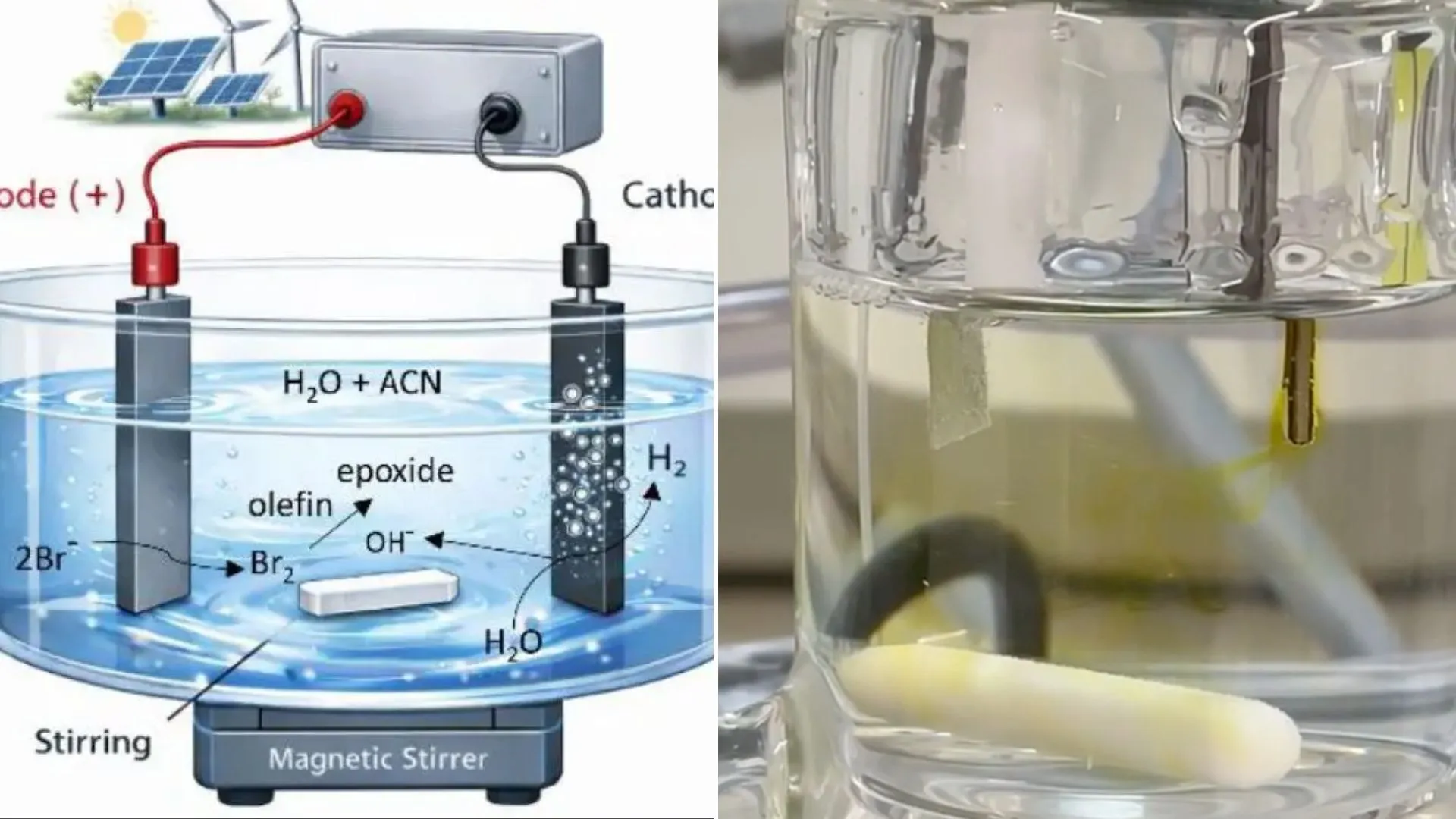
A new electrochemical process developed by researchers at the Technion, Israel Institute of Technology, could make green hydrogen production more economically attractive by producing a valuable industrial chemical alongside the fuel.
The approach replaces the oxygen normally generated during water electrolysis with an epoxide, a class of chemicals widely used to manufacture polymers, coatings, adhesives, pharmaceuticals, and other products. Researchers report that the system achieved 98% efficiency for both hydrogen generation and the parallel epoxide-producing reaction.
The study, published in Nature Communications, was led by Prof. Avner Rothschild of the Technion Faculty of Materials Science and Engineering and Dr. Guilin Ruan, a postdoctoral researcher. The team filed a U.S. patent application for the technology.
Replacing oxygen with a valuable chemical
Green hydrogen is produced by using electricity from renewable sources to split water into hydrogen and oxygen. While the resulting hydrogen can help decarbonize industries that are difficult to electrify directly, its wider adoption has been constrained by its cost compared with hydrogen produced from fossil fuels.
The Technion team approached the problem by rethinking what happens on the other side of the electrolysis process. “Instead of producing oxygen,” the researchers sought to generate an epoxide, turning what is normally a coproduct into a potentially valuable chemical feedstock.
In their experiments, the researchers report 98% efficiency for both hydrogen production and the parallel epoxide synthesis. This means, according to the team, that only about 2% of the electrical charge was lost to competing reactions. The researchers also report achieving a current density they say is compatible with large-scale industrial electrolysis.
Membrane-free electrolysis
The process builds on earlier work by Rothschild and his collaborators the separated the electrochemical reactions that normally produce hydrogen and oxygen.
That concept forms the basis of membrane-free electrolysis, which avoids the membrane traditionally used to separate the two electrode reactions. H2Pro has commercialized an earlier technology from the research group.
The new system takes the concept in a different direction by combining hydrogen production with chemical synthesis. According to Ruan, its performance comes from optimizing the complete electrochemical system rather than focusing on a single electrode or reaction.
The system brings together the electrodes, a redox mediator, the solvent environment, and the operating configuration. This allows the researchers to produce hydrogen and epoxide without a membrane separating the electrodes.
A potential economic advantage
The approach could offer an additional economic incentive for green hydrogen production because the electrolysis process would produce two useful outputs rather than hydrogen and oxygen alone.
However, the reported results are from the researchers’ experiments, and the study does not establish that the technology is ready for commercial-scale deployment. While the reported current density is described as compatible with large-scale electrolysis, further development is needed to show how the process performs under sustained industrial operating conditions.
The European Research Council supported the research through the H2Bro project, following Rothschild’s ERC Advanced Grant awarded in 2023. It is also part of the Waste to Value inter-university research initiative funded by Israel’s Council for Higher Education.
The researchers have filed a U.S. patent application for the technology, suggesting they see the process as having potential beyond the laboratory.
Related articles
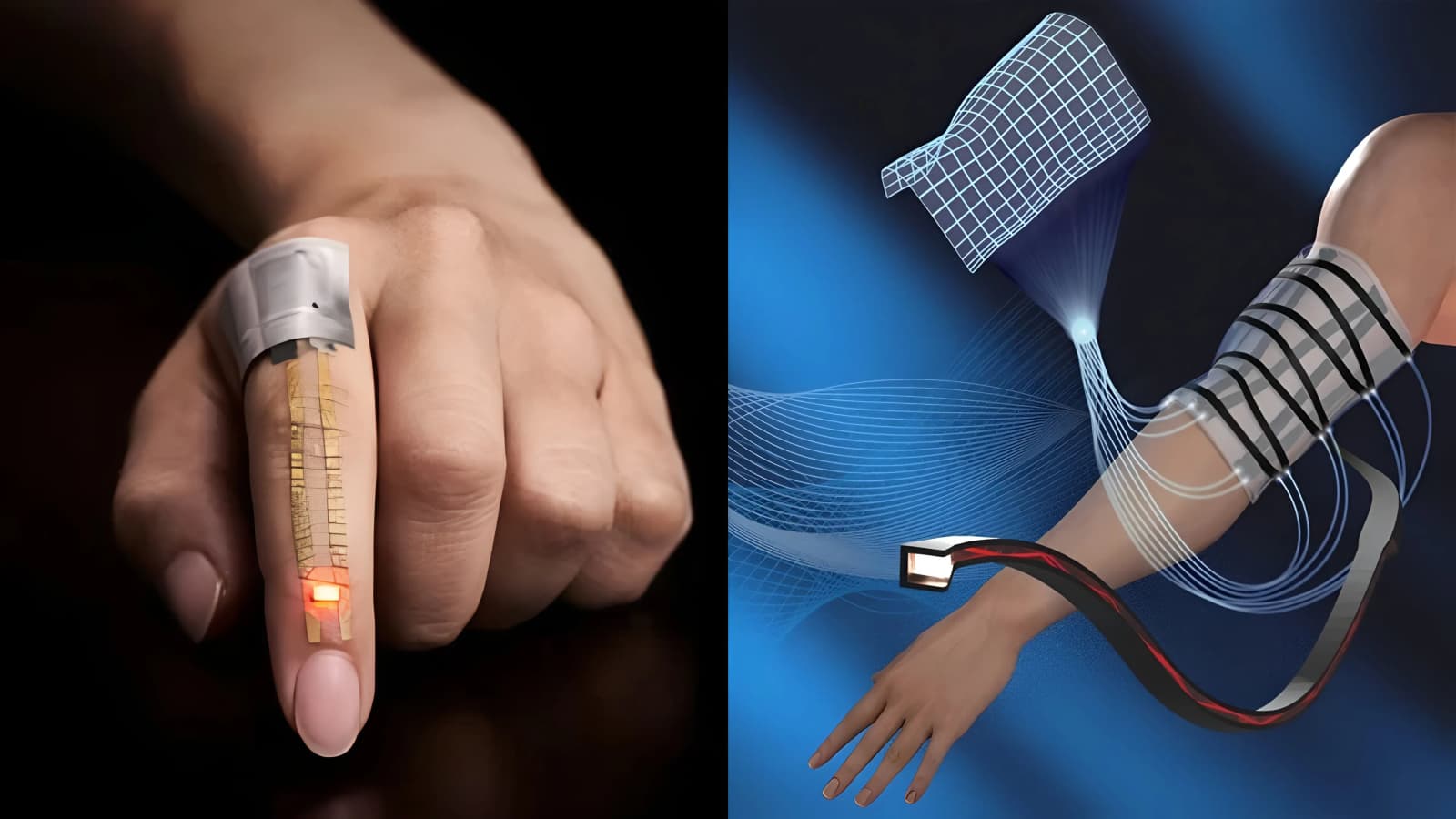
Soft sensor recreates 3D shapes through bending and twisting despite fiber damage
MIT researchers have developed a soft sensor that recreates its own three-dimensional shape as it...

Biohub, DOE, NIH and Meta/DeepMind back $1.8B virtual-biology data push for predictive AI models of disease
On October 7, Biohub said it, the U.S. Department of Energy, the NIH and new partners are committing $1.8 billion in funding, data, compute and measurement technology to build open, AI-ready biological datasets for predictive models of cells and disease.
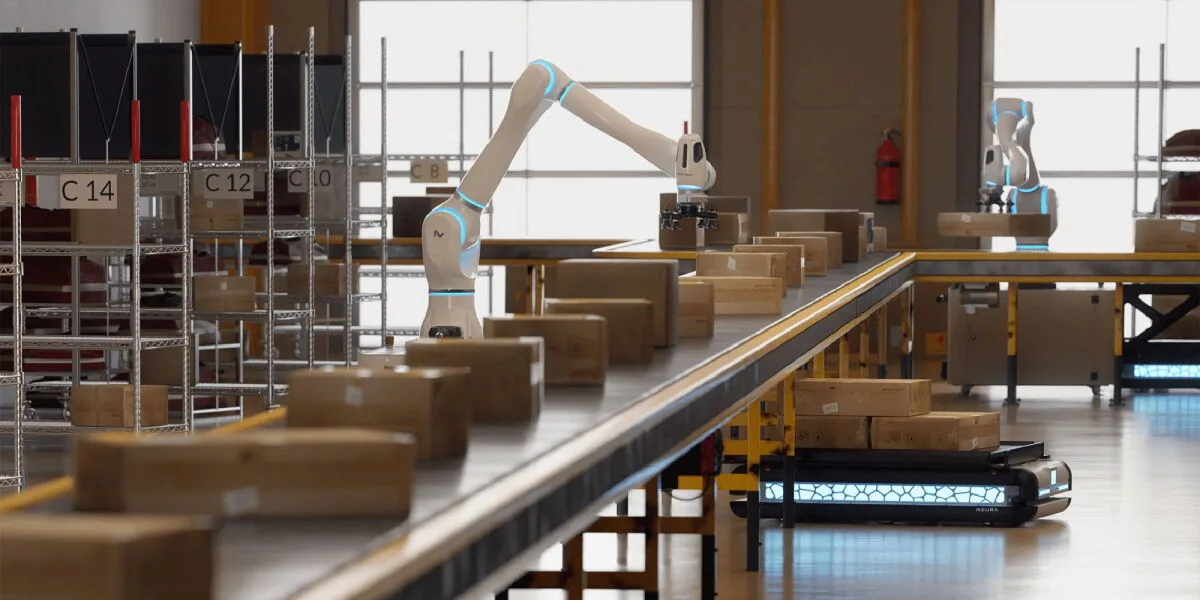
AWS launches open-source Physical AI Toolchain with NVIDIA stack for robotics development
Amazon Web Services on October 8 released an open-source Physical AI Toolchain that ties together synthetic data, training, simulation, validation and edge deployment with NVIDIA’s Isaac and Cosmos software for industrial automation, mobility and humanoid robotics.

OpenAI rolls out GPT-6 and Intelligent UI in ChatGPT, adding interactive charts, forms and in-chat tools
OpenAI began rolling out GPT-6 with Intelligent UI on October 7 to Plus, Pro, Business and Enterprise users, expanding to Free and Go on October 8, so ChatGPT can answer with interactive graphics, buttons, forms and tools inside the conversation.
Google Cloud launches a unified Gemini agent for enterprise work that plans tasks and connects to business systems
At Gemini at Work 2026 on October 8, Google unveiled a universal Gemini agent that can take objectives, plan work, connect to enterprise systems and return finished results from a single prompt—initially in private preview for businesses.

White House: 11 firms including NVIDIA, OpenAI and Anthropic pledge $2.4B in AI tools and compute for Genesis Mission
At a science summit on October 8, the Trump administration said eleven industry partners will provide $2.4 billion in super-intelligence tools and compute credits for the Genesis Mission Consortium, led by NVIDIA’s $1 billion commitment.