Just in time for Halloween: ‘Zombie’ star that may be the first green star
Astronomers say a dead star about 326 light-years away, one that has been taking in...
This story was prepared automatically by software.
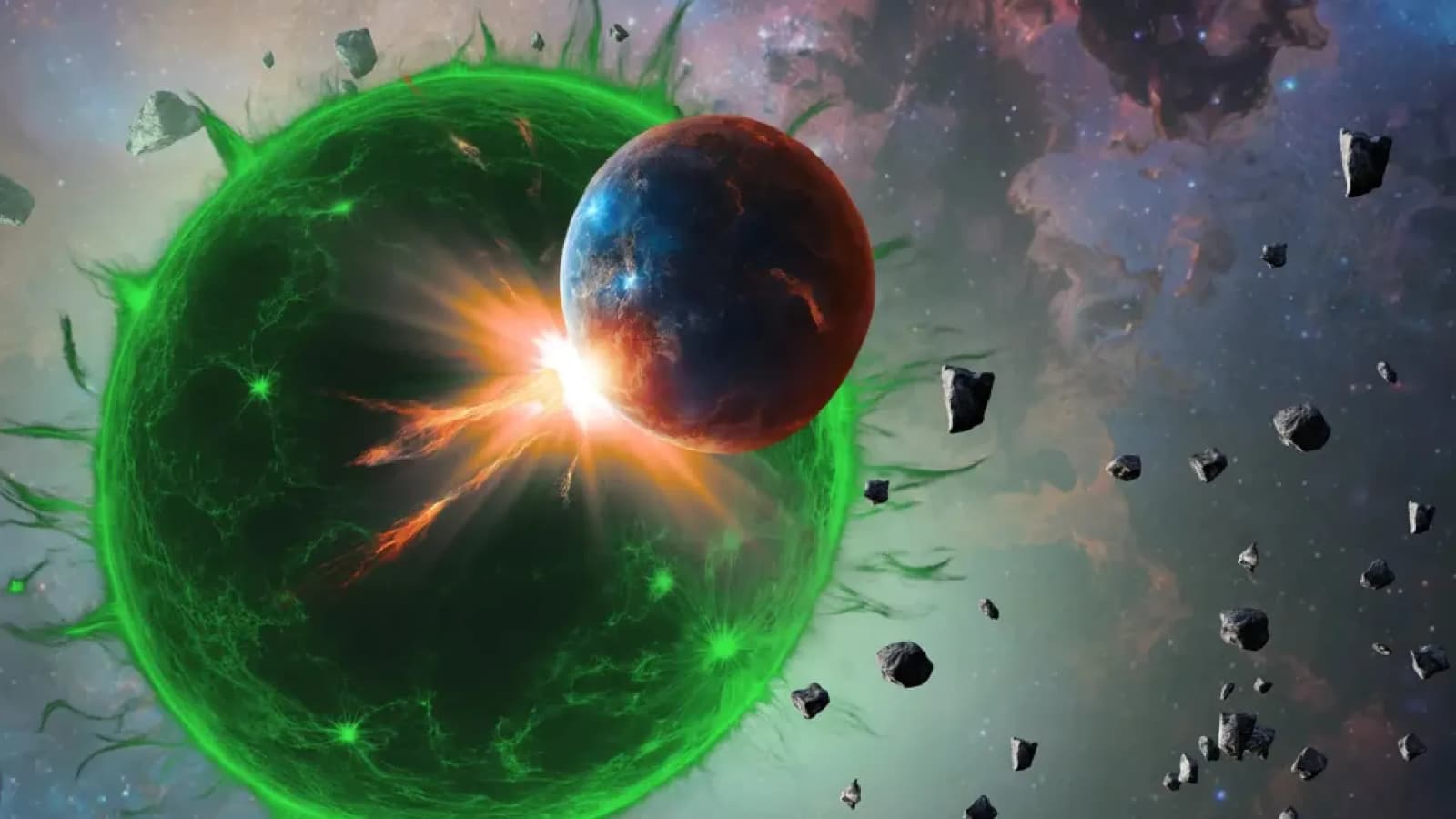
Astronomers say a dead star about 326 light-years away, one that has been taking in rocky planetary material, may glow green, which would make it the first genuinely green star ever reported, according to new research from the University of Warwick.
The star, a cool white dwarf called WD J1330+6435, has accreted rocky material from its planetary surroundings. A model of its atmosphere suggests that this diet gives it a ghostly green color. The work was published in RAS Techniques and Instruments.
Why white dwarfs are not always white
Most stars act like “perfect radiators,” so temperature sets their color. Cool stars look orange, stars like the sun look white and the hottest glow pale blue. Astronomers had assumed white dwarfs follow the same rule. Team leader Mark Hollands of Warwick said nobody had really explored what else might be possible for these stars.
The key is density. White dwarfs form when sun-sized stars run out of fuel and their cores collapse, packing matter extremely tightly. In that dense atmosphere, elements such as carbon, calcium and sodium interact with the surrounding helium plasma and absorb light across a wider range of colors than they would at lower densities. That nudges a star away from white or pale blue.
No white dwarf is close enough for Earth-based astronomers to see its true color, so the team worked out how each would look from its atmosphere.
A recipe for every color
The researchers found white dwarf colors fall into groups tied to atmospheric chemistry. Carbon-rich ones should look pink or purple. Those enriched with debris from consumed asteroids, comets and old planetary systems take on a yellow tone. Cooler white dwarfs with mixed hydrogen and helium atmospheres often glow cyan or pale blue, because hydrogen molecules collide with helium atoms.
The green zombie
In WD J1330+6435, the accreted material has enriched the atmosphere with calcium, lithium and sodium. Sodium absorbs the orange part of the spectrum, Hollands said, leaving behind a ghostly green glow. The team thinks no other star, living or dead, has been credibly reported as green. Imagining a green star overhead, Hollands said, “feels like something out of science fiction.”
The reddest star
The team also found what could be the reddest star known, the white dwarf WD J1011+2845, just 48 light-years away. A deep convection zone carries carbon from its core to its surface, where carbon molecules distort its light into a deep salmon-pink glow.
Mostly still white
Only five of the 151 white dwarfs within about 65 light-years of Earth have extraordinary coloring. Extrapolating, the team estimates about one in 30 of these dead stars has an unusual color. Boris Gänsicke of Warwick said that is still a lot of oddly colored stars across the universe, but the average white dwarf really is white.
Source: https://interestingengineering.com/space/first-green-star-white-dwarf-zombie
Related articles