8,000-mile-tested autonomy system set to be deployed in multiple ground vehicle platforms
A Rhode Island-based company has debuted a new robotic control package for the autonomy deployment...
This story was prepared automatically by software.
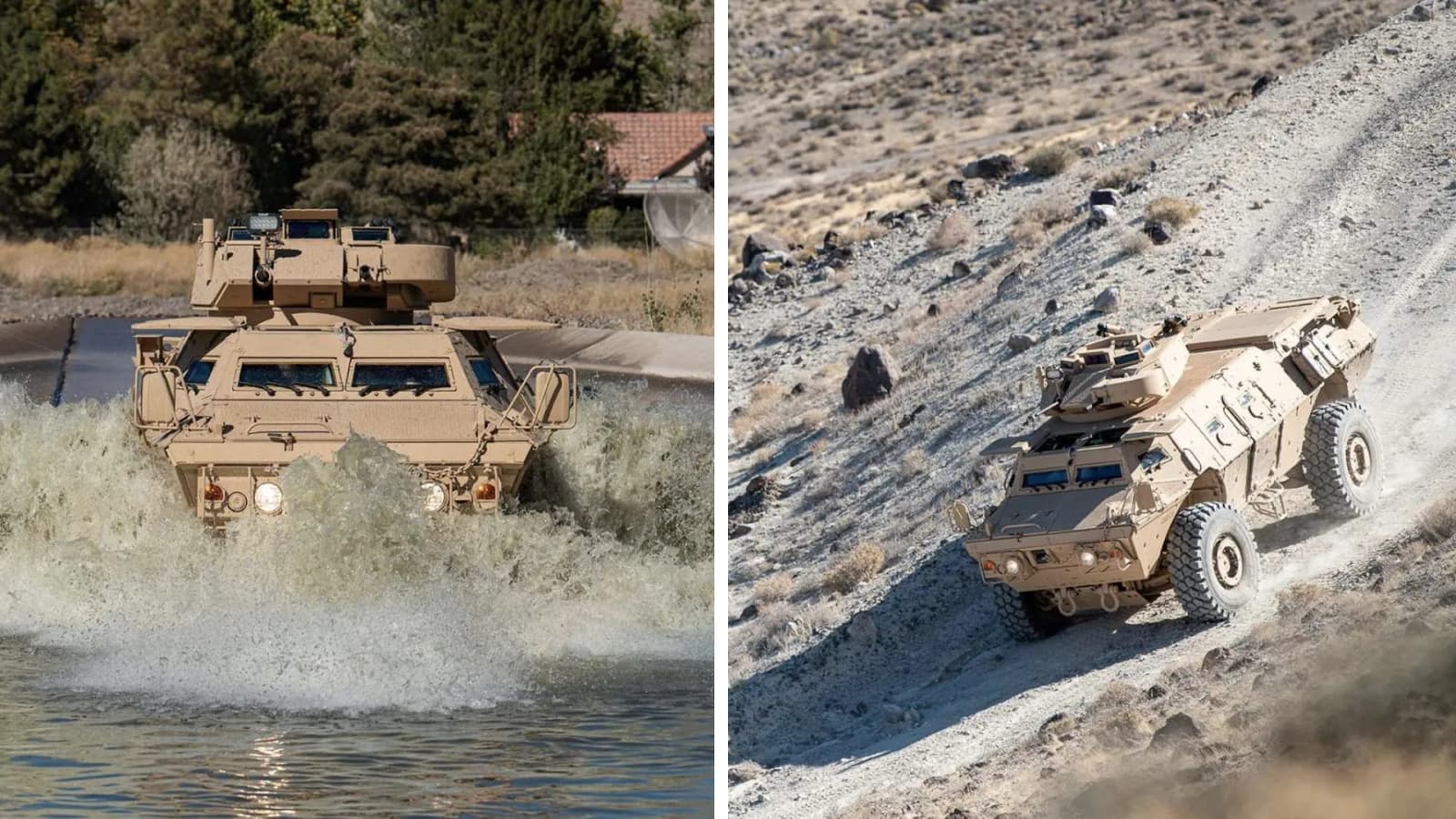
A Rhode Island-based company has debuted a new robotic control package for the autonomy deployment across ground vehicle platforms. Developed by Textron Systems, the CoreMotion robotic control package interprets and translates commands between ground vehicle subsystems, robotic controls, autonomous navigation and mission payloads to ensure confident mission set execution in diverse operating environments.
The company revealed that as the proven control backbone behind Textron Systems’ RIPSAW family of uncrewed ground vehicles, the CoreMotion package also provides an affordable and scalable pathway for retrofitting existing fleets of crewed vehicles for reliable robotic operation.
Robotic control package
The robotic control package is developed to execute and translate commands between autonomy software and vehicle hardware.
The field-proven hardware- and software-agnostic autonomy integration solution is utilized across Textron Systems’ RIPSAW family of uncrewed ground vehicles, demonstrating reliable performance over more than 8,000 operational miles.
“Our CoreMotion technology has been proven over more than 8,000 miles of UGV operation,” said Ryan Schaffernocker, Senior Vice President, Air, Land & Sea Systems.
“By bringing this same field-proven robotic control capability to both new and existing vehicle platforms, CoreMotion provides customers with a low-risk path to autonomy adoption while preserving the flexibility to integrate the autonomy stack of their choice.”
CoreMotion deployed across full RIPSAW UGV family
With more than five decades of robotics and autonomy experience, Textron Systems’ CoreMotion has been deployed across the full RIPSAW UGV family. Implemented as a modular kit, the CoreMotion package enables customers to rapidly integrate autonomous capabilities across new and existing vehicle fleets while reducing technical and integration risk. CoreMotion technology accelerates the transition from autonomy development and experimentation to operationally relevant capability, as per the release.
CoreMotion combines mission-ready software with ruggedized hardware components, including computers, actuators, wiring, and electronic systems. Its modular design is intended to support installation in field environments, potentially simplifying the process of equipping vehicles with robotic capabilities.
One of the most significant aspects of CoreMotion is its potential application to existing vehicle fleets. Military organizations often operate vehicles that remain useful but may require modernization to support emerging operational requirements.
CoreMotion is designed to provide a pathway for retrofitting crewed vehicles for robotic operation. By using a modular integration kit, customers may be able to introduce autonomous capabilities without replacing entire vehicle fleets.
Such an approach could help reduce the cost and complexity associated with modernization while preserving investments in existing platforms. It may also offer a practical route for organizations seeking to expand their uncrewed vehicle capabilities without undertaking a complete redesign of their ground systems.
However, the extent of the benefits will depend on individual vehicle architectures, integration requirements, testing, and mission-specific operational needs.
CoreMotion is intended to address this integration challenge by providing a common control layer between autonomy software and vehicle hardware. Its modular architecture could reduce the need for platform-specific integration work and help simplify the deployment of robotic functions across different fleets.
Source: https://interestingengineering.com/military/autonomy-tech-deployed-in-vehicle-platforms
Related articles