
Lattice fusion reactor shows heat and gas signals in independent validation study
Hylenr Inc. has completed the first phase of an independent study of its lattice confinement...
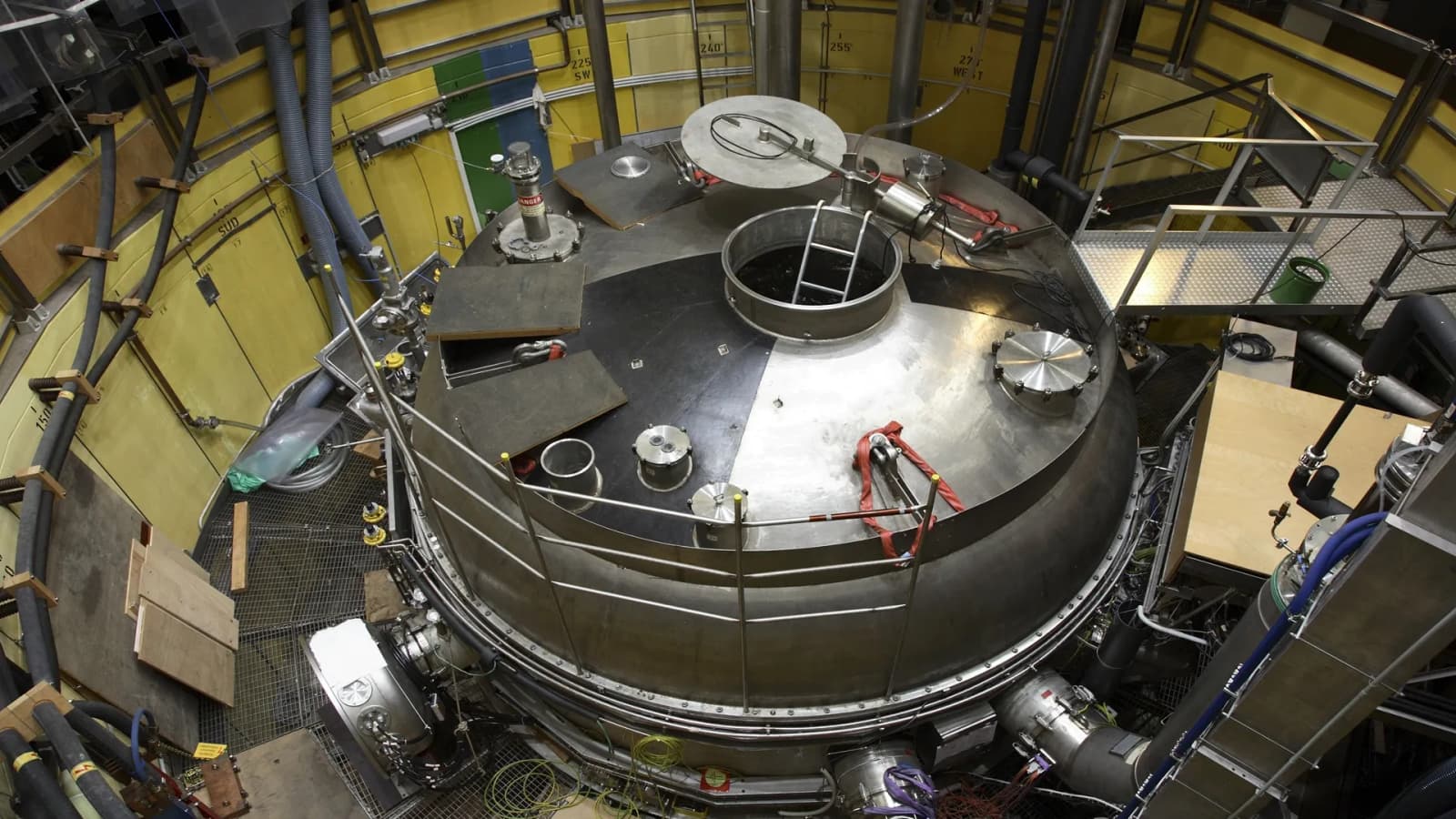
Hylenr Inc. has completed the first phase of an independent study of its lattice confinement fusion reactor at Texas A&M University, reporting thermal, gas and material signatures that the company says warrant further investigation.
The Michigan-based company tested its BRT-NiUCS-2 reactor and multiple hydrogen-loaded nickel-palladium catalyst samples under controlled laboratory conditions. The work examined heat, radiation, residual gases and changes in the catalyst materials after testing.
The results do not establish that the reactor produces commercially useful fusion energy. Instead, they provide measurements that Hylenr plans to investigate in a second phase focused on reproducibility and more precise measurements.
The study detected elevated helium, argon and neon signals in the active reactor compared with background measurements. Helium and argon were reported at levels roughly two to three orders of magnitude above background.
Fusion signatures face scrutiny
The researchers also found temperature differences between the active reactor and a calibration device operating under comparable input-power conditions. Thermocouples and calibrated infrared imaging were used for the thermal measurements.
Post-reaction analysis using scanning electron microscopy and energy-dispersive X-ray spectroscopy, or SEM/EDX, also showed morphological and compositional changes in the catalyst samples.
“Our objective has always been to move beyond internal observations and subject the technology to rigorous, independent testing. The validation study conducted at Texas A&M University provides an important external data point across thermal measurements, gas analysis, and material characterization,” said Ram Ramaseshan, Co-Founder and CEO, Hylenr Inc. “These results provide a basis for the next phase of validation while reinforcing our focus on reproducibility, quantitative measurement, and scientific transparency.”
Residual gas analysis was performed using an SRS RGA 100 system under high-vacuum conditions. The elevated helium and argon signals were accompanied by no corresponding rise in nitrogen, which the study said provided evidence against atmospheric leakage being the sole explanation.
Radiation measurements produced a different result. Geiger-Müller and neutron detectors found no detectable gamma or X-ray emissions, while neutron counts remained statistically indistinguishable from background during about five days of monitoring.
Phase 2 targets repeatability
Hylenr will now move to Phase 2 testing, which will examine multiple independent reactors and use quantitative calorimetry to measure heat output more precisely. Researchers will also study hydrogen-loading parameters and perform isotopic-ratio measurements.
Additional analytical methods, including secondary ion mass spectrometry and inductively coupled plasma mass spectrometry, or SIMS and ICP-MS, are planned to provide more detailed measurements of the reactor materials.
“The Phase 1 research provided an opportunity to examine the BRT-NiUCS-2 reactor using a range of complementary analytical techniques. The combination of thermal measurements, residual gas analysis, nuclear diagnostics and post-reaction materials characterization broadens the experimental basis for assessing the observed phenomena and determining priorities for further investigation,” said Prof. Lin Shao, Professor of Nuclear Engineering at Texas A&M University.
The next phase is important because reproducing the reported signals across multiple reactors would provide a stronger basis for assessing whether the observed effects are consistent and quantifiable.
Hylenr ultimately wants to use the validation work to determine whether its lattice-based technology can deliver repeatable excess heatand meet the engineering requirements for a scalable energy system.
The Phase 1 research paper, “Validation of Anomalous Heat and Nuclear Signatures in the BRT-NiUCS-2 Reactor: Phase 1 LCF Investigation,” was presented at the 27th International Conference on Condensed Matter Nuclear Science in Niagara Falls, Canada.
Related articles
20 MW compact fusion system targets on-site power for data centers and industry
Israeli fusion company nT-Tao and US nuclear developer Orion Nuclear Energy Corporation have signed a...
GEK800 engine reaches ignition milestone as turbofan program moves toward production
GE Aerospace has successfully ignited the GEK800 turbofan engine in a new test for a...
US nuclear startup taps large-bore drilling firm to advance 1-mile underground reactor project
A nuclear energy project aimed at placing small modular reactors about one mile underground is...

Higgsfield AI ships new video features in a day with GPT-6 Astra
With GPT-6 Astra, Higgsfield AI makes video ad creation easier for small businesses and brings new creative tools to market faster.

Flights grounded at JFK, LaGuardia, other US airports after air traffic system outage
The Federal Aviation Administration (FAA) has issued ground stops at several major airports in the...

US Army’s oldest test base gets 390MW molten salt nuclear plant fueled by U-235
The US Army’s oldest active proving ground and test base will reportedly receive a 390-megawatt...