Near-death experiences: 50 people sketch dark tunnels, colorful horizons, and bubbles
When people try to describe a near-death experience, words often fail. So researchers asked 50...
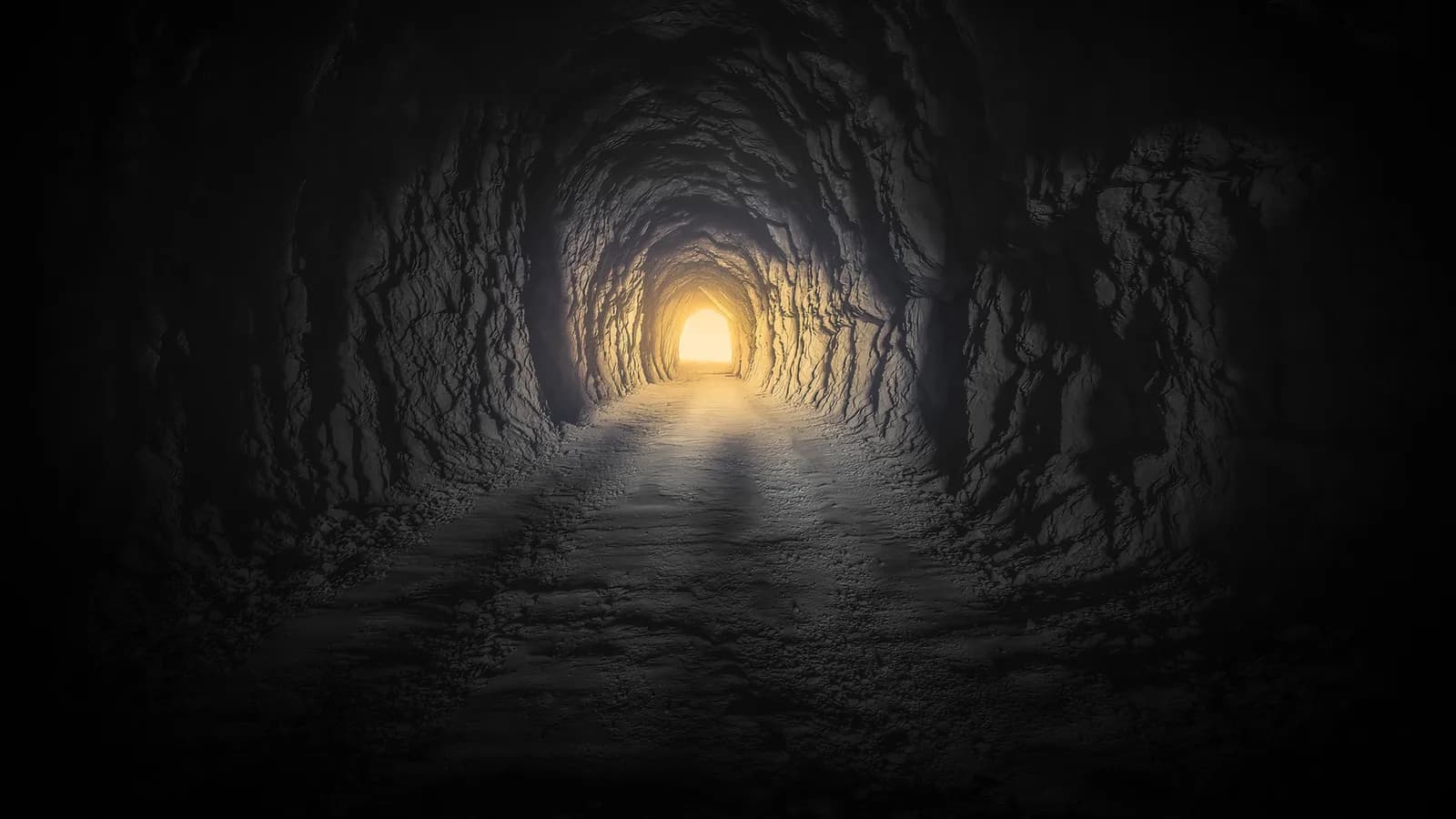
When people try to describe a near-death experience, words often fail. So researchers asked 50 people to draw what they remembered, and the sketches show recurring shapes and colors in how people say they perceived their surroundings, according to a study.
The drawings captured 112 distinct scenes, and 108 of them fit four geometric categories the researchers defined. The study maps what people report seeing. It doesn’t address what causes these experiences.
Why draw instead of describe
Near-death experiences are reported by survivors of cardiac arrest, respiratory failure, coma, brain disorders, and other life-threatening situations. Earlier studies of cardiac arrest survivors estimate that about one in five report a lucid experience of death. They can give psychologists and neuroscientists a window into the mind and brain under extreme strain.
Research has long cataloged familiar features, such as tunnels, lights and encounters with deceased loved ones, but has rarely examined the visual space itself: what shape its boundaries take and where the person feels they are within it.
How the study worked
The team recruited 50 participants through the International Association for Near-Death Studies. In individual sessions, a researcher explained the drawing instructions while avoiding suggestive words such as “tunnel” or “light.”
Participants sketched each scene, marking their body with a circle, their direction of movement with arrows, and other people with squares. They also noted colors or the lack of them, textures, speed, and emotions. The researchers then sorted episodes into dissociative out-of-body experiences, “NDE core” experiences, and associative out-of-body experiences.
Type A resembled a cone or tunnel, with straight or sloping lines enclosing the field of view. Type B stretched into wide, sweeping curves like part of a circle or ellipse. Types C1 to C4 had flatter, nearly level horizons, and type C5 was a full sphere or bubble enclosing the person in a 360-degree view.
Shape and color went together
Color tracked shape. Nearly 79% of tunnel-like spaces were described as black voids or night skies with little or no color. Wide, open horizons were far more colorful, with 87% featuring vivid hues, often lavender and pink, and some including gardens or fast flashes of a life replay. Flatter arcs had color in 59% to 65% of cases, and spherical spaces were often filled with brilliant white or golden light.
Experiences also tended to follow a sequence. People moved from a dissociative out-of-body state, where they felt they had left their bodies, to the NDE core, which involved traveling through nonphysical spaces. They then reached an associative out-of-body state, where they felt reunited with their bodies.
What the study can’t tell us
The authors note limits. Many participants reconstructed experiences from 15 years earlier or longer, leaving plenty of time for memories to shift. The sessions weren’t recorded, so no independent reviewer could check whether the drawing templates or researchers’ guidance influenced responses. The report also doesn’t say how representative a group recruited through a near-death-studies organization is of all survivors.
The study was published in Frontiers in Psychology.
Get the latest news delivered to your inbox.
Related articles