
Neuralink trains on 50,000 hours of brain data, hits 11.32-bit/s cursor record
Neuralink says its brain-computer interface has achieved a cursor-control record of 11.32 bits per second...
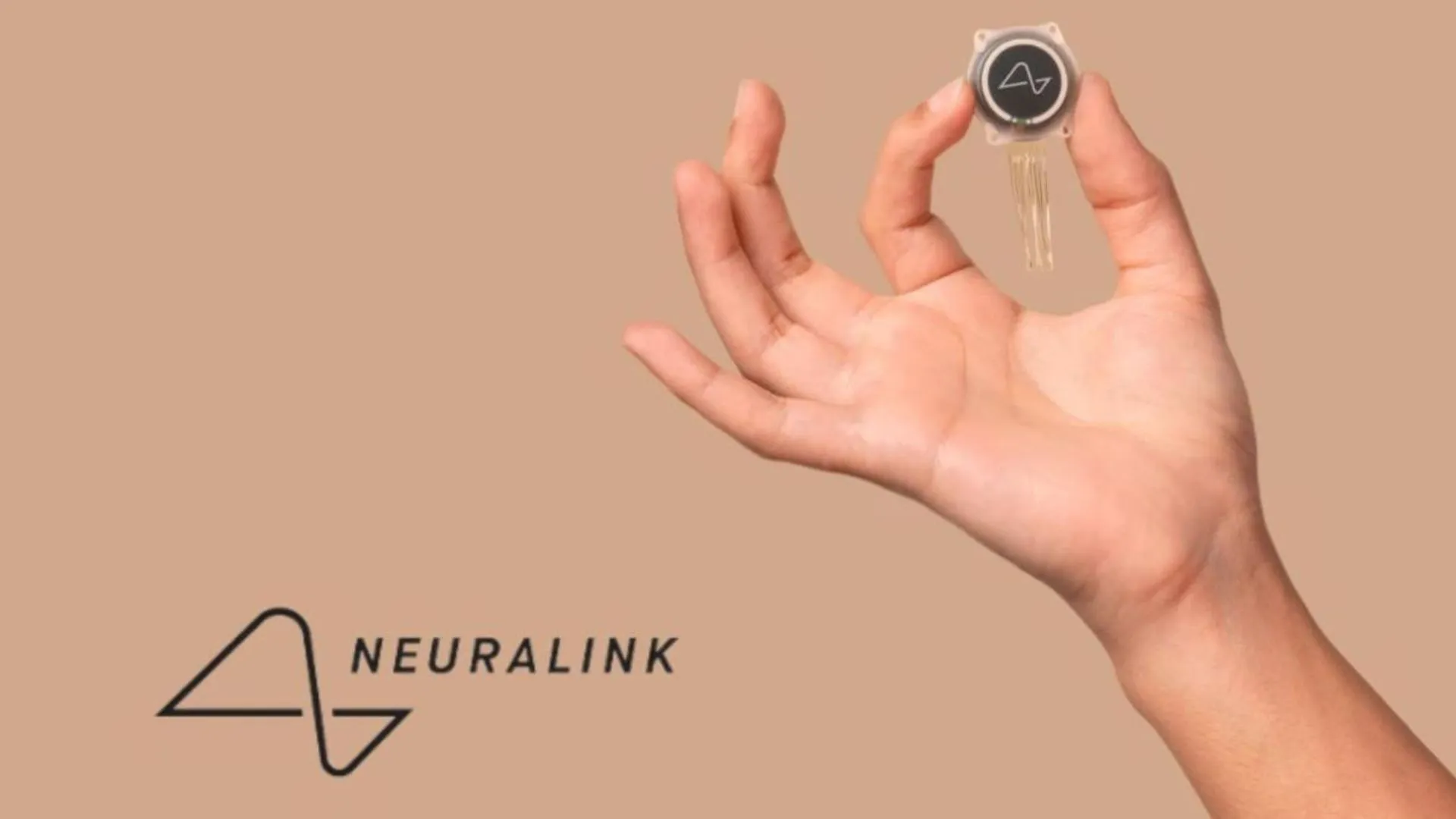
Neuralink says its brain-computer interface has achieved a cursor-control record of 11.32 bits per second after training a foundation model on more than 50,000 hours of neural activity collected from its clinical trial participants.
The Elon Musk-founded brain-computer interface company used the large dataset to pretrain self-supervised neural encoders designed to interpret electrical signals recorded directly from the brain. Neuralink says the approach can make those signals more stable and useful for controlling computers.
The company reported that some decoders built using the approach continued working for weeks rather than days. For some participants, the amount of calibration required fell from about 10 minutes each day to 10 minutes per week.
Neuralink also demonstrated what it calls “teleporting cursors,” where a cursor jumps directly to an intended target rather than moving continuously across the screen. The company says its 11.32-bit-per-second result exceeds the performance of most able-bodied people, although the comparison has not been independently verified.
Brain signals keep shifting
Brain-computer interfaces translate patterns of neural activity into commands that can operate computers and other devices. But signals recorded from neurons can change over time, creating a major problem for systems intended to work reliably every day.
Neuralink’s implants record spikes, or electrical activity produced by neurons, from the motor cortex. Small changes in recorded signals can make a decoder trained on earlier data less accurate, requiring users to repeatedly recalibrate the system.
To tackle that problem, Neuralink trained what it describes as a foundation model for brain-computer interfaces. Instead of relying only on labeled examples tied to specific movements or commands, its self-supervised neural encoders learn representations from large amounts of neural activity.
The company says the resulting representations remain useful even as individual neural signals drift. That could allow a decoder to continue interpreting a user’s intended movements without requiring frequent retraining.
The dataset behind the model comes from Neuralink’s clinical trial participants, who have collectively used their implantsfor more than 50,000 hours. The company describes it as one of the largest datasets of intracortical neural activity assembled to date.
Less calibration, faster control
Reducing calibration could be particularly important for practical brain-computer interfaces. A system that needs daily adjustment places an additional burden on users, while a decoder capable of remaining stable for weeks could make an implant behave more like an everyday computer interface.
The 11.32-bit-per-second result provides another measure of that progress. Bits per second is commonly used in BCIresearch to quantify how quickly and accurately a user can select intended targets, rather than simply measuring how fast a cursor physically moves.
Neuralink is now looking at pooling neural data across multiple participants to improve its models further. Future work could also include one-shot or zero-shot calibration, potentially allowing a system to work for a new task or user with little or no additional calibration.
The company has also outlined the possibility of creating an “API for the motor cortex,” suggesting that common neuralrepresentations could eventually provide a standardized layer for translating intended movement into digital commands.
The results were released by Neuralink as a technical update and have not been presented as a peer-reviewed journal study.
Related articles
Robot learns complex 12-step tasks in 5 minutes, replans when things go wrong
A robot learned to complete complex tasks involving up to 12 steps after receiving just...

Meta open sources code to let you make Muse AI gadgets
Meta now lets you make your own Muse gadgets that feature the company's new AI agent with code that the company open sourced.

Apple will limit Mac disk access as AI agents ‘substantially’ increase risk
Apple will add new limits for "full disk access" on Mac in response to risks posed by AI agents, as reported earlier by TechCrunch.
New rice-sized GaN chip packs 3x more power, 20x better signals and dual functions
Northrop Grumman has unveiled a new gallium nitride chip aimed at handling demanding radio-frequency workloads...

Why safety will decide the future of humanoid robots
In this episode of Lexicon, we spoke with Rick Balzano, Vice President of Go-to-Market for...

New center bids to supercharge nuclear isotope production for deep-space missions
Canada is moving to expand its role in supplying nuclear isotopes that could power spacecraft...