
New heat pump tested at 320°F could help factories ditch fossil fuels for steam
Researchers have tested high-temperature heat pumps at 320 degrees Fahrenheit and showed that the technology...
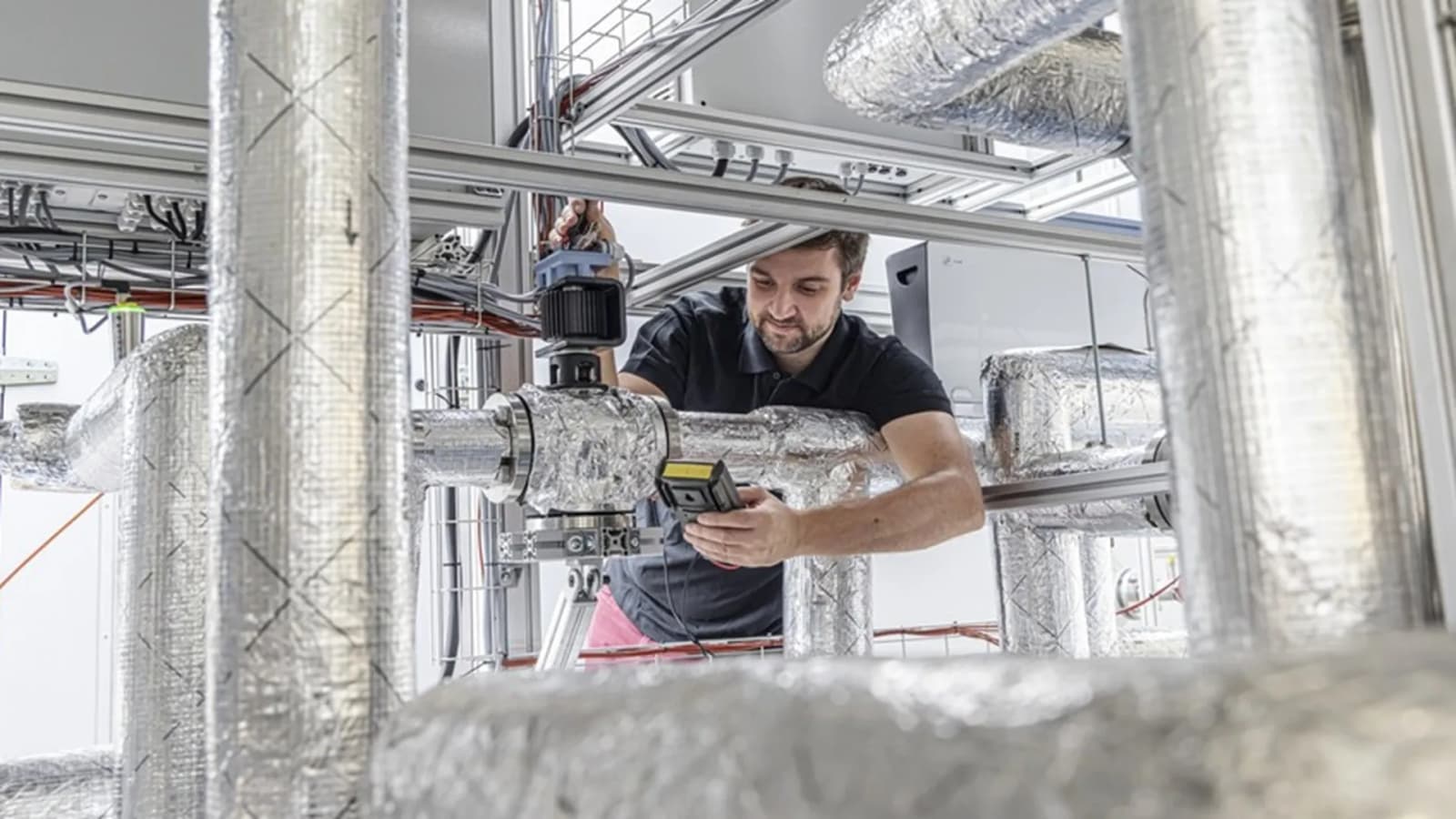
Researchers have tested high-temperature heat pumps at 320 degrees Fahrenheit and showed that the technology can provide industrial steam and hot water while reducing reliance on fossil fuels.
The study was carried out by scientists at the Fraunhofer Institute for Solar Energy Systems ISE (Fraunhofer ISE) in Germany. The team developed a new lab test rig to examine heat pumps capable of supplying process steam and pressurized hot water at high temperatures.
The work aims to tackle industrial decarbonization, a major challenge for factories that still rely on fossil fuels to provide big amounts of heat. Ursula Wittstadt, PhD, senior engineer, and FernWP project manager at the institute, revealed that high-temperature heat pumps could provide an alternative.
She then stressed the technology’s potential. “With our test rig, we can measure these interactions and thereby create a foundation for the further development of components and complete systems,” Wittstadt explained.
Cutting fossil fuel use
The new test rig was designed under the FernWP research project. It explores how heat pumps could replace coal for district and industrial heating. The researchers can use the facility to measure heat pump performance at temperatures of up to 320 degrees Fahrenheit (160 degrees Celsius).
They can also examine how the systems respond to changing heat sources, loads, as well as operating modes. “For industrial applications, the maximum achievable temperature alone is not the decisive factor,” Wittstadt elaborated.
Test site for investigating steam-generating heat pumps for process temperatures of up to 320 degrees Fahrenheit at Fraunhofer ISE. Credit: Fraunhofer ISE / Michael Spiegelhalter
As per Wittstadt, a high-temperature heat pump must also reliably and efficiently produce process steam or pressurized hot water as operating conditions change. For the project, the team tested heat pumps that use butane as a refrigerant. As butane is flammable, they also studied safety and installation requirements.
Data collected from the test rig could allow manufacturers to design heat pumps and heat exchangers for high temperatures, large loads, and changing conditions. Meanwhile, Fraunhofer ISE also plans to further develop its safety test facilities to establish safety concepts for refrigerants for in large-scale and high-temperature heat pumps.
Heat pumps under test
Alongside lab tests, Fraunhofer ISE has monitored five large heat pumps in district heating networks since 2023. The researchers found that they can run reliably and achieve their target performance when their parts, controls, hydraulic integration, and operating strategies are properly designed.
Axel Oliva, project manager of Reallabor GroßWP at Fraunhofer ISE, disclosed that monitoring showcased that large-scale heat pumps perform well under real-world conditions and can reach their target performance. However, that performance depends heavily on surrounding conditions.
He said that systems drawing heat from flowing water produced less heat when water temperatures dropped or during partial-load operation. Output fell when source temperatures dropped below about 43 degrees Fahrenheit (six degrees Celsius).
The Mannheim Power Plant is among the sites studied as part of the Large-Scale Heat Pumps Living Lab. Credit: GKM AG
“We have also seen that operation within an integrated power plant system requires good knowledge of the existing plant fleet, the district heating network, and customer installations,” he emphasized in a press release.
According to the team, operators now increasingly run the heat pumps based on daily heating needs and energy prices. This means that these systems must start and stop more often while remaining reliable. The group will now use the data to model how large heat pumps interact with power and heating systems. This could show how to operate heat pumps more efficiently and use less fossil fuel.
Source: https://interestingengineering.com/energy/heat-pump-tested-ditch-fossil-fuels
Related articles

We found some great October Prime Day deals under $50
Getting in on the Prime Day action doesn’t have to result in an empty wallet.

Android’s physical navigation buttons are back on Googlebooks, but not the way you think
A common misconception I've seen with Googlebooks is that the Quick Insert and Google logo keys are new. They're not, as they first debuted a couple of years ago on some Chromebooks.

ChatGPT’s ‘Intelligent UI’ update fills its responses with pictures, charts, and buttons
OpenAI is launching a new Intelligent UI feature in ChatGPT that allows the chatbot to answer your questions with interactive visuals.

Roku’s OLED TVs are up to $400 off during Prime Day, starting at $700
Just over a week ago, we covered a deal at Amazon that knocked around 30 percent off Roku’s new (and first-ever) OLED TVs. The deal expired, but has returned for the final day of October Prime Day.

Everything announced at Microsoft’s Surface Laptop Ultra event
Microsoft just wrapped up a big Windows and Surface-focused keynote in San Francisco.

It appears .agent and .agi are about to be the hot new domains
For the first time in years, the Internet Corporation for Assigned Names and Numbers - better known as ICANN - is accepting applications for new top-level domains.