
China beats world’s first nuclear clock with 6x stability edge in early tests
China’s experimental nuclear clock has emerged as the more stable of the world’s first two...
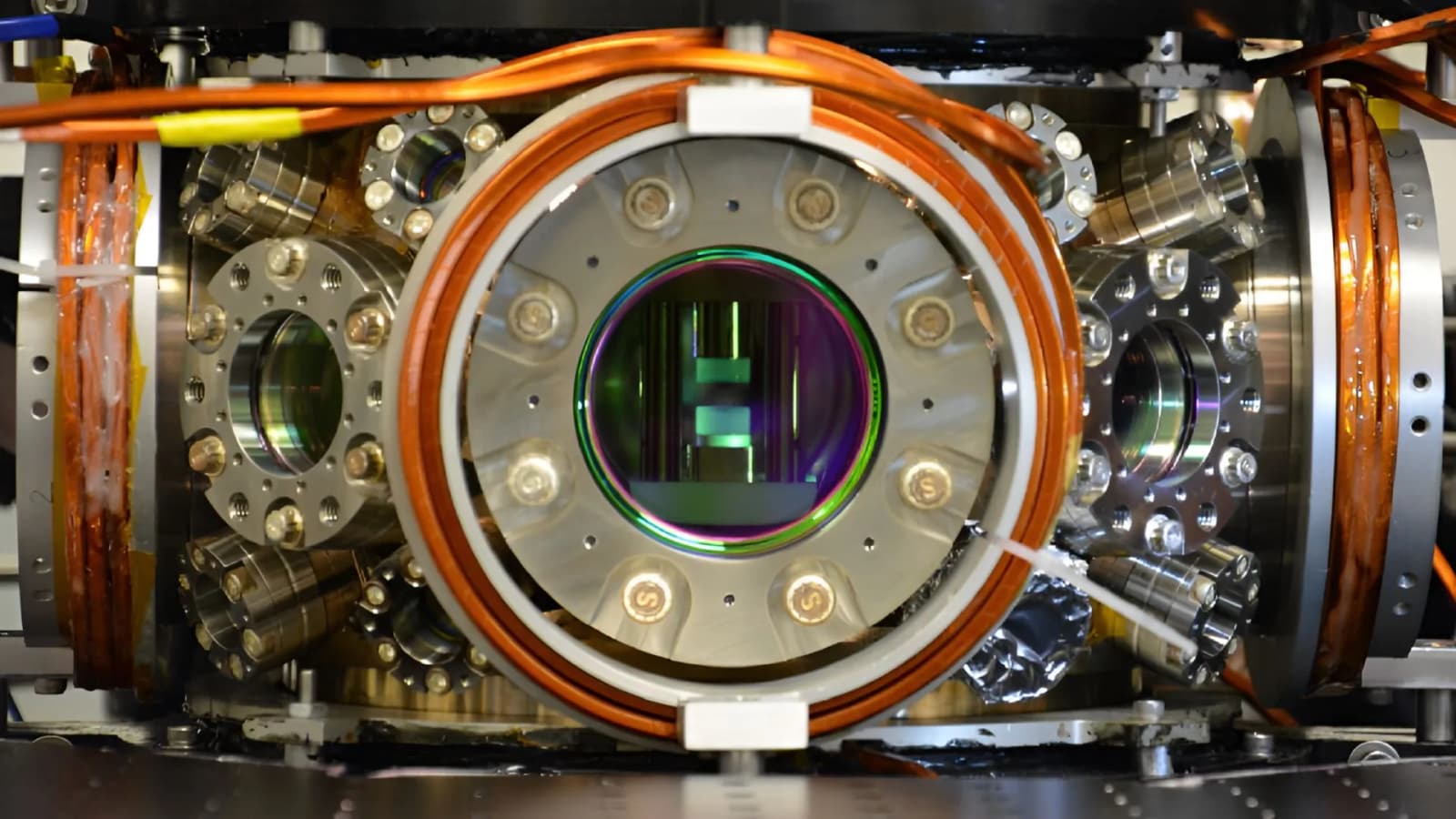
China’s experimental nuclear clock has emerged as the more stable of the world’s first two working devices. Researchers at Tsinghua University found their clock ran about six times more steadily than a competing system in Vienna.
Both teams built their clocks around thorium-229 nuclei trapped inside crystals. The approach shifts the timing mechanism from electrons to the atomic nucleus.
The results mark another step toward a new class of precision timekeeping. Nuclear clocks could also give physicists a new way to test fundamental laws of nature.
China clock shows strong stability
The Tsinghua team found that separately produced crystals generated nearly identical clock signals. Their measurements agreed to roughly three parts per 10 trillion.
The finding suggests the signal does not depend on one unusual crystal. The result also matched earlier measurements from researchers at JILA in Colorado. Ding Shiqian, who led the Tsinghua work, said the result strengthens the case for reproducible nuclear clocks. Researchers could eventually turn the technology into a practical time standard.
The clock still falls short of the stability achieved by the best atomic clocks. Atomic clocks have defined precision timekeeping for more than 70 years. Atomic clocks track changes in electron energy states. Nuclear clocks instead monitor a transition inside the atomic nucleus.
The difference could prove important because electrons occupy much larger regions around an atom. The nucleus remains far smaller and more tightly bound.
Thorium-229 enables nuclear timing
Thorium-229 offers a rare advantage for nuclear timekeeping. Its nucleus can respond to ultraviolet light at an energy current lasers can reach. Most atomic nuclei require far more energy for comparable transitions. Scientists only succeeded in driving thorium-229 with lasers in 2024.
The Tsinghua system generates ultraviolet light using cadmium vapor heated to 1,112 degrees Fahrenheit. Researchers direct the light into a tiny thorium-doped crystal.
The crystal measures less than a grain of rice. Yet it contains roughly one quadrillion thorium nuclei. The Vienna nuclear clockdevice uses a crystal containing about 200 times more thorium nuclei. Researchers compare its signal with an atomic clock through 6 miles of optical fiber.
Vienna researchers found the clock’s signal changed slightly depending on where the laser passed through the crystal. The fluctuation caused the device to keep slightly different time each day. Improving the crystal could help researchers reduce the problem.
Nuclear clocks could probe physics
The smaller scale of the nucleus could reduce interference from external electric and magnetic fields. Lower interference could eventually help nuclear clocks achieve extreme accuracy.
Nuclear clocks could also help researchers investigate dark matter. Physicists can compare nuclear and atomic clocks for tiny changes in fundamental physical constants.
Vienna researchers already used their clock in a dark matter search. The experiment produced no evidence of dark matter. Researchers still face major materials and engineering challenges. Thorium-229 remains extremely scarce, limiting experiments with new crystal designs.
Better crystals could distribute thorium more evenly and reduce internal defects. More powerful lasers could also improve clock performance.
Atomic clocks currently support systems that depend on extremely precise timing, including satellite navigation. Nuclear clocks would need substantial gains before they could challenge those established systems.
Researchers ultimately want nuclear clocks to leave specialized laboratories. Compact designs could make extreme timing precision available for a much wider range of applications.
The study is published in the journal Nature.
Source: https://interestingengineering.com/science/china-nuclear-clock-stability
Related articles
Scientists crack hidden solar cell leak that could boost efficiency to near 43%
Solar cells could potentially generate more electricity by controlling not only how they absorb sunlight,...

Nobel Prize in Chemistry awarded to two scientists for providing solution to a century-old mystery
The Nobel Prize in Chemistry 2026 awarded to two scientists for providing a solution to...
Smart US tool could cut quantum device tuning time in hunt for elusive dark matter
Scientists in the US have been developing a smart agent that could automatically tune sensitive...
‘Camera’ captures atomic shockwaves before quantum bit forms inside a crystal
Scientists have recorded what happens inside a crystal in the split second before a quantum...
Microscopic nuclear fuel particles from Chernobyl still intact after 40 years
Forty years after explosions scattered radioactive debris from Chernobyl’s reactor across the surrounding landscape, some...
Wave-shaped building walls and roofs can cut hurricane wind pressure by up to 60%: study
Buildings with wave-shaped exterior walls and roofs can withstand hurricane-force winds far better than conventional...