
Wave-shaped building walls and roofs can cut hurricane wind pressure by up to 60%: study
Buildings with wave-shaped exterior walls and roofs can withstand hurricane-force winds far better than conventional...
Buildings with wave-shaped exterior walls and roofs can withstand hurricane-force winds far better than conventional structures, cutting peak wind pressures by as much as 40% to 60%.
The finding offers architects and engineers a passive, geometry-based way to improve structural resilience without necessarily adding more material or reinforcement to a building.
How wind damages buildings
When wind hits a flat-sided structure, it sweeps across the surface and separates at sharp edges, creating vortices that concentrate intense suction forces at roof corners and edges. Those concentrated low-pressure zones generate powerful uplift forces that pull roof panels upward. The highest suction loads in a typical low-rise building during a hurricane occur precisely at these corners and edges.
Existing mitigation strategies include rounded corners, sloped walls, setbacks, and simply building thicker, stronger walls. All of those approaches add cost and are often impractical for retrofitting existing structures.
The wave geometry approach
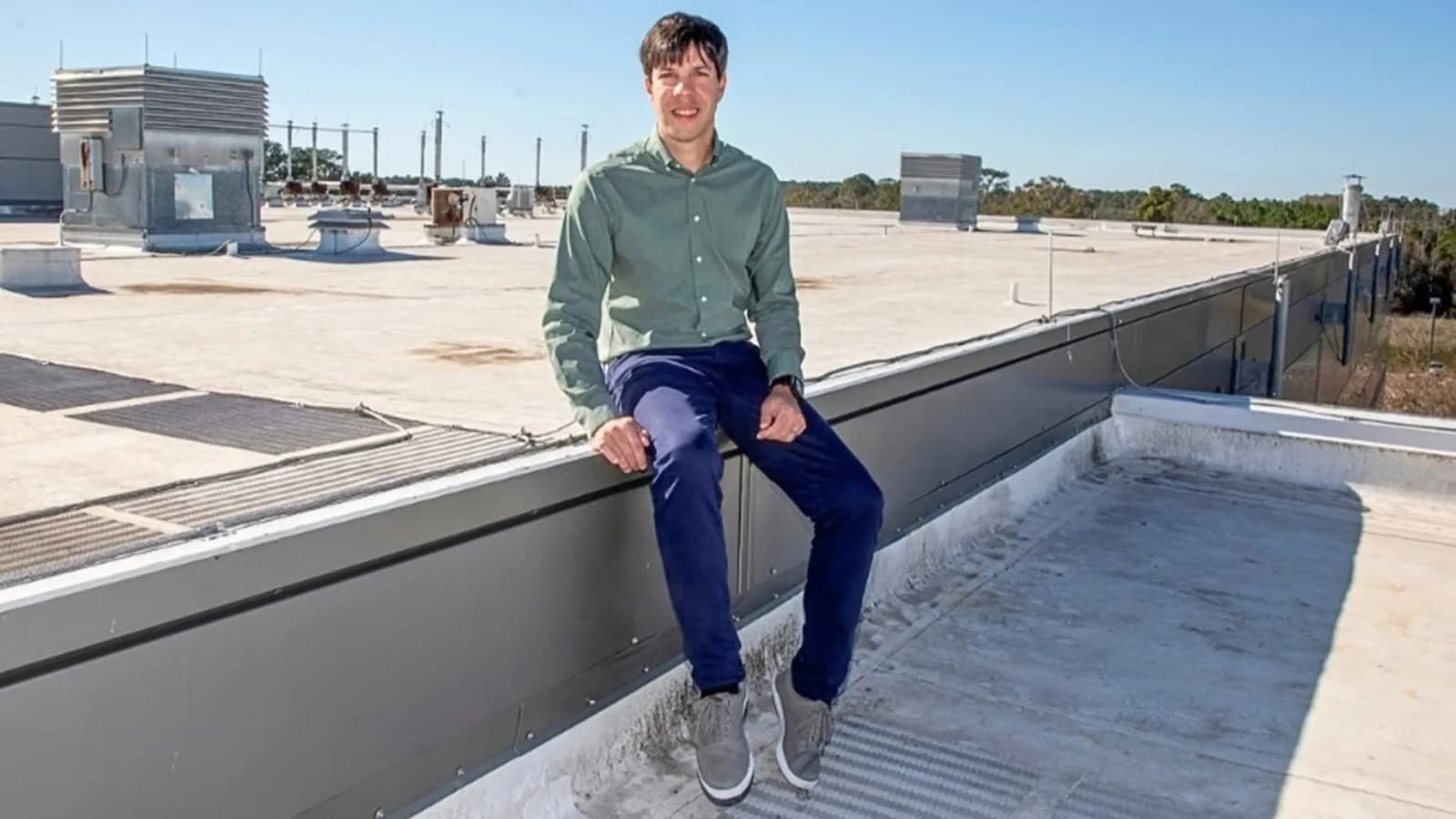
The research team, led by Pedro Fernandez-Caban, assistant professor of civil engineering at the FAMU-FSU College of Engineering, fabricated 3D-printed wind tunnel models of low-rise buildings with wave-shaped exterior roofs and walls in place of traditional flat surfaces.
They tested wave amplitudes ranging from 5% to 10% of the building height against standard flat designs. Researchers measured wind pressure data across the model surfaces as wind struck from multiple directions.
The model with the greatest wave depth performed best. At wave amplitudes equal to 10% of building height, peak wind pressures dropped 40% to 60% near roof and wall corners regardless of wind direction.
The mechanism behind the improvement is aerodynamic. Rather than sweeping smoothly over a flat surface and separating into a single large coherent vortex at the edge, air moving across the wave-shaped surface encounters a series of hills and valleys. The flow skips across the undulating contours, breaking into multiple smaller separation zones instead of one dominant vortex. Those smaller, distributed zones generate far less concentrated suction force at any single point.
Fernandez-Caban described the effect: “These nonconventional building shapes reduce the damage from worst-case severe weather scenarios. It’s another tool for engineers and designers to protect against wind damage.”
Broader implications
The research team notes that the aerodynamic principles behind the wave geometry extend well beyond wind engineering. The fluid dynamics governing how air interacts with corrugated surfaces share fundamental physics with other fields including aeronautics, environmental science, and physical oceanography.
“We’re dealing with air, and other engineers and scientists might be dealing with waves and water, but the understanding of fluid dynamics can inform design and engineering across fields,” Fernandez-Caban said.
The research team is currently running additional wind tunnel experiments to better characterize how the flow behaves around the wave-shaped envelope systems rather than just measuring the surface pressure.
They also plan to use computational fluid dynamics modeling to optimize wave geometry further and to test surface profiles not covered in the initial study.
The study was co-authored by associate professor Qian Zhang, doctoral student Arezoo Bakhshizadeh, and alumnus Peter Tsouroukdissian, with support from Florida State University and the FAMU-FSU College of Engineering.
As hurricane intensity continues to rise with warming ocean temperatures, passive aerodynamic solutions that do not depend on added structural mass represent a meaningful step toward more resilient building design at scale.
The research was published in the journal Engineering Structures.
Related articles

Heat first, compress later: New fusion strategy flips the script to reach ignition
A tiny amount of tungsten inside fusion plasma could roughly double the pressure needed to...

Google’s power-hungry data centers crave nuclear energy
Google announced a new agreement to update six nuclear power plant sites across the US as the tech giant seeks to generate more electricity for its power-hungry data centers.

World’s largest neutrino telescope wins its creator the 2026 Nobel Prize in Physics
A Belgian-American particle physicist has won the 2026 Nobel Prize in Physics for his work...

7 of history’s deadliest plagues and the science behind their spread
Long before scientists could identify bacteria or sequence viruses, infectious diseases traveled with soldiers, merchants,...
Could Nazi Germany’s nuclear reactor work in 1945? The material gap explained
When the American forces in 1945 reached Nazi Germany’s final experimental nuclear reactor, the B8...
World’s largest nuclear fusion reactor receives final piece of its giant plasma chamber
ITER, the world’s largest nuclear fusion reactor, reached a major milestone in its decades-long journey...