
New nanoscale electrode design could unlock lighter, longer-range EV batteries
South Korean researchers have developed a nanoscale electrode design that could help make electric-vehicle batteries...
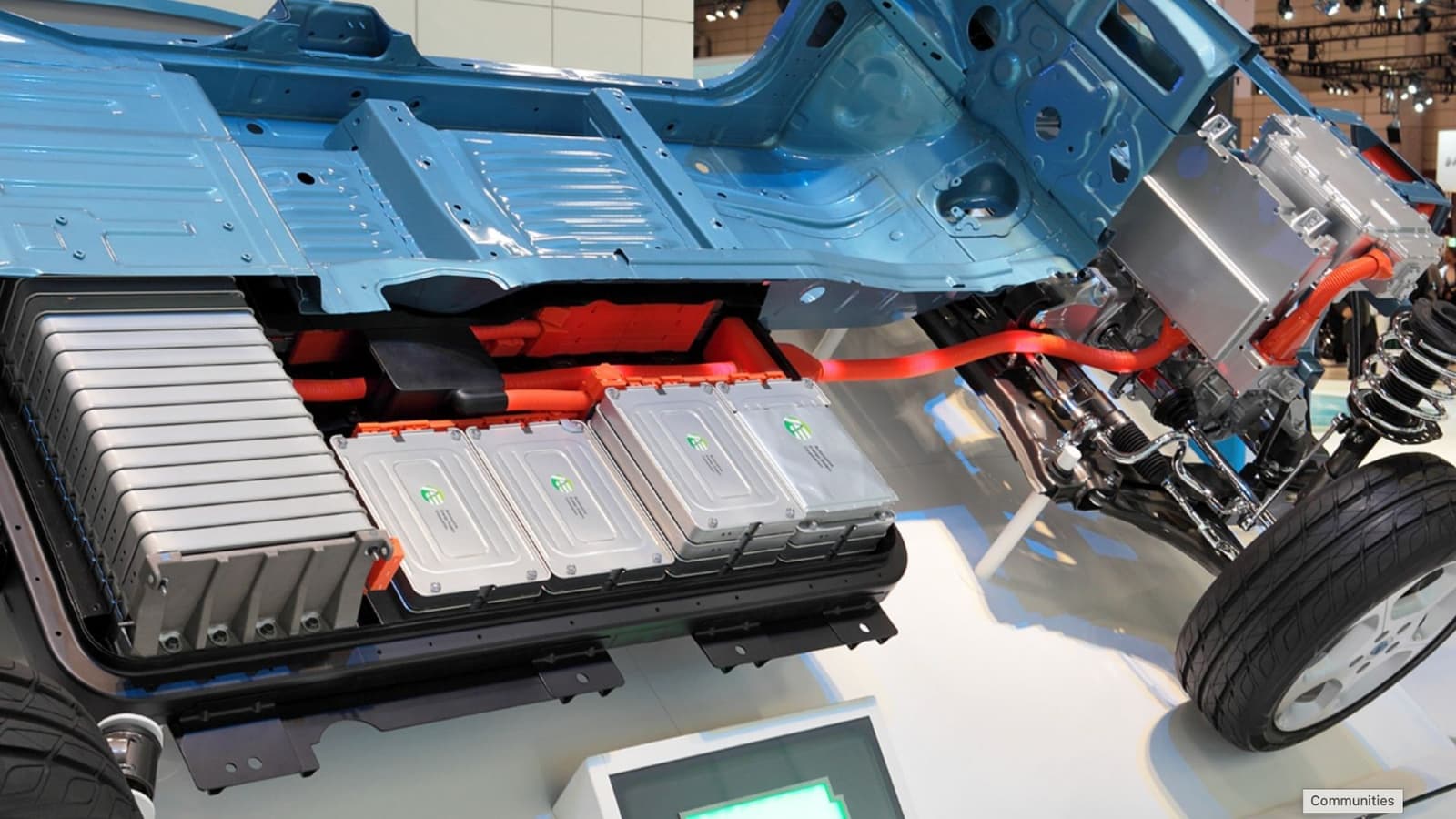
South Korean researchers have developed a nanoscale electrode design that could help make electric-vehicle batteries smaller and lighter while extending their operating life.
The technology uses semiconductor manufacturing techniques to address uneven lithium deposition, a major obstacle facing anode-free batteries.
Anode-free batteries could potentially increase the amount of energy stored within a given battery size.
However, their commercial development has been limited by unstable lithium deposits that reduce performance during repeated charging and discharging.
Removing the conventional anode
Standard lithium-ion batteries contain an anode material, typically graphite, that stores lithium while the battery charges. Anode-free designs remove this material and instead deposit lithium directly onto a thin copper current collector.
Eliminating graphite frees up space and reduces weight, potentially allowing manufacturers to build batteries with higher energy density. For electric vehicles, that could translate into lighter battery packs or greater driving range without increasing pack size.
The design also creates a difficult engineering problem. Lithium does not always spread evenly across flat copper foil. Instead, it can accumulate in particular areas and develop into sharp, branching structures called dendrites.
These formations destabilize the protective layer surrounding the lithium and encourage unwanted reactions with the electrolyte. Battery performance consequently declines rapidly over repeated cycles.
Earlier attempts to solve the problem have included adding surplus lithium or placing thick protective coatings on the electrode. Although these measures can offset lithium losses or shield its surface, they also increase battery weight and volume.
Microscopic tubes guide lithium deposition
The KAIST-led team modified the copper foil itself using secondary sputtering lithography, or SSL, a precision fabrication method associated with semiconductor manufacturing.
Researchers created regularly spaced, tube-shaped structures measuring approximately 300 nanometers across and 150 nanometers high.
The arrangement provides defined sites where lithium can settle, helping it spread across the electrode rather than accumulating in isolated areas.
The microscopic structures increased the surface area available for lithium deposition to around four times that of untreated flat copper foil. This larger deposition area helped limit the concentrated lithium growth that can produce dendrites.
The researchers compared the arrangement to marking closely spaced parking spaces across an otherwise open lot. Each structure helps direct the incoming lithium toward an available location.
Ultrathin layer forms stronger protection
The team also coated the structured copper foil with an MXene layer roughly 10 nanometers thick. MXenes are two-dimensional materials with surface properties that can be tailored for electrochemical applications.
Instead of functioning as the final protective barrier, the coating behaves like a primer. In the study’s LiPF6-based electrolyte, its surface encouraged the development of a uniform protective layer rich in lithium fluoride.
That layer reduced unwanted reactions between lithium and the electrolyte while further suppressing dendrite growth.
The researchers examined its composition and formation using techniques including X-ray photoelectron spectroscopy, time-of-flight secondary ion mass spectrometry and transmission electron microscopy.
“This study shows how ultrafine fabrication techniques used in semiconductor manufacturing can create both uniform sites for lithium deposition and a stable protective layer without changing the bulk electrolyte formulation or adding excess lithium,” Professor Jinwoo Lee said.
The research findings were published online in Advanced Functional Materials on September 1.
Related articles

Saudi Arabia’s new Exobot EVs make the Cybertruck look normal
The Kingdom of Saudi Arabia is mostly known for its global dominance over petroleum production and oil reserves - not necessarily cars and auto manufacturing, and certainly not electric vehicle…

Rivian’s R2 beat its own climate goals four years early
Rivian always planned for its all-important R2 vehicle to be less expensive than its pricey R1 predecessors, but also less polluting.

GM can’t ‘bring back’ Apple CarPlay because it never left
Last week, GM announced a new software experience for its upcoming Chevy Silverado and GMC Sierra trucks, including a new look for Apple CarPlay and Android Auto, the popular phone mirroring systems that the automaker made a big deal about removing from its electric vehicles in 2023. Naturally, this led to some confusion about whether […]

New EV battery adds 62 miles of range every minute, reaches 97% in 9 minutes
Chinese battery maker Sunwoda unveiled its latest fast-charging EV battery technology at a battery industry...

Volkswagen electric bus sets Guinness World Record, drives 62,000 miles across 92 countries
A Volkswagen ID. Buzz has completed a 99,767-kilometer (roughly 62,000 miles) journey through 92 countries...
EV-maker produces powerful battery cells using recycled cathode active material for the first time
A German company has successfully produced battery cells using recycled cathode active material for the...