
Nvidia approves LG’s 5.1-MWh battery storage system to power AI factories
LG Energy Solution has qualified its battery energy storage system under NVIDIA’s DSX Ready program,...
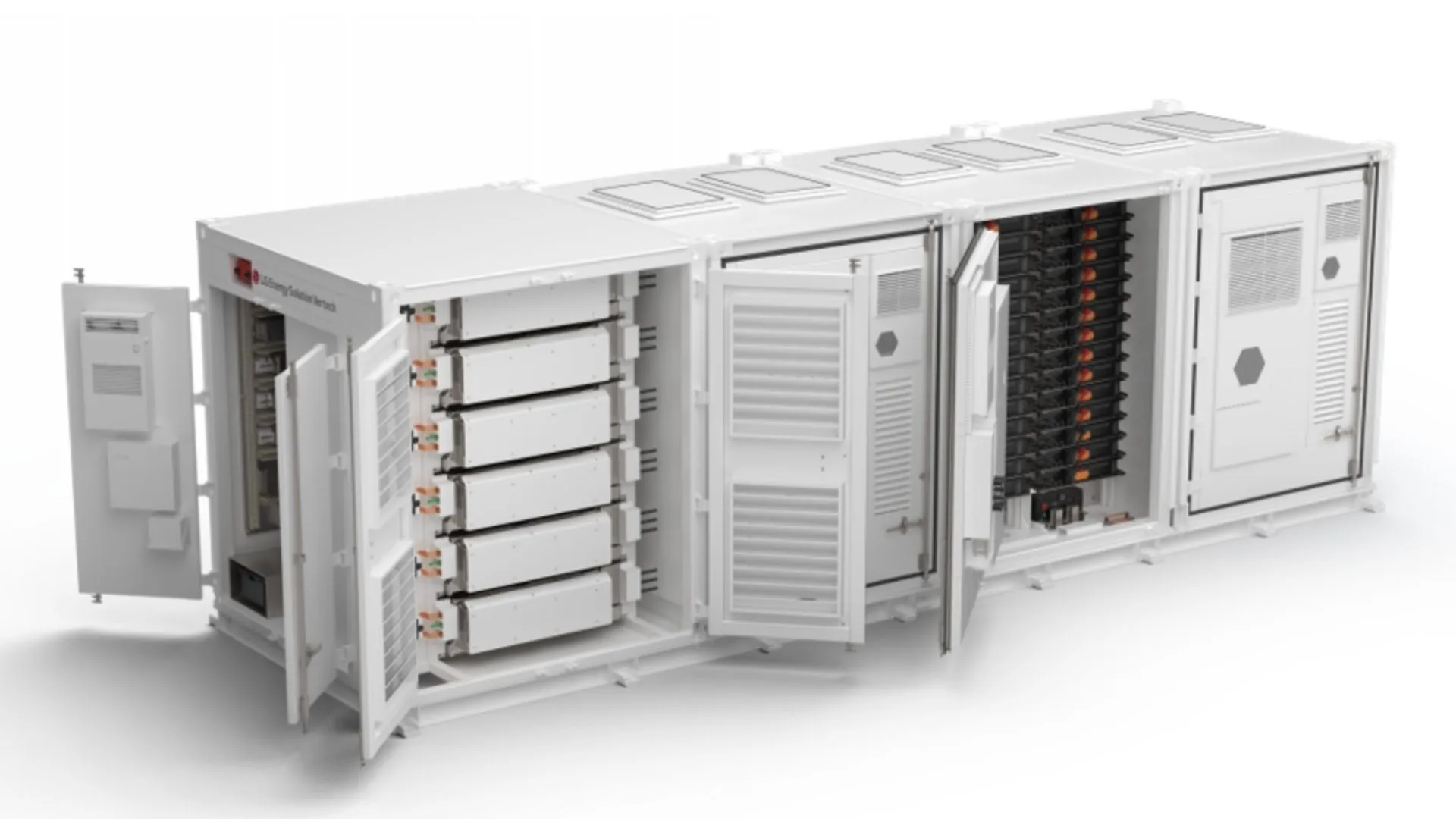
LG Energy Solution has qualified its battery energy storage system under NVIDIA’s DSX Ready program, positioning the system as a power infrastructure option for large-scale AI factories.
Announced on September 21, the qualification covers LG Energy Solution’s AC energy storage solution, which uses modular 2.5-megawatt (MW)/5.1-megawatt-hour (MWh) battery blocks.
The system is designed to help data center operators deploy capacity faster while managing the volatile power demands created by AI computing infrastructure.
Batteries built for AI power demands
NVIDIA DSX Ready is a qualification program for products and solutions that meet applicable requirements outlined in the company’s DSX reference designs. It is intended to help customers identify compatible components for building and operating AI factories.
The wider NVIDIA DSX AI Factory Platform brings together infrastructure spanning computing, networking, power, cooling, facilities, and software. LG Energy Solution’s BESS has qualified under the program’s requirements for AC energy storage systems.
AI factories place unusual demands on electrical infrastructure because their computing workloads can change rapidly.
Sudden swings in electricity consumption can strain the grid, affect voltage stability, and complicate power management within a data center.
LG Energy Solution said its battery system can address these challenges through AI load smoothing, voltage ride-through, and fast-response capabilities.
It is also intended to accelerate “time-to-power,” or the period required to secure and deploy the electrical capacity needed to operate an AI facility.
The Modular battery blocks
At the center of the system are modular battery blocks rated at 2.5 MW. Operators can combine blocks to expand storage capacity as their computing and power needs grow.
The integrated AC system also supports grid-forming capabilities, allowing it to help establish and stabilize voltage and frequency rather than merely follow an existing grid signal.
This could provide additional resilience for AI infrastructure dealing with steep and unpredictable load changes.
According to LG Energy Solution, the architecture is designed to meet applicable UL and National Fire Protection Association requirements. These standards cover areas such as equipment safety, installation, and fire protection for battery storage facilities.
“Being selected as a partner for NVIDIA’s first-ever DSX Ready program validates the strength and competitiveness of our BESS products,” said Chang Beom Kang, Head of ESS Battery Division at LG Energy Solution.
Expanding production in North America
LG Energy Solution is supporting its energy storage business with a localized North American supply chain spanning battery cell production, pack manufacturing, and system integration.
The company operates a network of five regional production facilities and plans to secure more than 50 gigawatt-hours of lithium iron phosphate battery cell production capacity by the end of 2026.
It expects demand to come from data centers, infrastructure developments, and utility-scale energy storage projects.
LG Energy Solution also offers DC battery containers and power conversion system-integrated AC battery containers. Its North American portfolio includes products eligible for applicable Investment Tax Credit incentives under the Inflation Reduction Act.
Related articles

The Beats 360 are what I’d bring to the gym if I hated earbuds
Everyone has seen someone at the gym or running around their neighborhood wearing headphones that were never designed for workouts. Quite often those headphones are Beats.
Elon Musk floats 30-minute Hyperloop trip idea between Austin and San Antonio
Elon Musk’s tunneling startup The Boring Company is working on a “simple precursor Hyperloop” that...
This quadcopter swaps propellers for 3D printed radial impellers and still flies
A drone builder known as QUADMOVR has swapped every propeller on a self-built quadcopter for...
US engineers 3D-print giant two-ton steel mold to make lighter aircraft doors
Inside a Tennessee laboratory, a robotic arm spent eight weeks 3D-printing a two-ton, six-foot-tall block...
Kairos Power teams up with Samsung to build 50-megawatt nuclear reactor for Google
Kairos Power has chosen Samsung Construction and Trading to help build its 50-megawatt nuclear demonstration...

It’s time for the Mac Neo
The Mac Mini is a great little desktop computer, and back when it cost $599, it was easy to recommend to anyone who wanted something speedy, simple, and cheap.