Ranked: The World’s Nuclear Arsenals in 2006 vs. 2026
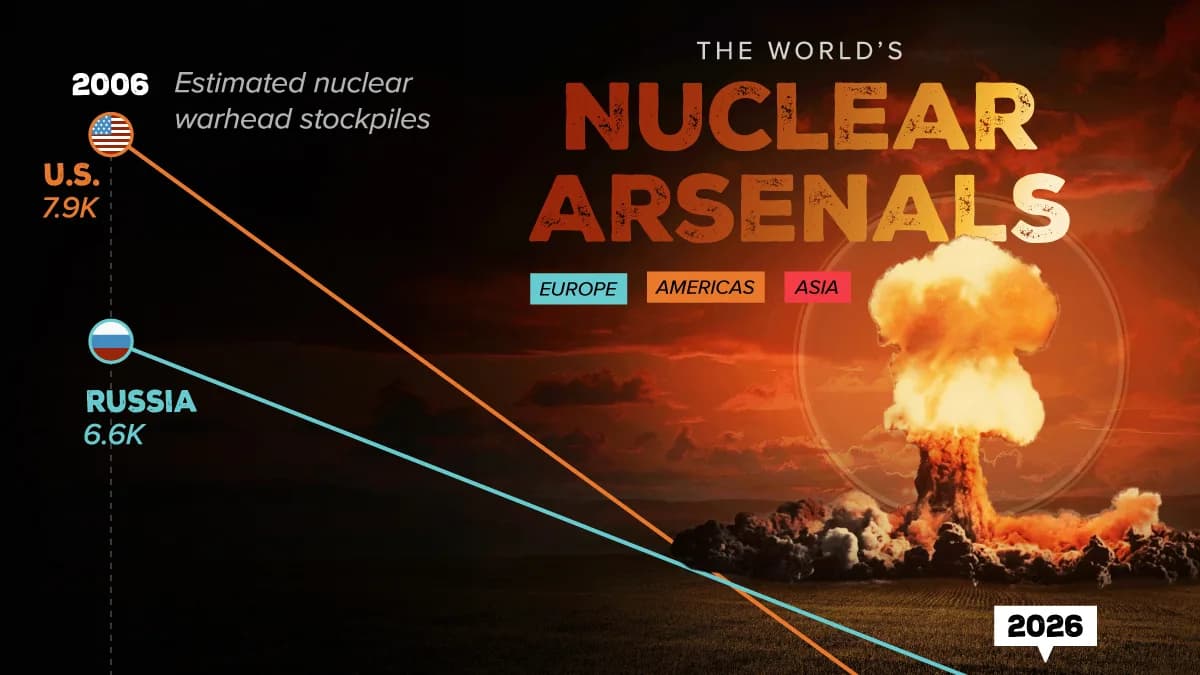
Nuclear arsenals in 2026 remain dominated by Russia and the U.S., but China and several Asian powers have expanded their stockpiles.
How Nuclear Arsenals Have Shifted Over the Past 20 Years
Key Takeaways
The U.S. and Russia together hold 83% of the world’s nuclear warheads in military stockpiles.
The United States has reduced its stockpile by 53% since 2006, while Russia’s has declined by 34%.
China’s nuclear stockpile has grown by 164% since 2006, reaching an estimated 620 warheads in 2026.
The world’s nuclear arsenal has shrunk dramatically since the Cold War, but the balance of nuclear power is shifting.
While the United States and Russia have substantially reduced their stockpiles, countries such as China, India, and Pakistan have moved in the opposite direction, expanding their nuclear capabilities.
This visualization compares estimated nuclear warhead stockpiles in 2006 and 2026, using data from the Federation of American Scientists (FAS). The figures include deployed and reserve warheads but exclude retired weapons awaiting dismantlement.
The U.S. and Russia Still Dominate Nuclear Stockpiles
Across the nine nuclear-armed countries, combined military stockpiles fell by approximately 37% between 2006 and 2026, largely driven by reductions in the United States and Russia.
In 2006, the United States held an estimated 7,853 nuclear warheads in its military stockpile, compared with Russia’s 6,643. Two decades later, the ranking has reversed: Russia now holds an estimated 4,400 warheads, compared with 3,700 for the United States.
Country2006 Warheads2026 Warheads
United States7,8533,700
Russia6,6434,400
France350290
United Kingdom245225
China235620
Israel8090
Pakistan50170
India43190
North Korea-60
Even after decades of reductions, the two countries remain in a category of their own. Each maintains a military stockpile several times larger than China’s, the next-largest nuclear power, underscoring how much of today’s nuclear balance still reflects the Cold War legacy.
The future of nuclear arms control also remains uncertain following the expiration of the New START treaty in February 2026, which ended the last legally binding limits on deployed strategic nuclear forces between the two countries.
China’s Nuclear Arsenal Has More Than Doubled
China has experienced one of the most significant increases in nuclear stockpiles over the past two decades.
Its arsenal has grown from an estimated 235 warheads in 2006 to 620 in 2026, an increase of 164%. China has overtaken both France and the United Kingdom to become the world’s third-largest nuclear power by military stockpile, although it remains far behind the U.S. and Russia.
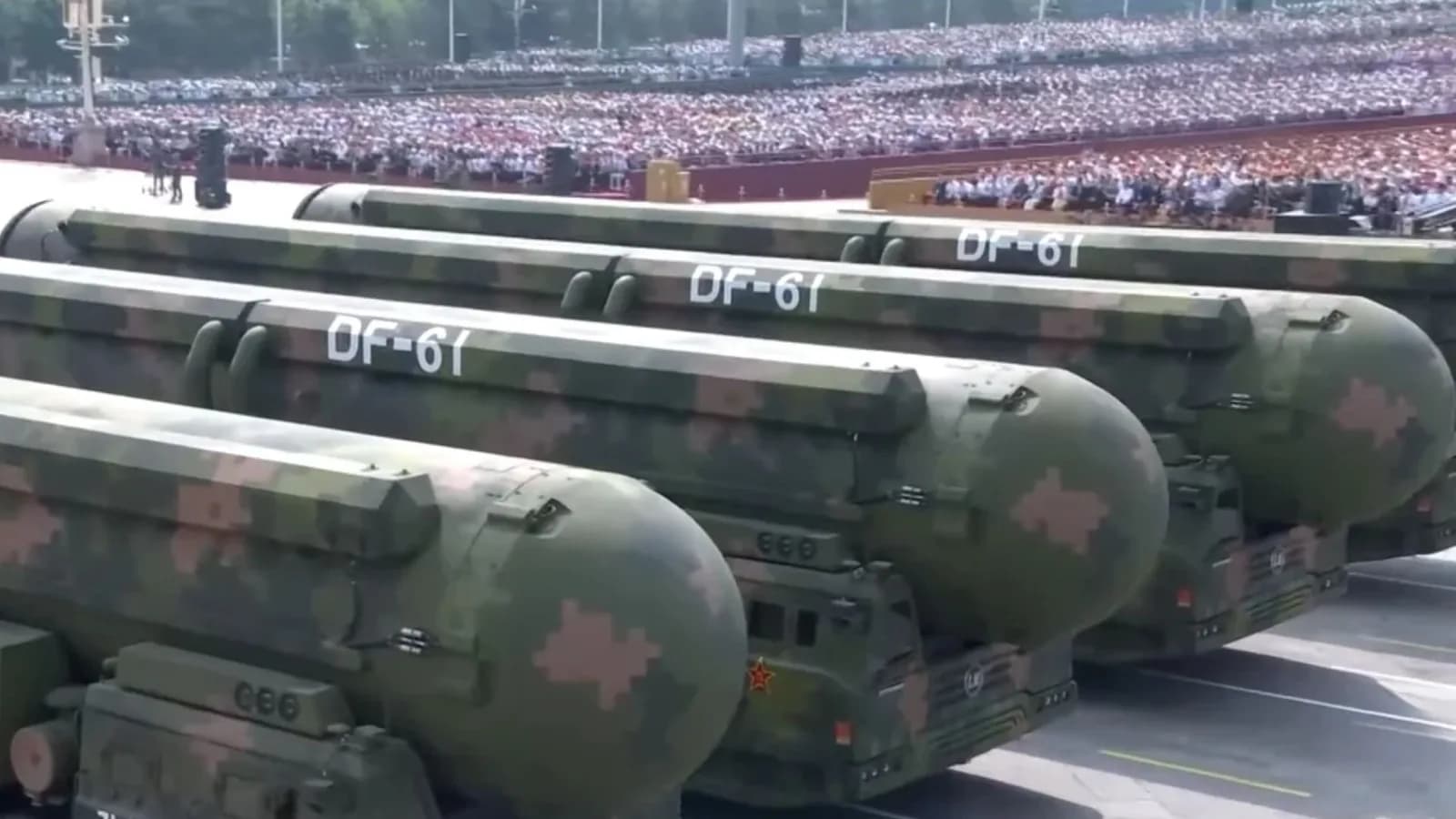
This growth has come alongside the modernization of China’s nuclear forces, including new intercontinental ballistic missile silos, submarine-launched missiles, and other delivery systems.
According to the Federation of American Scientists, China is constructing 320 new solid-fuel missile silos across three sites, along with 30 additional silos for liquid-fuel missiles. It also operates six nuclear-powered ballistic missile submarines, expanding its ability to deliver nuclear weapons at sea.
Asia’s Other Nuclear Powers Are Expanding
China is not the only Asian country expanding its nuclear arsenal.
India’s stockpile has grown from 43 warheads in 2006 to an estimated 190 in 2026, while Pakistan’s has increased from 50 to 170. Both countries continue to develop their nuclear capabilities amid longstanding regional security tensions, while India’s strategic planning increasingly takes China into account.
North Korea has also emerged as a nuclear-armed state during this period. Although a reliable stockpile estimate is unavailable for 2006, the country is estimated to possess approximately 60 assembled nuclear warheads in 2026.
While these arsenals remain relatively small compared with those of the United States and Russia, their destructive potential is immense. Some modern nuclear warheads have explosive yields approximately 30 times greater than the atomic bomb dropped on Hiroshima in 1945, which had a yield equivalent to 15,000 tons of TNT. An estimated 140,000 people died in Hiroshima by the end of 1945.
Learn More on the Voronoi App
If you enjoyed today’s post, check out Who Rules the Waves? U.S. and Chinese Fleets, by Tonnage on Voronoi.
Source: https://www.visualcapitalist.com/ranked-the-worlds-nuclear-arsenals-in-2006-vs-2026/
Get the latest news delivered to your inbox.
Related articles