Schneider tests quantum chip that improves home energy forecasting by up to 41%
Australian government-backed Silicon Quantum Computing (SQC), whose investors include telecom giant Telstra and Commonwealth Bank,...
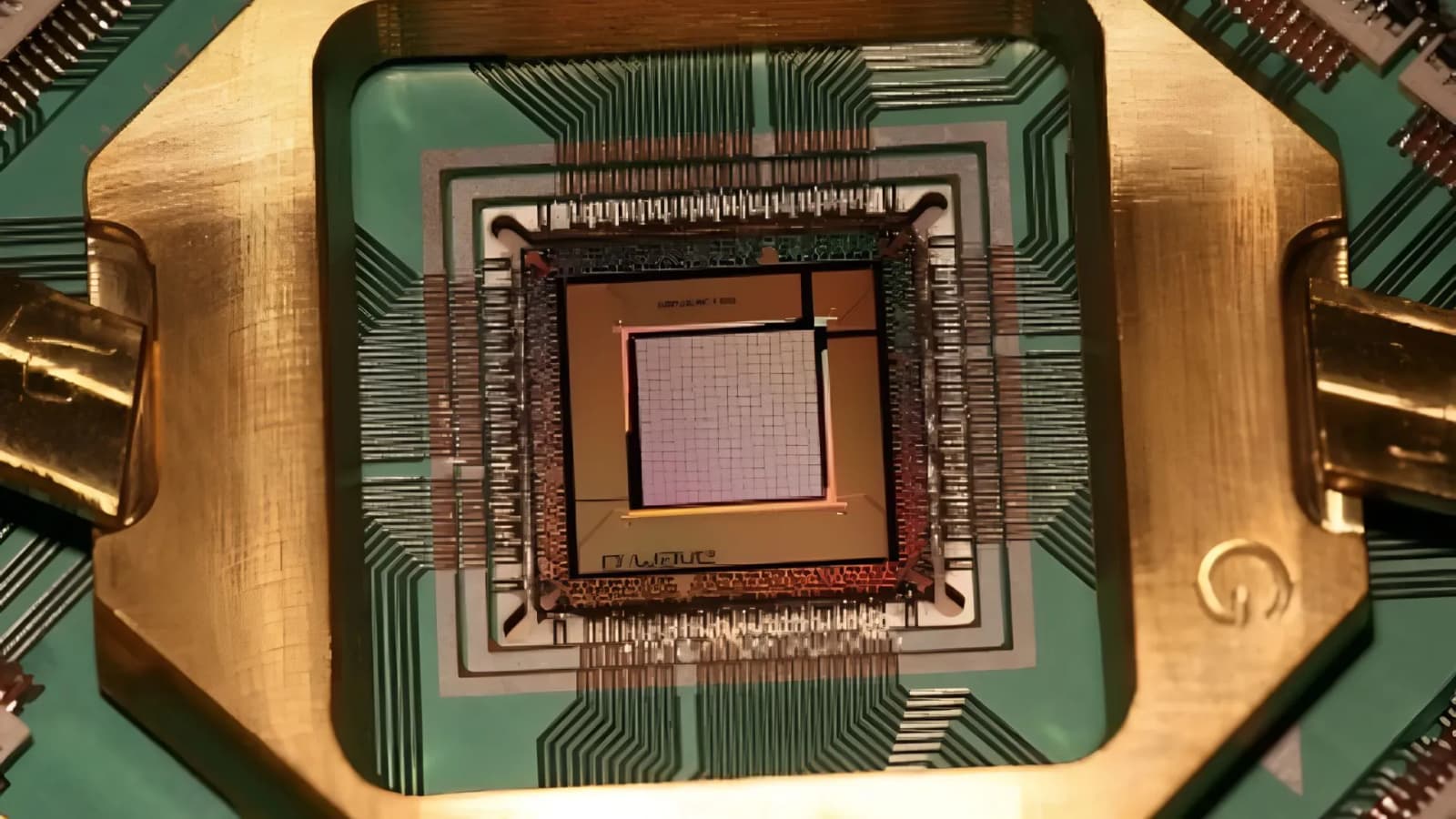
Australian government-backed Silicon Quantum Computing (SQC), whose investors include telecom giant Telstra and Commonwealth Bank, has teamed up with global energy technology firm Schneider Electric to test a quantum-enhanced chip that improved household energy forecasting accuracy by an average of 20 percent, with gains reaching 41 percent.
The companies have secured A$3.6 million (US$2.5 million) from the Australian government to move into the second stage of the Critical Technologies Challenge Program. The project, conducted with UNSW Sydney, will now expand testing to hundreds of Australian homes.
SQC develops silicon-based quantum computing systems and manufactures quantum processor chips using atomic-scale engineering. Schneider Electric develops energy management and automation technologies used across homes, buildings, data centers, factories and power grids.
The collaboration is targeting a growing challenge for power grids: predicting energy demand and supply as more homes add rooftop solar panels, batteries and electric vehicles. These resources can cause household power consumption and generation to change considerably throughout the day.
Quantum boosts grid forecasts
At the center of the project is SQC’s Watermelon chip, an atomically engineered processor designed to generate quantum features that can be combined with conventional data used by existing models.
Rather than replacing conventional computing systems, the approach uses the quantum processor alongside classical hardware. SQC says the additional quantum features can produce richer models with stronger predictive capabilities.
During the first stage of the program, researchers applied Watermelon to next-day energy forecasting data covering a 12-month period. Compared with the classical benchmark, the quantum-enhanced approach produced an average 20% improvement in forecasting accuracy, with improvements reaching as high as 41%.
“We have always believed that quantum processors would work alongside CPUs and GPUs to deliver real-world performance gains,” said Michelle Simmons, founder and CEO of SQC. “The results we have achieved with Schneider Electric demonstrate how quantum-enhanced AI can address practical challenges across the energy sector and time-series datasets more broadly.”
The results are significant because even relatively small forecasting improvements can help utilities make better decisions about when energy should be generated, stored or consumed.
Hundreds of homes next
The second stage will test the technology on a much larger dataset covering hundreds of homes across Australia. The quantum system will also be integrated directly into Schneider Electric’s existing workflows, moving the project closer to a potential production environment.
“The energy system is becoming more dynamic with variables like rooftop solar, EVs, and home batteries creating new levels of complexity,” said Colette Munro, Pacific Zone President at Schneider Electric.
“Together with SQC, we’ve demonstrated how advanced energytechnology has the potential to better manage this complexity, lowering costs for consumers and using energy more efficiently across the system.”
SQC launched Watermelon in 2025 and has since deployed the system for applications including telecommunications, banking and high-frequency trading. The technology can be accessed through the cloud or purchased as hardware, including for data center deployment.
The latest project will test whether the forecasting gains seen during the initial trial can be maintained as the technology moves from a limited dataset to hundreds of real-world household energy systems.
Related articles

New center bids to supercharge nuclear isotope production for deep-space missions
Canada is moving to expand its role in supplying nuclear isotopes that could power spacecraft...
Digital twin tech from US, Korea could predict toxic ammonia leaks on new ships
The US, South Korea and Germany have recently joined forces in order to develop a...
Mapped: The World’s Digital Leaders in 2026
Which economies are the most digitally connected? See how 159 economies rank in the ITU’s 2026 ICT Development Index.

Breaking up (with Elon Musk) is hard to do
In a throwback to MySpace-style internet drama, Shivon Zilis announced that she and the father of four of her children, Elon Musk, had broken up on X.

OpenAI’s Dot agent is enterprise software that can also order your dinner
It's a tale as old as last week: OpenAI's new agent platform, called Dots, is full of cute little guys who can do your bidding.