
Self-propelled Panther railcars get $100 million boost for commercial rollout
Parallel Systems has raised $100 million in a new funding round to scale production of...
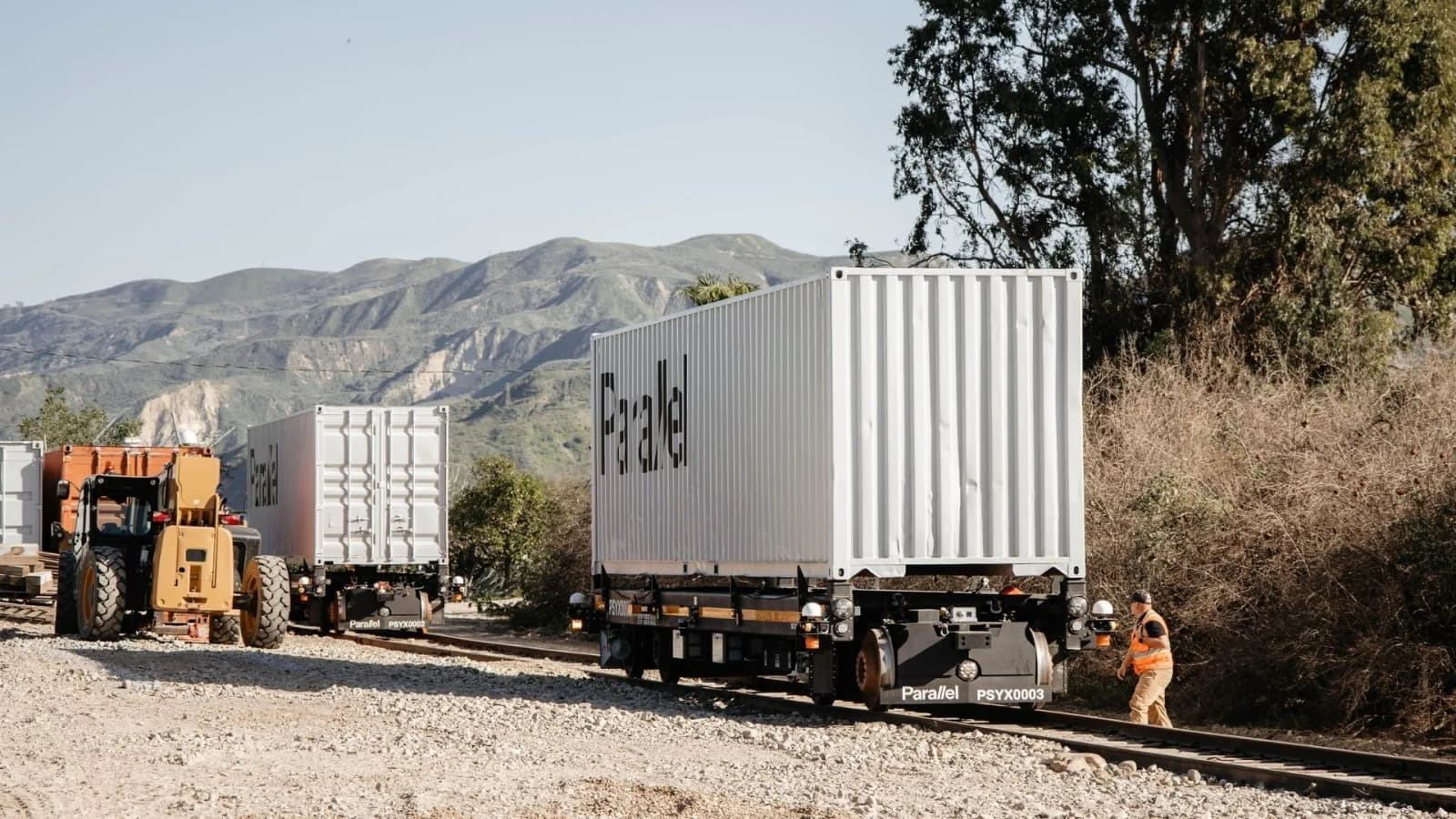
Parallel Systems has raised $100 million in a new funding round to scale production of its autonomous, battery-electric freight rail vehicles, betting that smaller, self-propelled railcars can make rail shipping more competitive with trucks on shorter routes.
The Los Angeles-based company announced the close of its Series C round on October 7, saying the funding would support production of its third-generation Panther vehicle, commercial expansion, and entry into international markets.
Founded in 2020 by former SpaceX engineer Matt Soule, Parallel Systems is developing a freight system that combines electric propulsion, autonomous control, and software-coordinated rail vehicles. Its aim is to make rail practical for shipments that are often moved by trucks because conventional freight trains are less flexible on shorter routes.
Railcars that move without a locomotive
Traditional freight trains rely on locomotives to pull long strings of coupled railcars. That arrangement is efficient for moving large volumes over long distances, but assembling trains and coordinating terminal operations can make smaller, short-haul shipments less economical.
Parallel’s approach is different. Its battery-electric vehicles propel themselves rather than relying on a conventional locomotive, and can operate individually or form coordinated groups, known as platoons. The vehicles can separate and regroup to route freight toward different destinations without requiring the same conventional coupling arrangements.
The system is designed to carry standard shipping containers, allowing it to work with existing freight infrastructure and handling equipment. Onboard sensors and vehicle-control software track position and operating conditions, while the company’s software is designed to integrate with railroad control and logistics systems.
The engineering challenge is not simply making a railcar electric or autonomous. It is coordinating multiple self-propelled vehicles while meeting railway operating rules and safety requirements, without sacrificing the energy efficiency that makes rail attractive in the first place.
Testing moves beyond the laboratory
Parallel is testing its technology in Georgia with short-line railroad operator Genesee & Wyoming under a Federal Railroad Administration-approved program.
The pilot has progressed beyond an isolated test track. In September 2026, FreightWaves reported that the program had advanced to a phase involving a 30-mile stretch between Vidalia and an area east of Helena, Georgia. The broader testing program is intended to evaluate the vehicles and their operating approach under increasingly representative conditions.
The company says several major railroads are now under contract to deploy its system for commercial freight transport. However, the Georgia program remains an important step in establishing how the technology will work within real railway operations.
Making short-haul rail more competitive
Parallel argues that its system could open routes that are currently difficult for conventional rail services to serve economically, particularly journeys under 500 miles. The company’s goal is to combine rail’s energy and cost advantages with more frequent departures and greater flexibility.
Its website says the vehicles can travel up to 500 miles on a charge, although that is a company-stated capability rather than an independently established performance figure.
The new funding will help Parallel scale Panther manufacturing and pursue international opportunities. The company has not disclosed a production timetable or the number of vehicles the Series C financing will fund.
If the system can operate reliably at scale, it could give railroads another way to move containerized freight while reducing dependence on short-haul trucking. For now, the central test is whether autonomous electric railcars can move from supervised pilots to dependable commercial service across existing rail networks.
Related articles

Anthropic adds live dashboards and animated explainers to Claude with Dashboards and Motion
Anthropic launched Claude Dashboards, which builds auto-updating dashboards from data platforms and CRMs, and Claude Motion, which turns reports and charts into editable animations, in beta, while making Docs, Slides and Design available on every plan.

Microsoft launches Microsoft-Decision-1, a fast decision-scoring model, on Foundry and OpenRouter
Microsoft released Microsoft-Decision-1, a model that returns calibrated probabilities over fixed options instead of generating text. Microsoft says it topped a 36-benchmark comparison and ran 35 times faster than GPT-6 Sol.

Microsoft’s Satya Nadella says advanced AI needs a human-controlled ‘emergency brake’
Microsoft CEO Satya Nadella urged the industry to treat frontier AI models like insider risks, wrapping them in containment, independent controls and an “emergency brake” that lets an authorized person pause or shut down a model mid-task.

Amazon in talks to buy AI startup Decart for around $7 billion, WSJ reports
Amazon is negotiating to acquire Decart, maker of real-time video-editing and robotics-simulation AI models, in a deal that could be valued at about $7 billion, The Wall Street Journal reported. Decart was valued at nearly $4 billion in May.

A college in Illinois tried to cancel its Flock contact and it refused
In April of 2025, Elgin Community College had six Flock safety cameras installed to "enhance the safety and security of students.

Silicon Valley is falling in line with Trump’s attempt to rename AI
When President Donald Trump announced his plans to rebrand artificial intelligence as "super intelligence," you'd be forgiven for being skeptical that it would catch on.