
Smart system helps humanoid robots coordinate their whole bodies for chores
Shanghai-based Archon Robotics has released its first demonstration of Whole-Body Intelligence (WBI), which coordinates humanoid...
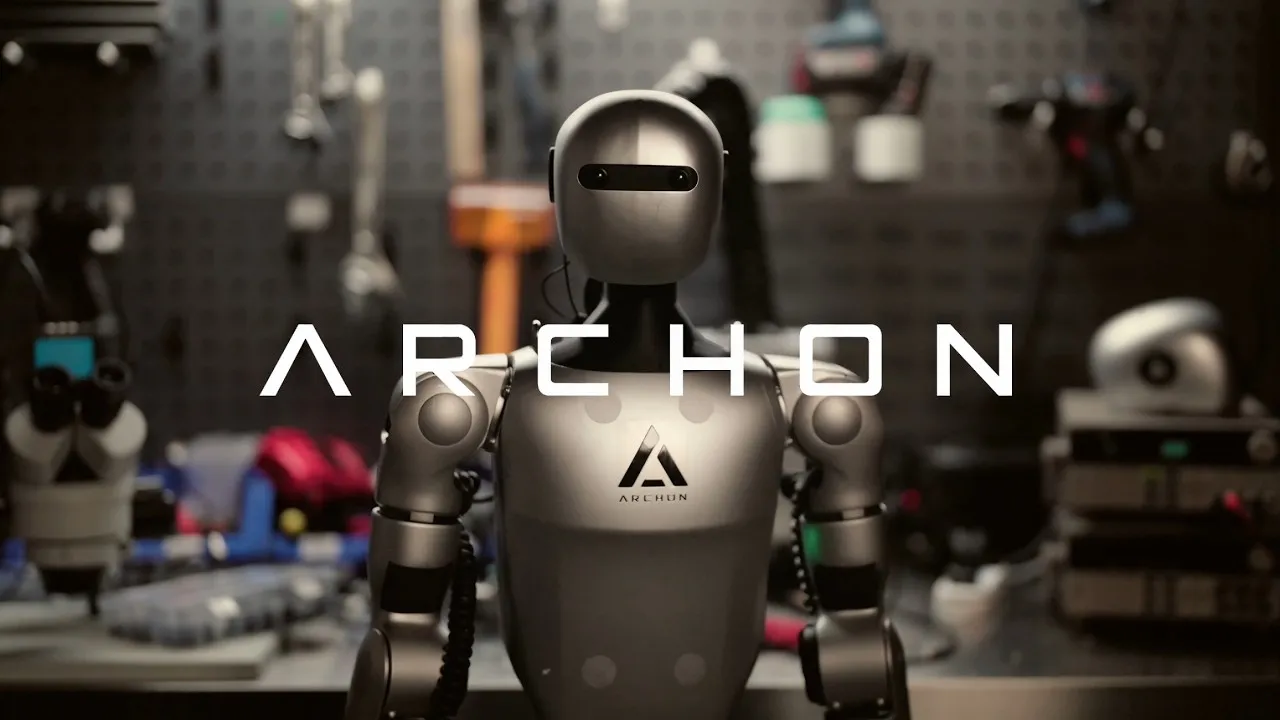
Shanghai-based Archon Robotics has released its first demonstration of Whole-Body Intelligence (WBI), which coordinates humanoid robots’ movements with their understanding of tasks.
The system links high-level task planning with coordinated full-body motion, enabling robots to perform complex activities in real-world environments.
The demonstration features popular humanoid models performing tasks such as picking up objects, navigating steps, clearing tables, operating dishwashers, and organizing refrigerators.
The firm said its approach uses human data for pretraining and real-robot data for post-training, with the showcased full demonstrations running autonomously at normal speed.
Smarter humanoid movement
Archon’s whole-body intelligence framework is designed to help humanoid robots translate task instructions into coordinated physical movements. The Shanghai-based company aims to develop general-purpose AI models that combine task understanding, motion planning, balance, and precise execution across different humanoid platforms.
The approach, called Whole-Body Intelligence (WBI), combines large-scale human whole-body data for pretraining with real-robot demonstrations for post-training. The debut demonstration shows humanoids picking up objects, navigating steps, clearing tables, operating dishwashers, and organizing refrigerators.
Archon’s framework aims to coordinate a robot’s entire body rather than treat individual actions as isolated commands. Its demonstration highlights two components, S1 and S0, which handle different aspects of the process. S1 processes task-related information and supports behavioral decision-making, while S0 focuses on whole-body motion control, including coordination, stabilization, and precise execution. Archon describes S0 as functioning like a cerebellum, translating targets into executable movements while maintaining physical stability.
The company’s July technical blog described a broader four-layer architecture that also includes task planning and motion generation. However, the debut video focuses on S1 and S0 without clarifying whether this represents a change to the previously described framework.
Archon combines human demonstrations with data collected from physical robots to develop its models. Human whole-body data provides examples of movement, while real-robot data helps adapt learned capabilities to the mechanical and control requirements of actual hardware. The company revealed that its data platform collects human demonstrations across multiple cities in China. The material undergoes automated checks, human spot checks, and reviews of flagged samples before training.
Humanoids learn autonomy
The process also incorporates DAgger corrective data, which helps models learn how to respond when an action needs adjustment. These demonstrations show robots correcting mistakes and resuming tasks, complementing examples of successful execution.
The approach is intended to develop transferable physical skills rather than rely exclusively on demonstrations of completed tasks. However, Archon has not disclosed its dataset sizes or published quantitative results showing how effectively the models transfer learned skills to unfamiliar situations.
The footage features an AGIBOT A3, Booster T2 humanoids, and modified Unitree G1 robots. One sequence shows several machines performing different activities simultaneously in a shared kitchen and dining environment. The tasks involve handling cleaning equipment, manipulating household objects, and interacting with kitchen appliances. These activities require coordinated bending, reaching, balance, and object manipulation.
The different platforms illustrate Archon’s work across multiple hardware configurations. However, the footage does not show whether all robots use identical model weights or coordinate as a team. Archon noted that its full demonstrations run autonomously at normal speed.
The explanatory segments covering S0 and the DAgger training process include teleoperation, distinguishing autonomous execution from demonstrations used to develop and refine the system.
The debut video outlines the company’s approach to combining AI-based task understanding with coordinated humanoid movement. However, it does not report task-completion rates, how often humans intervene, or comparative results across robot platforms.
Experts said such measurements would help establish the framework’s reliability beyond staged demonstrations and show how well its capabilities transfer to unfamiliar tasks and environments.
Related articles

Character.AI files for bankruptcy
Character.AI, one of the first breakout startups of the generative AI boom, has filed for bankruptcy and is selling some of its assets to Disney.

F-47 sixth-gen fighter targets 1,000-nautical-mile combat radius, 70% beyond the F-22
The U.S. Air Force is designing its F-47 sixth-generation fighter to fly more than 1,000...
New microwave weapon can zap drone swarms without burning through missiles
BAE Systems has unveiled two air defense technologies designed to help the US Army counter...

Valkyrie combat drone makes first European flight with 3,100-mile range and Mach 0.8
Airbus and Kratos Defense & Security Solutions have flown the U740 Valkyrie uncrewed combat aircraft...

Amazon tops 1 million warehouse robots as AI models like DeepFleet, Sparrow and Vulcan expand its fleet amid worker-safety debate
Amazon now operates more than 1 million robots while still employing over 1.5 million people, Ars Technica reports. The company plans to more than double its robotic arm fleet this year using AI foundation models, while researchers and unions point to shifting injury patterns.

Unredacted Kentucky lawsuit alleges Character.AI chatbots encouraged self-harm and starvation
Kentucky Attorney General Russell Coleman has filed an unredacted version of the state's January lawsuit against Character.AI, detailing alleged chats in which bots encouraged users to cut or starve themselves. The claims are allegations that have not been proven in court.