
Texas clears full-scale drilling test to bury spent nuclear fuel deep underground
Deep Isolation is moving closer to testing a new way to dispose of spent nuclear...
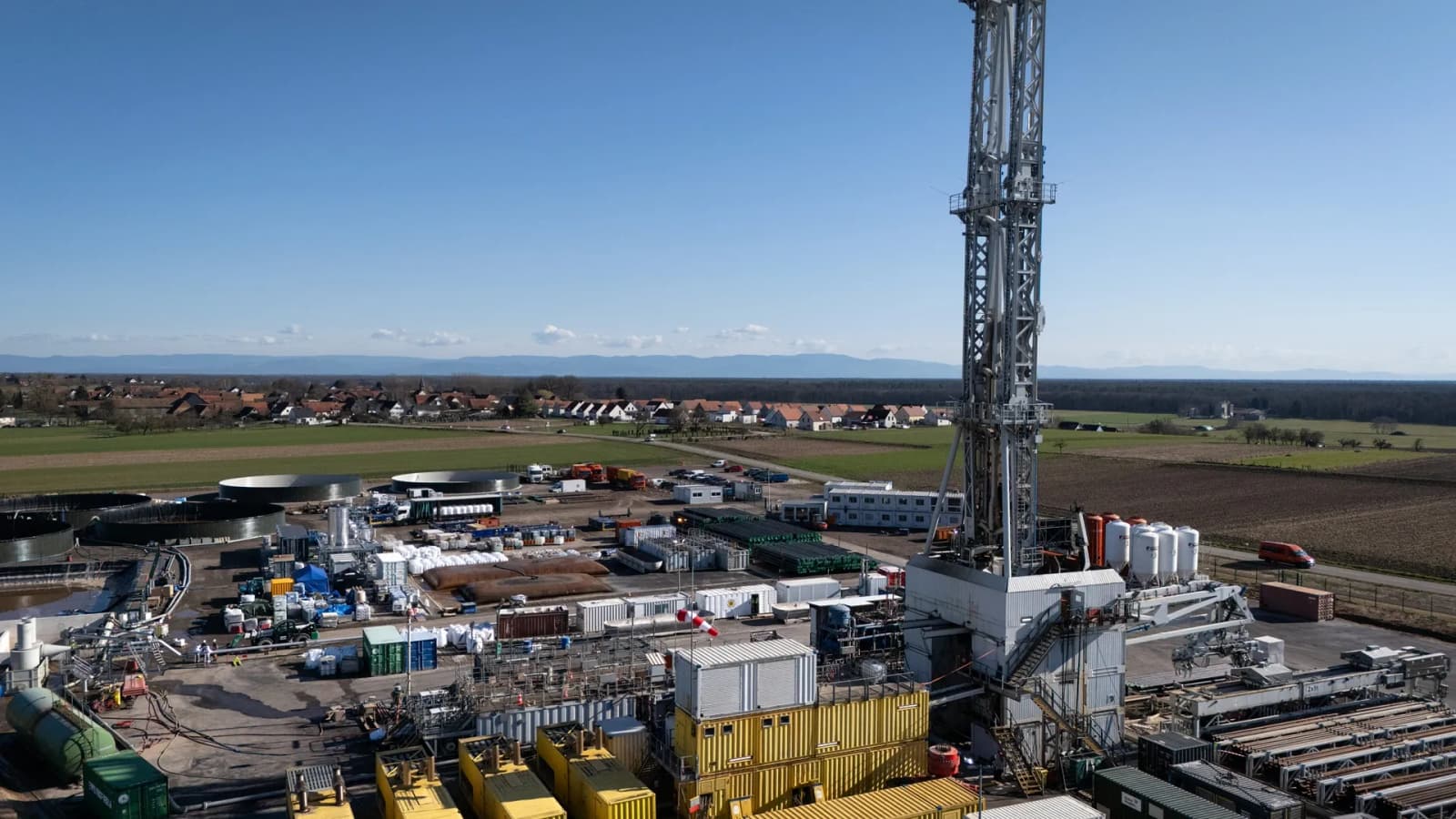
Deep Isolation is moving closer to testing a new way to dispose of spent nuclear fuel by drilling it deep underground after securing approval for a full-scale demonstration in Texas.
The Texas Railroad Commission has issued a drilling permit for the company’s Commercialization Pilot near Cameron, allowing construction and field activities to move ahead. The project will use non-radioactive materials to test the technology without handling actual nuclear waste.
The demonstration is designed to show whether established drilling and well-construction techniques can be adapted to place spent nuclear fuel and high-level radioactive waste in deep boreholes. Deep Isolation’s concept could eventually use horizontal, vertical, or slanted underground repositories.
Halliburton will drill a new well for the project and contribute its subsurface, drilling, and well-construction expertise. Other collaborators include the Deep Borehole Demonstration Center, Amentum, NAC International, and Occlusion Nuclear Solutions.
Nuclear disposal goes deeper
Unlike conventional mined repositories, Deep Isolation’s approach relies on narrow boreholes drilled deep underground. The company is developing systems that would place nuclear waste in engineered canisters and isolate it in suitable geological formations.
The Texas pilot is intended to test the process at full scale and at depth, including the technologies and operations needed to construct and use such a disposal system. It will also provide field data and operating experience that could inform future commercial projects.
“Receipt of this permit is a major milestone for Deep Isolation as we move the development of our deep borehole disposal technology into field activities,” said Jesse Sloane, executive vice president of engineering at Deep Isolation.
“The Commercialization Pilot is designed to demonstrate, at full scale and at depth, the integrated technologies and operations that underpin our deep borehole disposal solution.”
The company broke ground on the Cameron pilot in January 2026. With the drilling permit now in place, the team plans to begin site and construction work before moving to drilling and subsurface testing.
Oilfield tools tackle waste
Halliburton’s involvement is intended to bring established oil and gas drilling expertise into nuclear waste disposal, reducing the need to develop an entirely new drilling system for the application.
“As we drill a new well for this effort, Halliburton will apply its subsurface, drilling, and well construction experience to support the deployment of Deep Isolation’s technology in a new application and assist the project team,” said Steve Haden, senior vice president of project management at Halliburton.
The demonstration will not involve radioactive material. Instead, it is intended to establish how the equipment and procedures perform under realistic underground conditions before the technology is considered for commercial nuclear waste projects.
Deep Isolation has received more than 100 patents related to its technology. Its Universal Canister System was also developed through a three-year project funded by the U.S. Department of Energy’s Advanced Research Projects Agency-Energy.
The canister system is designed to handle spent fuel and high-level radioactive waste from both legacy and advanced reactors through storage, transportation, and eventual disposal. The Texas pilot will now provide a full-scale test of how the company’s broader disposal concept performs in the field.
Related articles
New center bids to supercharge nuclear isotope production for deep-space missions
Canada is moving to expand its role in supplying nuclear isotopes that could power spacecraft...
Schneider tests quantum chip that improves home energy forecasting by up to 41%
Australian government-backed Silicon Quantum Computing (SQC), whose investors include telecom giant Telstra and Commonwealth Bank,...
Digital twin tech from US, Korea could predict toxic ammonia leaks on new ships
The US, South Korea and Germany have recently joined forces in order to develop a...
Mapped: The World’s Digital Leaders in 2026
Which economies are the most digitally connected? See how 159 economies rank in the ITU’s 2026 ICT Development Index.

Breaking up (with Elon Musk) is hard to do
In a throwback to MySpace-style internet drama, Shivon Zilis announced that she and the father of four of her children, Elon Musk, had broken up on X.

OpenAI’s Dot agent is enterprise software that can also order your dinner
It's a tale as old as last week: OpenAI's new agent platform, called Dots, is full of cute little guys who can do your bidding.