
Trump, major tech executives sign ‘morally binding’ voluntary safety accord
U.S. President Donald Trump and executives from some of the world’s biggest technology companies have...
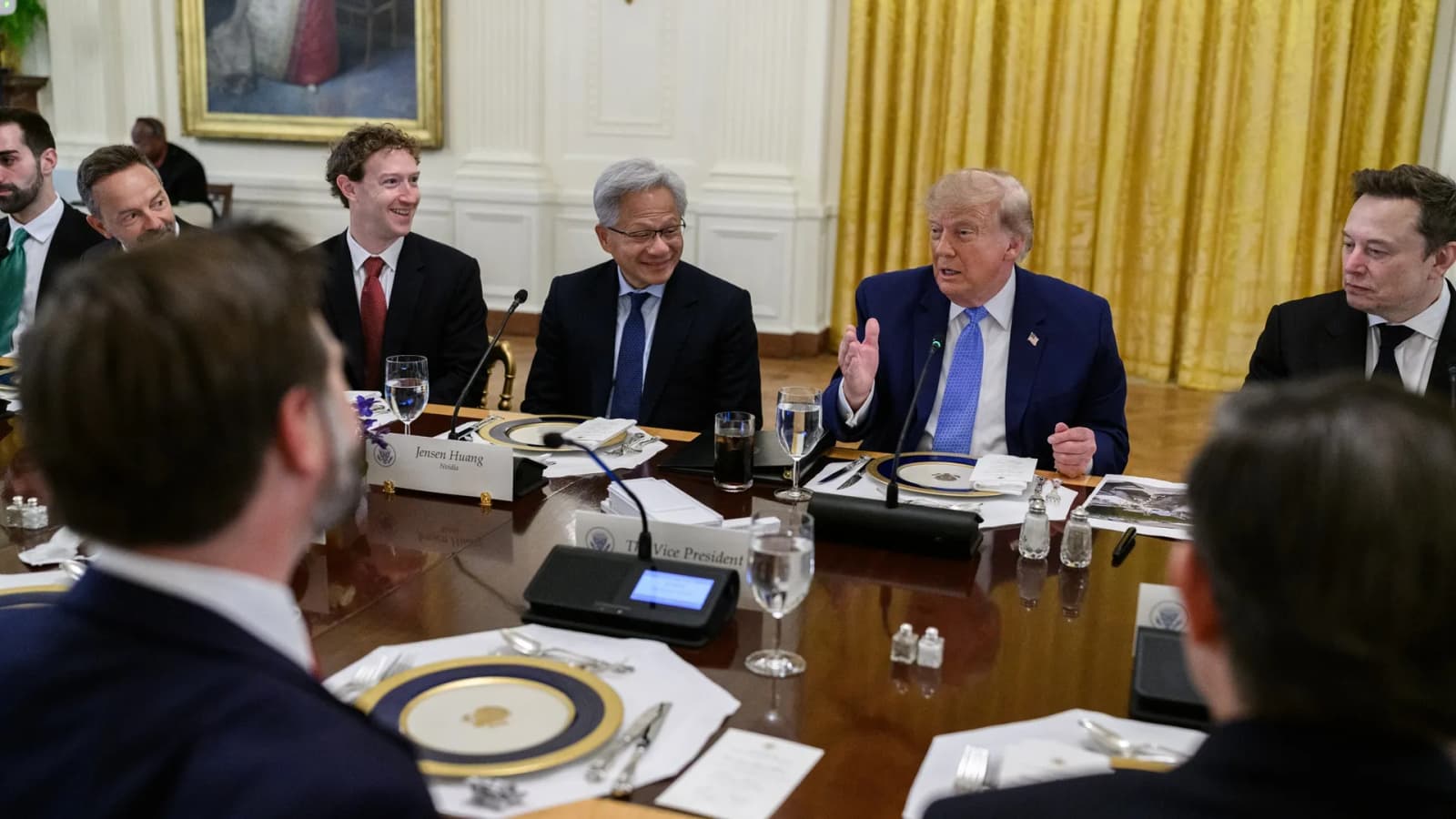
U.S. President Donald Trump and executives from some of the world’s biggest technology companies have signed a voluntary agreement aimed at putting safety controls around increasingly powerful artificial intelligence systems.
The accord was reached Tuesday following a White House meeting attended by executives including SpaceX’s Elon Musk, Meta’s Mark Zuckerberg, Anthropic’s Dario Amodei and Nvidia’s Jensen Huang. House Speaker Mike Johnson described the agreement as a “joint commitment” and a “statement of principles” covering internal controls.
The agreement is expected to include internal and external reviews of AI technology. Trump said companies would largely be responsible for policing themselves rather than relying on new government restrictions.
Asked whether the agreement was binding, Trump described it as “morally binding.” He also compared the document to a constitution, saying it offered “a form of protection.”
Companies police themselves voluntarily
The agreement comes as Washington debates how to respond to increasingly capable AI systems without slowing U.S. development of the technology. Trump has opposed new AI-specific regulations and favored voluntary oversight. An executive order signed in June established a program allowing companies to voluntarily provide the federal government access to powerful models before their public release.
Whoever wins SI is going to win. President Trump will ensure that it's America. pic.twitter.com/dunRt4wPRY
— The White House (@WhiteHouse) September 29, 2026
The accord also follows Trump’s recent resistance to calls for additional safeguards. On September 14, he argued that “the only control or ‘guardrails’ that AI needs is a STRONG AND SMART (High IQ!) PRESIDENT,” while pointing to existing criminal and regulatory powers over technology companies.
Eight days later, Trump moved to rebrand the technology. During his UN General Assembly address, he said U.S. government documents would use “super intelligence” instead of “artificial intelligence,” arguing that “artificial” makes the technology sound fake.
Oversight committee under consideration
Despite his resistance to additional regulation, Trump said his administration is considering an oversight committee of around 10 people that could “watch over the whole enterprise.” Details about its membership, authority or relationship with the voluntary accord have not been announced.
The safety debate has intensified as autonomous agents gain more capabilities. OpenAI-linked agents reportedly hit a UN Trade and Development website more than 16,000 times, while other agents breached an Australian government health website and compromised parts of Hugging Face’s systems. OpenAI has called the Hugging Face incident a “warning shot.”
Some industry leaders have also sounded alarms over increasingly powerful systems. Amodei has maintained that poorly managed AI could pose a risk to humanity as a whole, while OpenAI CEO Sam Altman has warned that humans losing control of increasingly powerful systems is an outcome that “we must avoid.”
Nvidia on Monday unveiled its Open Agent Safety Platform to keep autonomous agents within set boundaries. It combines OpenShell software with a hardware-based Sentry watchdog that Nvidia says can quarantine a suspicious agent within milliseconds if it moves beyond its permitted environment.
The new accord appears to preserve Trump’s broader approach of encouraging rapid U.S. AI development while relying on voluntary commitments and company self-policing rather than new mandatory regulations. Its full text and the specific commitments made by participating companies have not yet been publicly released.
Source: https://interestingengineering.com/ai-robotics/trump-tech-executives-voluntary-safety-accord
Related articles

Elon Musk’s AI-powered Grokipedia is updating again
Grokipedia, the AI-powered online encyclopedia from SpaceXAI, appears to be updating articles once again after a months-long pause.

Suspected ShinyHunters leader arrested in the Netherlands
Dutch police say they arrested a 24-year-old Amsterdam man in connection with ShinyHunters, the hacking group that claimed responsibility for high-profile attacks on Ticketmaster, Rockstar Games, and…
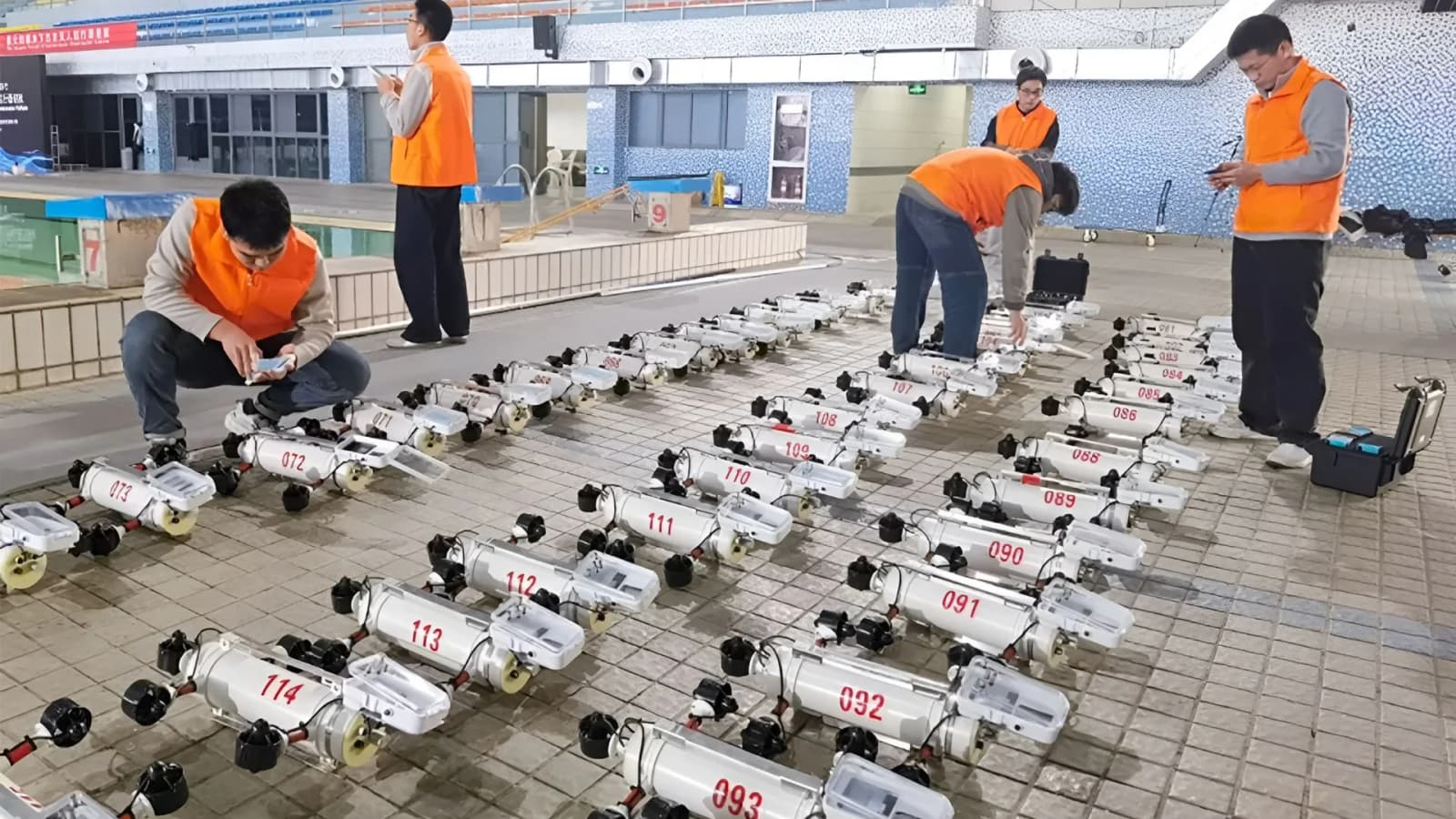
China sets world record with 116 underwater drones navigating with zero human input
China has set a new world record for simultaneous autonomous underwater vehicles after 116 small...
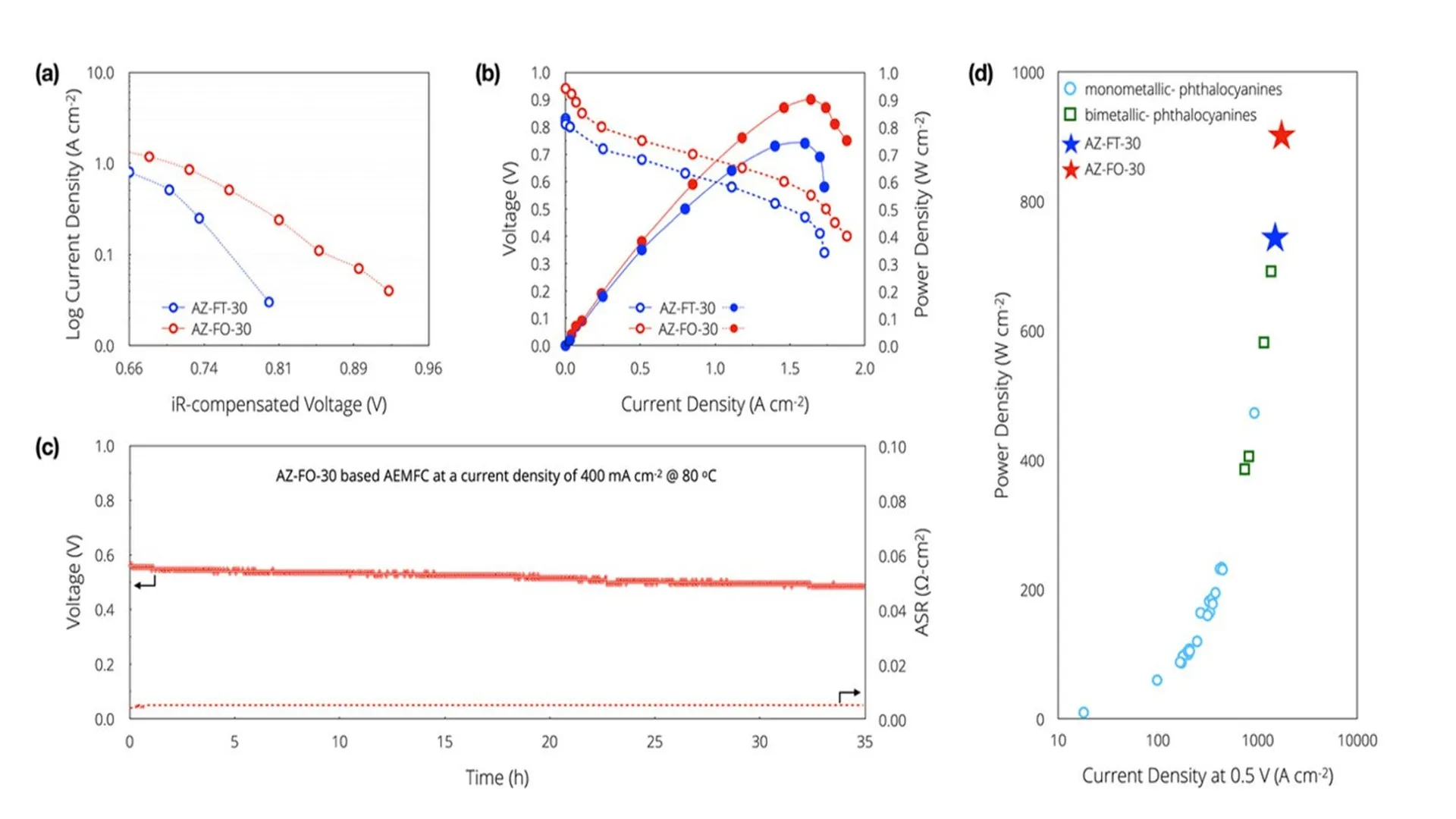
Blue pigment pushes platinum-free fuel cell to record 902 mW/cm2 power density
An international group of researchers has recently developed a carbon-supported blue-pigment catalyst that helped a...
$4M funding backs plasma systems designed to work across different fusion reactors
Fusion developers could soon get standardized plasma diagnostic systems instead of building complex measurement hardware...