
Unitree humanoid robots return to America’s Got Talent for Chinese dance finale
A Chinese dancer and eight humanoid robots from Unitree Robotics have brought a centuries-old Chinese...
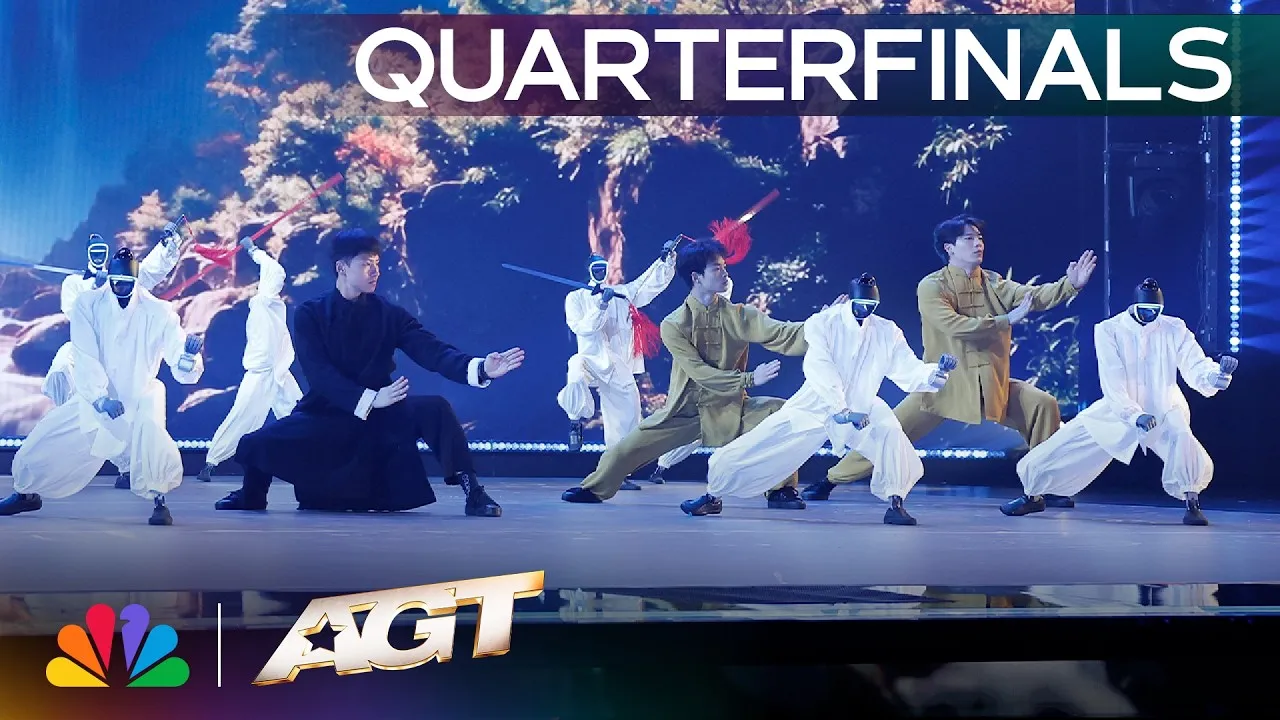
A Chinese dancer and eight humanoid robots from Unitree Robotics have brought a centuries-old Chinese dance tradition to the stage of America’sGot Talent, performing a synchronized shuixiu, or “water-sleeve,” routine during the Season 21 finale.
The performance by 27-year-old Sichuan dancer Wu Yufei and the Unitree G1 robots combined traditional Chinese movement with humanoid robotics, giving American television audiences an unusual meeting of classical performance and modern machines.
The group had already become one of the season’s most recognizable technology-focused acts before reaching the finale.
From backflips to water sleeves
Wu and eight Unitree G1 humanoids first appeared on America’sGot Talent during the June 2 auditions. Their tightly synchronized routine included dance, martial-arts movements and coordinated backflips, earning all four judges’ approval and sending the act through to the next stage.
The robots returned during the competition before advancing to the September 22 finale. Reporting from Chinese media described the latest performance as a water-sleeve dance, incorporating the long, flowing sleeves associated with Chinese traditional theater and dance.
The act performed under the name Homies, with Wu serving as the human dancer alongside the robot performers. Chinese reporting said Unitree chief marketing officer Wang Qixin described the group as the first Chinese team to reach the America’s Got Talent finale.
The finale performance also builds on a longer effort to make humanoid robots capable of performing complicated choreography alongside humans.
Teaching robots to dance
Getting a humanoid robot to reproduce a dance routine requires considerably more than simply telling it to imitate a human. According to reporting by AFP, the process involves capturing detailed human movements, simulating them on computers and transferring the resulting motion data to the robots. Engineers then have to fine-tune the movements so the machines can execute the choreography reliably.
That creates a particular challenge for dance. Robots can be highly consistent once a sequence has been programmed, but they have difficulty with movements requiring the flexibility of a human body. They also generally cannot improvise or adjust to unexpected changes in music the way a human dancer can.
For the Unitree performance, however, that repeatability is an advantage. Eight robots can be programmed with the same movements and execute them in synchronization, allowing choreography that would otherwise require considerable coordination between individual performers. Wu told AFP that after months of training with the robots, they began to feel less like machines and more like members of a team.
Unitree’s humanoids move into entertainment
The G1 is Unitree’s humanoid robot platform and has become increasingly visible outside conventional robotics demonstrations. The machines have been shown performing complex movements including walking, balancing, martial arts and backflips.
Unitree robots also gained widespread attention in China after appearing in the country’s annual Spring Festival Gala, where humanoid machines performed alongside human dancers. That exposure helped fuel a wider trend of robot performances at commercial events and public shows.
For the robotics industry, performances such as the America’s Got Talent routine serve a purpose beyond entertainment. They provide a highly visible demonstration of balance, motion control, multi-robot coordination and the ability to repeatedly execute complex sequences in a public environment.
At the same time, the performance highlights the current limits of humanoid robotics. The choreography remains heavily scripted, with humans and engineers playing a central role in designing and refining the movements.
Still, putting eight humanoid robots alongside a human dancer and having them perform a traditional Chinese dance on one of America’s biggest talent shows offers a striking demonstration of how rapidly robotics is moving from laboratories and demonstrations into mainstream entertainment.
Related articles

Everything is spying on you and there’s no opting out
Earlier this month, Apple announced that its new Apple Watches will have the ability to continuously listen to every spoken word they detect and create summaries of whatever's going on around you.

Meta’s Muse AI Charms can interact with each other
Meta's handheld AI gadget, called the Muse Charm, will be able to recognize and interact with other nearby Charms when it launches later this year.

Waymo’s driverless cars continue to crash less often than people
Waymo's latest batch of self-reported data continues to affirm the company's message that its driverless cars are safer than human drivers.
F-35 jets could get 40-kilowatt cooling boost to handle future tech upgrades
Honeywell Aerospace has introduced an upgrade designed to give the F-35 fighter jet more cooling...

Island solar plant gets 150-kW electrolyzer to make hydrogen from surplus energy
A solar plant on the French island of Corsica has a new use for electricity...
Electra’s EL2 first fixed-wing plane to fly helicopter-style IFR at commercial airport
A fixed-wing aircraft has landed at a commercial airport using helicopter-style instrument procedures for the...