
US Army awards $4.7M contract to integrate AI weapon sensors into live training
The U.S. Army has awarded Armaments Research Company (ARC) a $4.7 million contract to integrate...
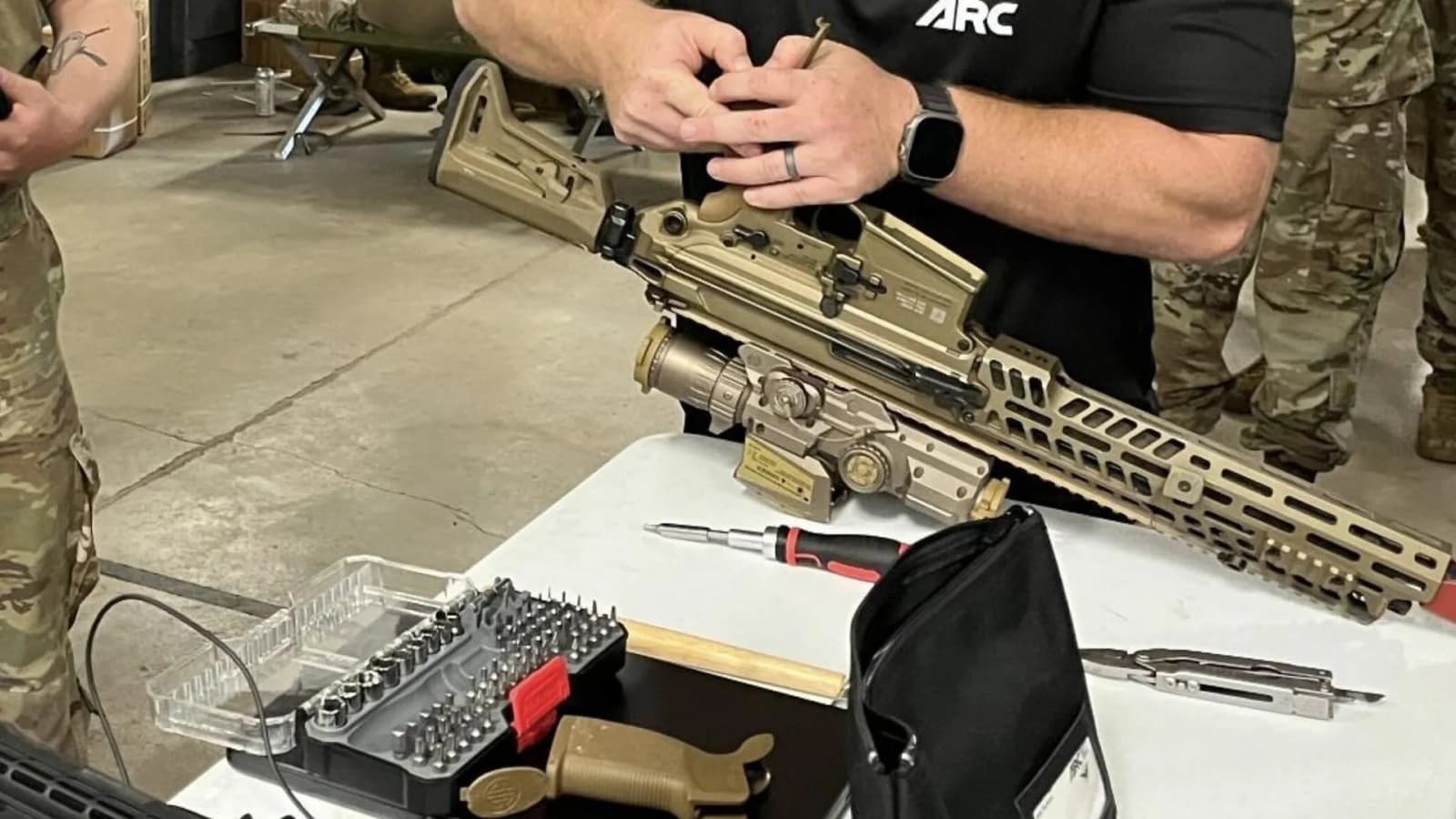
The U.S. Army has awarded Armaments Research Company (ARC) a $4.7 million contract to integrate AI-enabled weapon sensors into live collective training, potentially giving commanders and trainers a much more detailed picture of how soldiers employ their weapons during exercises.
The 12-month Other Transaction Agreement (OTA) supports the Army’s Capability Program Executive Simulation, Training, Test and Threat (CPE ST3), which develops and fields technologies for military simulation, testing and training.
The effort will connect ARC’s AI-enabled weapon sensors (AEWS) to the Army’s live training environment and tactical network, aiming the turn weapon employment into measurable, real-time data.
Turning battlefield actions into training data
ARC said in its announcement that Army tactical units originated the requirement through operational validation. The company says the current training environment can leave commanders and Observer Controller/Trainers with relatively limited objective data about how units actually fight.
Under the new effort, AEWS will collect information during large-scale collective training and feed it into the Army’s training architecture. The resulting data is intended to support common operating pictures and after-action reviews, allowing trainers to examine what happened during an exercise in greater detail.
ARC describes AEWS as a weapon-mounted sensing system that combines embedded sensors, data processing and AI-enabled analytics. The company says its broader platform can turn individual weapons into networked sensors, with applications including training optimization, situational awareness, predictive logistics and predictive maintenance.
For the Army, the new contract specifically focuses on using the technology in live collective training rather than simply monitoring an individual weapon.
The objective is to make weapon employment measurable, rather than relying primarily on observations made during or after an exercise. Data gathered from weapons could give commanders and trainers additional information for evaluating how units performed and identifying areas for improvement.
Sensors designed to follow soldiers
One of ARC’s stated goals is to eliminate the distinction between training equipment and equipment soldiers use during operations. The company says its modular, open-system approach is intended to let the technology adapt to changing requirements while enabling soldiers to train with the same sensor technology they use downrange.
That approach also fits into CPE ST3’s broader push toward more connected, data-rich training environments. In July, the organization announced the Army Training Verse, an initiative designed to connect simulation engines, engineering data, and other services in an AI-enabled digital environment supporting live, virtual, and constructive training.
ARC is not new to Army work involving AI-enabled weapon sensing. The company previously received Army-related contracts for AI-based weapons sensing, including work involving small-unit resupply and weapon systems. Its existing technology has also been demonstrated in Army interoperability efforts, including a 2025 xTech Counterstrike competition focused on counter-drone technologies.
The company says the new $4.7 million effort will build on that experience while integrating AEWS into the Army’s live collective training environment. “Warfighters want to leverage a training system that follows them downrange,” ARC CEO Mike Canty said.
The contract does not specify which weapons will receive the sensors, how many systems will be integrated, or which specific AI models will process the training data.
If successful, however, the effort could give Army units a way to turn weapon-level sensor data into a larger picture of battlefield performance, linking what individual soldiers do during an exercise with the data commanders and trainers need to assess collective readiness.
Related articles

Bernie Sanders proposes banning ‘superintelligence’ and putting violators in prison
Sen. Bernie Sanders (I-VT) and Rep. Greg Casar (D-TX) have introduced new legislation that would ban anyone from developing artificial superintelligence - a technology the bill describes as capable…


Xbox’s Mythic achievements sound like PlayStation’s Platinum trophy
Xbox appears to be ready to launch its own version of PlayStation's platinum trophies.

Logitech’s new haptics-based gaming mouse is a little better and $20 more
The G Pro Superstrike mouse is one of Logitech's most interesting products.

Logitech’s new Blue Yeti 2 mic adjusts itself to where you are
The original Blue Yeti has been one of the most recognizable go-to USB microphones for content creators since it launched in 2009, and now it finally has a successor.

Energy firms advance US nuclear reactor technology for heavy industry operations
An alliance between US-based reactor developer Terrestrial Energy and British energy firm Viaro Energy has...