
US Army upgrades digital logistics tools after supply-chain challenges in Iran war
The US Army has upgraded its military transportation software based on lessons from Operation Epic...
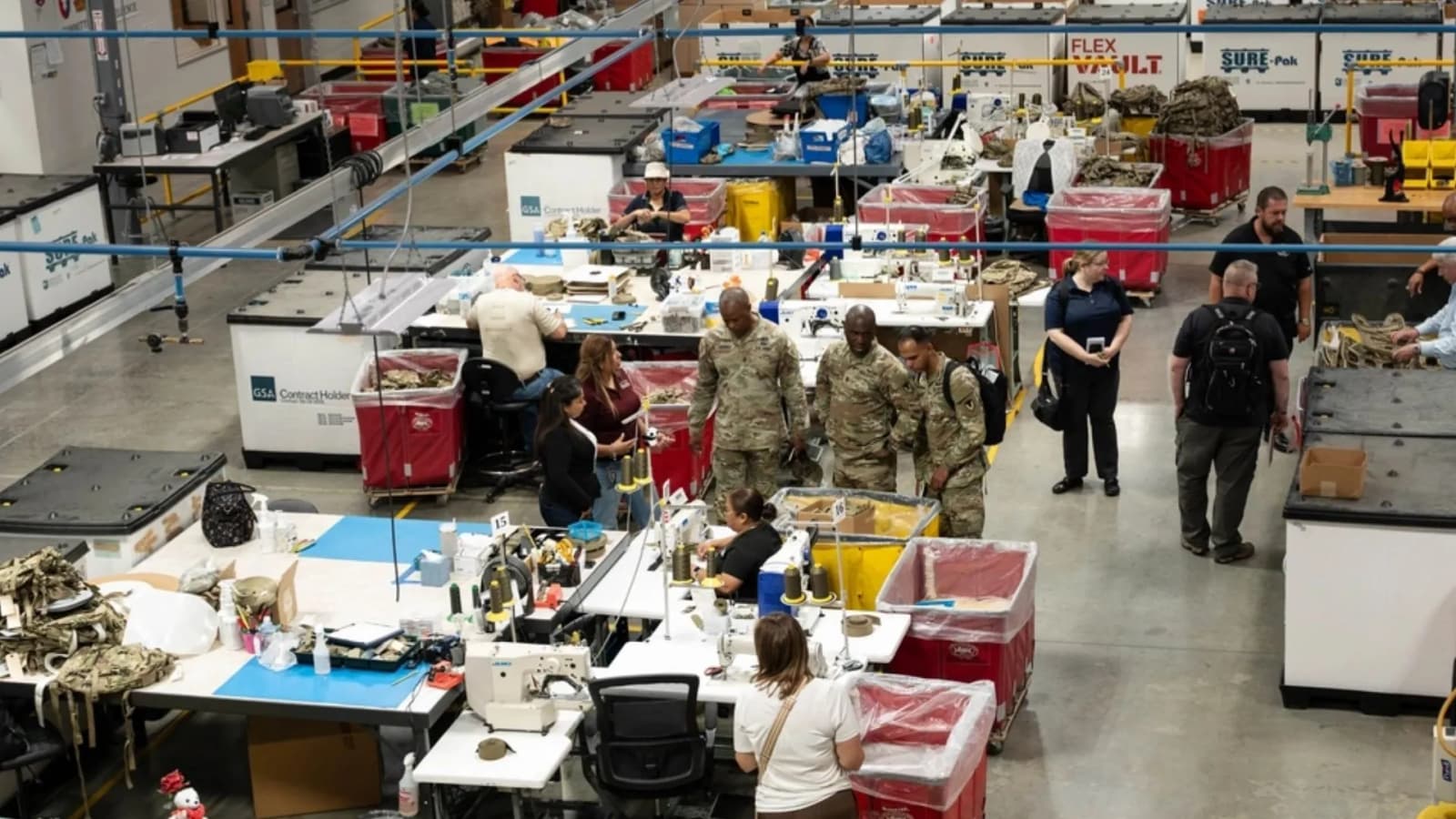
The US Army has upgraded its military transportation software based on lessons from Operation Epic Fury, aiming to give commanders a clearer picture of where cargo is, what transport capacity is available, and which movements need urgent attention.
The updated system, called LOADOUT, manages requests to move military personnel, equipment, and supplies. The Army’s Combined Arms Support Command (CASCOM) developed the latest enhancements with theater sustainment commands and other operational partners after identifying a recurring problem. Soldiers were spending too much time chasing shipment updates instead of coordinating movements.
A digital dashboard for military logistics
Moving military cargo involves more than assigning a truck or aircraft. Requests must be submitted, coordinated, matched with available transportation, executed, and eventually closed out. When information is scattered across different tools or requires repeated phone calls and emails, delays can add up.
LOADOUT is designed to manage that process through a shared workflow for Transportation Movement Requests. Its latest version introduces customizable dashboards, line-by-line cargo-manifest exports, and improved tools for uploading and assigning organizational equipment lists and unit deployment lists.
One important addition is an upgraded Movement Board that provides real-time visibility into available transportation capacity. A new Priority 1 banner also highlights mission-critical requests, helping users distinguish urgent movements from routine requirements.
The goal is to give units and sustainment planners a common view of transportation demand and available capacity, rather than forcing each theater to rely on separate workarounds.
Lessons from the war in Iran
The changes follow Operation Epic Fury, which placed substantial demands on the US military’s global logistics network. Moving forces and supplies during a major campaign requires coordination across services, geographic commands, transportation hubs, and multiple supply routes.
The Army says the LOADOUT updates were developed with the 1st Theater Sustainment Command, which supports operations in the Middle East, the 8th Theater Sustainment Command, US Army Forces, Japan, and other stakeholders.
The wider campaign has also highlighted the value of faster, data-driven logistics planning. In April, reports surfaced that the US Transportation Command was expanding its use of real-time data and AI-enabled visualization to maintain visibility across the logistics network and evaluate alternative transportation options as conditions changed.
Separately, Air & Space Forces Magazine reported that Transportation Command used AI agents to assess alternative airfields after Spain restricted US military access to its bases and airspace in March. The tools helped planners compare factors such as aircraft parking capacity, ground operations, and access constraints.
These are separate efforts from the Army’s LOADOUT upgrades, but they illustrate the broader push to make military logistics more responsive when routes, access, and transportation availability change unexpectedly.
What comes next for LOADOUT?
CASCOM held its first Functional Review Working Group for the software on September 24, bringing together leaders from the 1st and 8th Theater Sustainment Commands to review completed changes and establish future priorities.
The Army plans to hold monthly reviews with theater partners. Potential additions include interim tracking for diplomatic and customs clearances, which can affect how quickly cargo crosses international borders.
Over the longer term, the Army also plans to connect LOADOUT with its ARTEMIS capability suite so movement information can transfer automatically between systems.
The current upgrades focus primarily on visibility, coordination, and workflow, not autonomous transportation or AI-driven cargo movement. Their value will depend on whether they reduce administrative friction and help logistics teams make better-informed decisions.
For a military operating across vast distances, a clearer picture of transport requests and available capacity can be as important as the vehicles carrying the cargo. LOADOUT’s next test is whether those improvements translate into faster, more predictable movement of personnel and equipment when operational demands intensify.
Related articles

Anthropic adds live dashboards and animated explainers to Claude with Dashboards and Motion
Anthropic launched Claude Dashboards, which builds auto-updating dashboards from data platforms and CRMs, and Claude Motion, which turns reports and charts into editable animations, in beta, while making Docs, Slides and Design available on every plan.

Microsoft launches Microsoft-Decision-1, a fast decision-scoring model, on Foundry and OpenRouter
Microsoft released Microsoft-Decision-1, a model that returns calibrated probabilities over fixed options instead of generating text. Microsoft says it topped a 36-benchmark comparison and ran 35 times faster than GPT-6 Sol.

Microsoft’s Satya Nadella says advanced AI needs a human-controlled ‘emergency brake’
Microsoft CEO Satya Nadella urged the industry to treat frontier AI models like insider risks, wrapping them in containment, independent controls and an “emergency brake” that lets an authorized person pause or shut down a model mid-task.

Amazon in talks to buy AI startup Decart for around $7 billion, WSJ reports
Amazon is negotiating to acquire Decart, maker of real-time video-editing and robotics-simulation AI models, in a deal that could be valued at about $7 billion, The Wall Street Journal reported. Decart was valued at nearly $4 billion in May.

A college in Illinois tried to cancel its Flock contact and it refused
In April of 2025, Elgin Community College had six Flock safety cameras installed to "enhance the safety and security of students.

Silicon Valley is falling in line with Trump’s attempt to rename AI
When President Donald Trump announced his plans to rebrand artificial intelligence as "super intelligence," you'd be forgiven for being skeptical that it would catch on.