US defense-backed electricity-producing microreactor clears key regulatory checkpoint
US-based Antares has cleared a key regulatory hurdle for its first power-generating nuclear microreactor. The...
This story was prepared automatically by software.
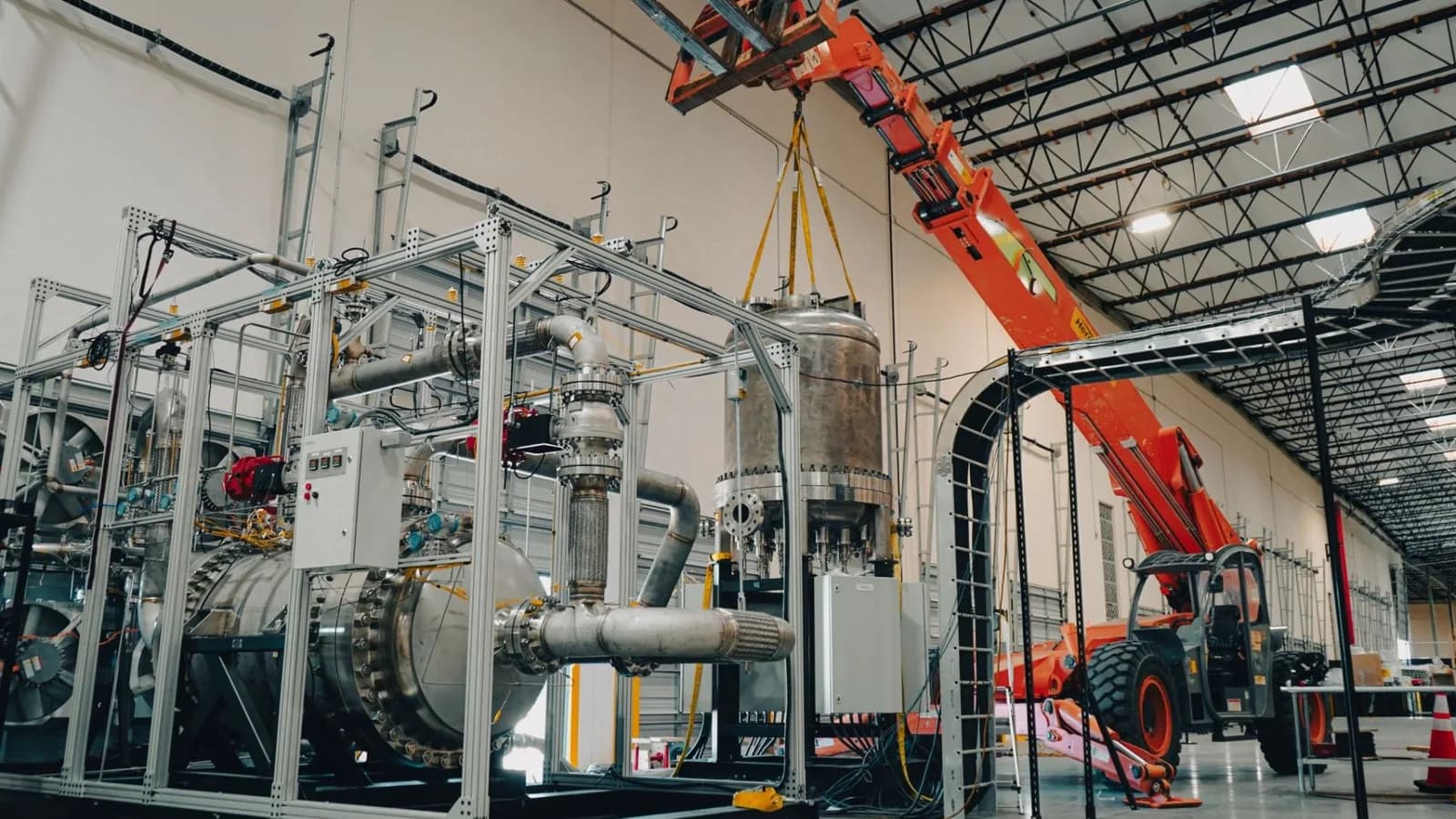
US-based Antares has cleared a key regulatory hurdle for its first power-generating nuclear microreactor. The US Department of Energy (DOE) has approved the Nuclear Safety Design Agreement for the company’s Mark-1 system.
The decision opens the door for construction and testing at Idaho National Laboratory. It also sets the formal safety standards and technical baseline that will govern the plant until it goes live.
The green light comes as the Pentagon accelerates efforts to field reliable, portable nuclear power on Earth and in orbit. In September 2026, the US Space Force granted Antares a $161 million Strategic Breakthrough award to build space-qualified reactors.
Military planners want persistent electricity for satellites to support high-demand computing and directed-energy equipment in contested orbital zones.
Commercial demonstration for deployment
Mark-1 serves as the crucial ground-based bridge toward those ambitions. Antares plans to run the reactor at full electrical power for six months during a major testing campaign in 2027. Unlike pure experimental rigs, Mark-1 is designed as a commercially representative plant.
The reactor will produce electricity by feeding heat into a specialized nitrogen closed Brayton cycle system. Operating data gathered throughout the test run will directly inform Antares’ first military deliveries. Under the US Army’s Janus program, the company plans to install the first of several operational microreactors at Fort Bragg, North Carolina, starting in 2028.
“Mark-1 isn’t a scaled-down, stand-in test rig,” said Jordan Bramble, chief executive and co-founder of Antares. “DOE’s approval of this safety agreement is the gate that lets us move not only from neutrons to electrons, but to customer plants, on schedule.”
The company is moving through federal safety reviews at an unusually rapid pace. This marks the second time in twelve months that Antares has entered the energy department’s authorization pipeline.
Achieving self-sustaining reaction
Its earlier test reactor, Mark-0, took just eight months to move from safety approval to initial criticality on June 4, 2026. That run marked the first time in over 40 years that a privately developed, non-light-water reactor achieved a self-sustaining fission reaction in the United States.
Mark-1 borrows heavily from that predecessor. It uses the same full-scale reactor core, high-durability TRISO fuel, and Idaho test bay. However, while Mark-0 focused purely on physics, Mark-1 must prove that the entire electrical generation system can run reliably under sustained operational loads.
Alongside Mark-1, Antares is developing the R1-S reactor for orbital flight. That design relies on passive heat pipes rather than mechanical coolant pumps to pull heat from the nuclear core. Fewer moving parts reduce the risk of mechanical breakdowns during long space voyages.
Engineers will first evaluate the R1-S on the ground before mounting it to a spacecraft for flight certification. Together, the terrestrial Mark-1 tests and orbital designs reflect a deliberate strategy: prove core reactor physics rapidly on Earth, then scale the technology for defense bases and deep-space missions.
Source: https://interestingengineering.com/energy/us-power-producing-microreactor-safety-milestone
Related articles