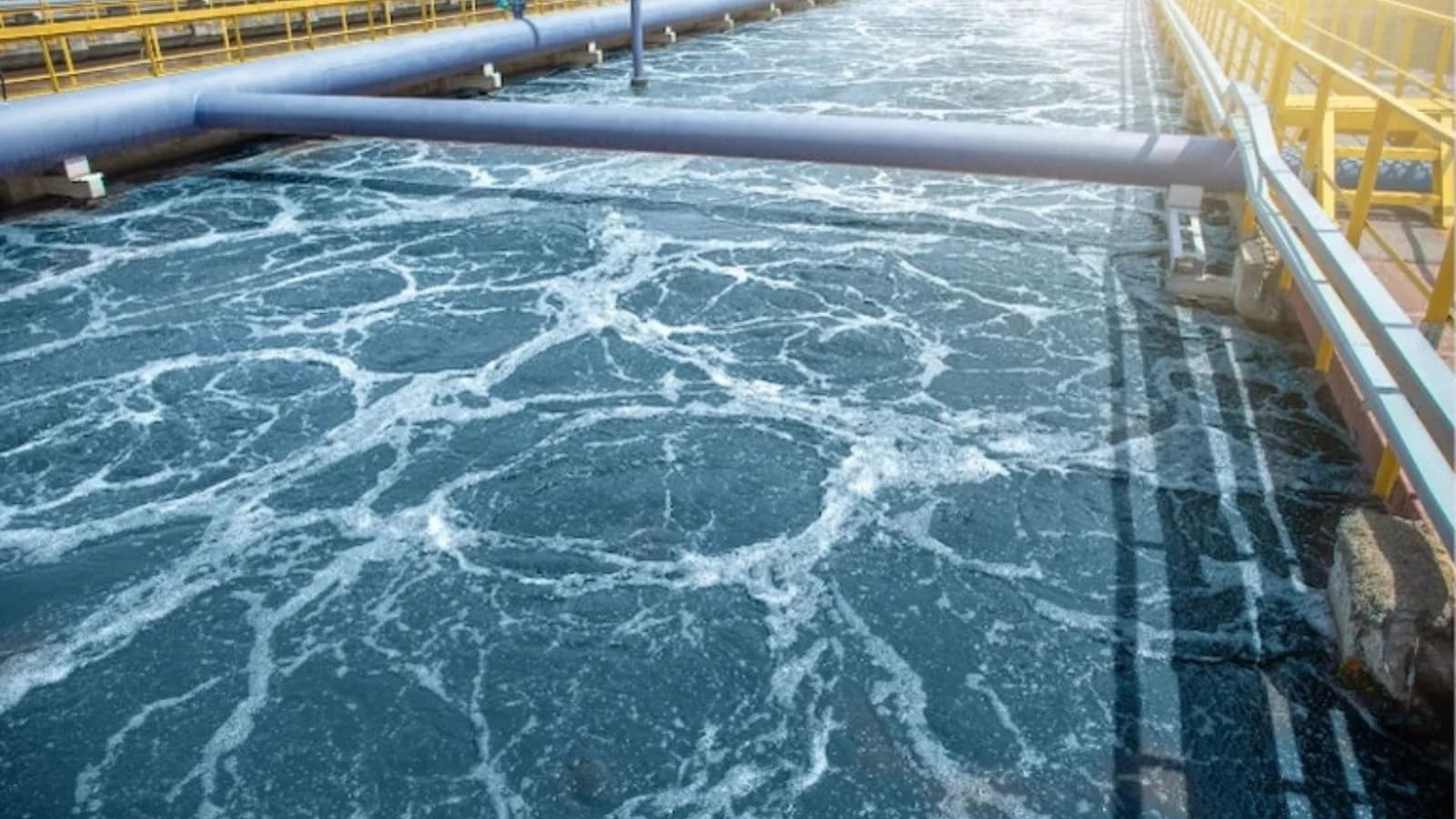
US drinking water may contain double the reported levels of harmful ‘forever chemicals’
The methods used to report harmful “forever chemicals” in U.S. drinking water may be underestimating...
This story was prepared automatically by software.

The methods used to report harmful “forever chemicals” in U.S. drinking water may be underestimating their concentrations by more than half, according to a study published in Cell Reports Sustainability.
Researchers analyzed more than 1.8 million measurement records from across the United States. They found that conventional calculations captured only 44.1 percent of the modeled concentration of perfluoroalkyl and polyfluoroalkyl substances (PFAS) in community water systems.
The findings suggest current methods may be understating the amount of PFAS present in water.
PFAS, or per and polyfluoroalkyl substances, are called “forever chemicals” because they do not degrade naturally, and man-made processes to destroy them are costly and yield questionable results.
Most PFAS measurements fall below reporting limits
Under the Environmental Protection Agency’s fifth Unregulated Contaminant Monitoring Rule (UCMR 5), public water systems monitor 29 PFAS in drinking water.
The researchers examined 1,863,306 PFAS measurement records from 10,297 monitored systems across the country, “of which 2 percent were detections above the reporting limit.”
“Replacing these non-detects with zero, half the detection limit, or the detection limit itself remains a common practice in water-quality monitoring,” researchers wrote, adding that these methods can introduce biases into estimated averages and other statistical measurements.
Results below reporting limits do not necessarily indicate the absence of PFAS. They represent concentrations that laboratories cannot quantify with current methods.
Models reveal substantially higher PFAS estimates
To investigate the missing concentrations, the researchers developed a statistical framework that accounts for results below laboratory reporting limits.
The team generated 500 model estimates and calculated average concentrations for 25 PFAS detected at least once in the national dataset.
For those chemicals, the model estimated a population-weighted average concentration of 15.04 nanograms per liter (parts per trillion), compared with 6.63 nanograms per liter when below-limit results were counted as zero. The conventional calculation fell 55.9 percent short of the model’s estimate.
For the six PFAS included in the EPA’s April 2024 National Primary Drinking Water Regulation, the conventional calculation produced an average of 2.62 nanograms per liter, compared with the model’s estimate of 5.23 nanograms per liter.
“Across sensitivity analyses, the direction of the national finding was consistent, but its magnitude was model dependent,” according to the study.
Findings could improve future water monitoring
Despite the notable differences, the researchers emphasized that their models do not directly measure unknown PFAS concentrations or establish additional health risks.
“Our study only examines how PFAS measurements are summarized,” lead author Gehendra Kharel told Phys.org. “It does not establish that every below-limit result poses a health risk.”
The researchers also examined whether lowering laboratory reporting limits could reduce the gap between conventional calculations and model estimates.
For PFOA and PFOS, two widely studied PFAS, models indicated that reducing reporting limits from 4 nanograms per liter to 0.5 nanograms per liter would allow conventional calculations to capture more than 92 percent of modeled occurrence, according to the study.
The authors concluded that improved laboratory sensitivity and statistical methods could help agencies better interpret drinking-water monitoring results.
“When a water quality report says ‘not detected,’ that means below the reporting limit, not zero,” added Kharel.
“Our method gives water agencies and utilities a way to account for that difference, so they can see where more testing would help and be clearer about what they do and do not know.”
Related articles