US firm unveils Phantom MKII battlefield humanoid robot with bigger payload, tougher build
San Francisco-based robotics startup Foundation Future Industries has unveiled its second-generation humanoid robot, the Phantom...
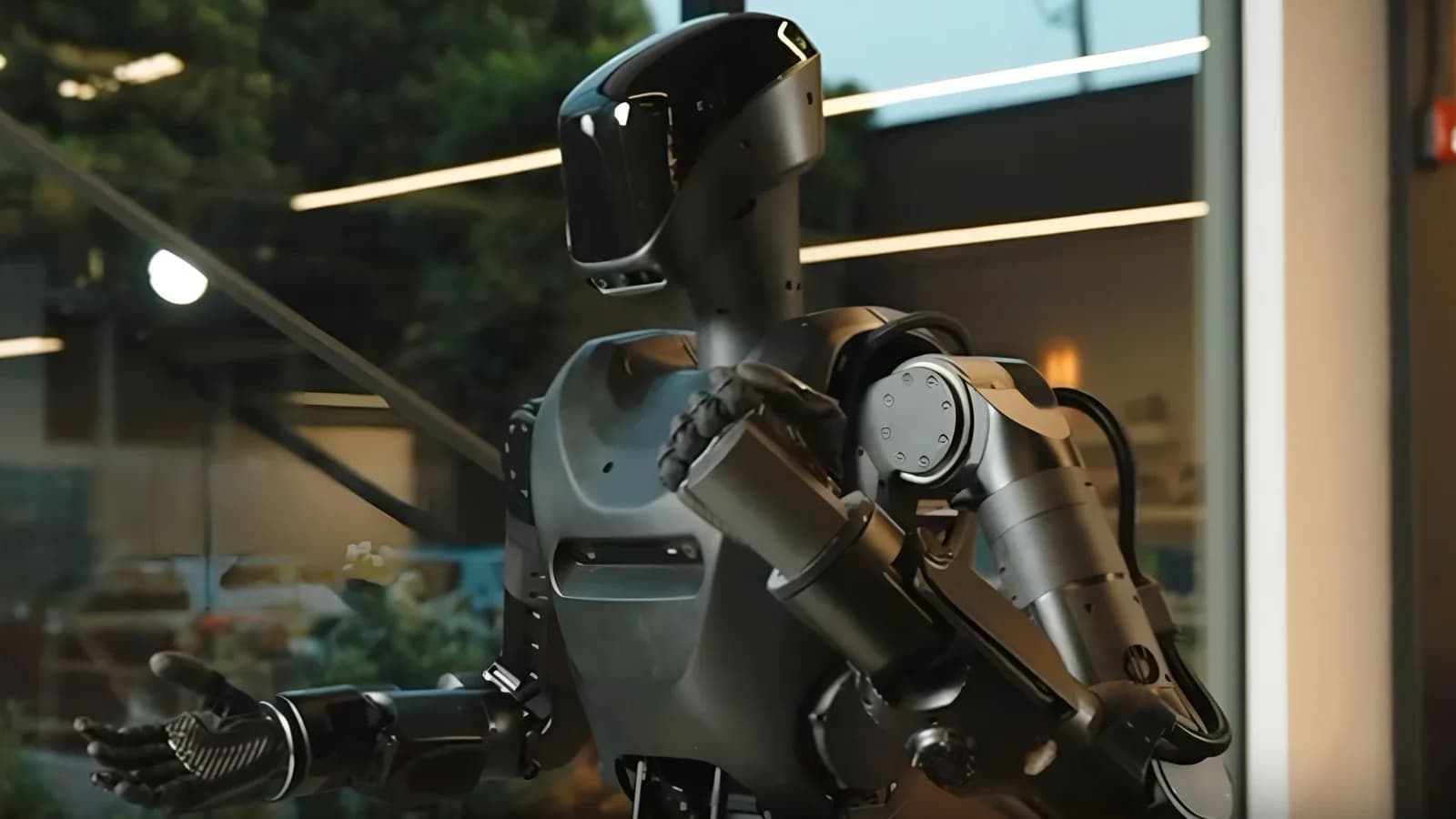
San Francisco-based robotics startup Foundation Future Industries has unveiled its second-generation humanoid robot, the Phantom MKII, alongside an upgraded artificial intelligence control system called Cortex II.
Engineered for heavy industrial work and military support roles, the new bipedal platform is designed to haul up to 200 pounds (91 kilograms) while walking through rain, snow, and dust.
Founded in 2024 by CEO Sankaet Pathak and former U.S. Marine Corps officer Mike LeBlanc, Foundation has positioned itself differently from competitors focused solely on indoor warehouse or factory automation. While most commercial humanoids operate in controlled environments, Foundation has explicitly pursued dual-use defense and rugged field applications, aiming to begin early production of the MKII in the San Francisco Bay Area in early 2027.
Weatherproofing, payload gains, and Cortex II
According to an interview with Pathak published by Fast Company on November 18, 2026, the Phantom MKII directly addresses hardware bottlenecks uncovered during early field trials of its predecessor, the Phantom MK-1. Earlier testing highlighted limitations in battery runtime, waterproofing, and lifting capacity. These constraints restricted how long the first-generation robot could operate outdoors.
To overcome those hurdles, engineers redesigned the Phantom MKII with environmental sealing against precipitation and dust, higher-load actuators capable of supporting a 200-pound walking payload, and a simplified assembly that Pathak claims cuts the bill-of-materials cost in half.
On the software side, the companion Cortex II control system is built to learn physical tasks by observing human demonstrations, requiring as few as 60 examples for certain operations rather than extensive custom programming.
Lessons from Ukraine trials and battlefield philosophy
The hardware overhaul follows Foundation’s high-profile push to test humanoid robotics in active conflict zones. Earlier in 2026, the company drew widespread attention after sending two Phantom MK-1 units to Ukraine for non-combat logistics and reconnaissance evaluations, though independent reporting later noted disagreements over how extensively the prototypes operated on the ground.
Those trials reinforced the need for fall recovery, ruggedized joints, and longer endurance before humanoids can handle frontline supply runs or hazard detection. Unlike robotics developers that strictly prohibit military uses, Foundation openly embraces defense deployment under a “human-in-the-loop” framework, meaning human operators retain final authority over any use of force.
In his interview with Fast Company, Pathak noted that while current defense work focuses on logistics rather than direct combat, the company would consider arming its robots if the U.S. military requested it. “I don’t think you can build a utopia and then not defend it,” Pathak said, outlining a broader vision in which robot fleets handle dangerous labor across construction, mining, and national security.
Manufacturing ambitions amid financial headwinds
Despite the technical upgrades showcased in the Phantom MKII, Foundation faces significant execution tests before its 2027 production target. As reported by CNBC and 36Kr, the startup recently experienced cash-flow pressures, including a missed staff payroll in late October 2026, while questions remain over how quickly its early military research agreements will convert into large-scale procurement orders.
Whether the Phantom MKII can deliver its claimed 200-pound payload and outdoor durability in independent testing will determine if Foundation can turn its dual-use defense thesis into fielded hardware.
Get the latest news delivered to your inbox.
Related articles